Old Testament
Isaiah 17:13
Read the Bible in clear, modern English—easy to understand, faithful to the meaning, and written for everyday readers.
The nations rush in like a flood of churning waters — but God will rebuke them, and they'll flee into the distance, scattered like chaff blown off a mountain by the wind, like tumbling dust before a whirlwind.
Compare translations
The nations shall rush like the rushing of many waters: but God shall rebuke them, and they shall flee far off, and shall be chased as the chaff of the mountains before the wind, and like a rolling thing before the whirlwind.
What Isaiah 17:13 means
Plain-English insight for readers
In Isaiah 17:13, the imagery of nations rushing like a flood illustrates the overwhelming power and chaos that can arise from human conflict. However, the verse emphasizes that despite this turmoil, God has the ultimate authority to intervene. When He rebukes these nations, they will scatter and flee, much like chaff blown away by the wind. This metaphor highlights the fragility of human strength compared to divine power. The passage reassures believers that no matter how formidable the opposition may seem, God is in control and can swiftly turn the tide. The comparison to dust before a whirlwind further emphasizes the futility of opposing God's will. This verse serves as a reminder of God's sovereignty and the transient nature of human efforts against His plans.
How to apply Isaiah 17:13 to your life
In times of chaos and uncertainty, remember that God is in control. Trust in His power to bring order from disorder. Instead of being overwhelmed by the challenges around you, seek God's guidance and strength, knowing that He can scatter opposition and bring peace.
Curated for this public verse page. Isaiah Summary
Explore more of the Bible
Learn the Bible through its people and places
Get to know the people in Scripture through illustrated stories, and explore the places where they lived and traveled.

Illustrated scene from Daniel's story: Faithful at the King's Table (Daniel 1:1–21)
Meet the people of the Bible
Follow their lives in order, with illustrated scenes and Bible passages that tell their stories.
 Daniel
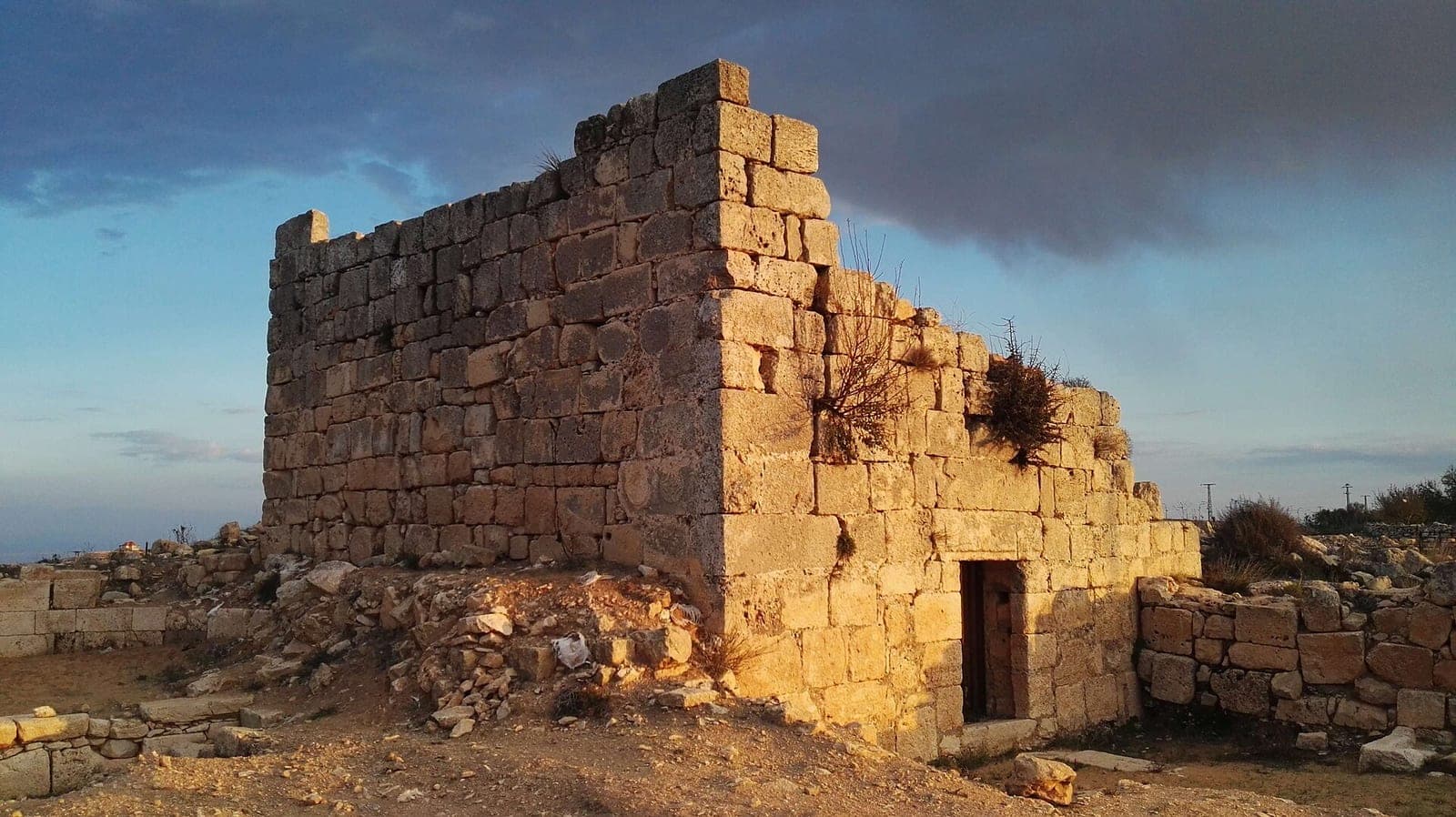
Photo: Bukvoed, via Wikimedia Commons. License: CC BY 4.0. Source. Location: Burj Beitin, Beitin, Ramallah and al-Bireh Governorate, West Bank. Resized for the web.
Explore the places of the Bible
See where biblical events happened, why each place matters, and what archaeology helps us understand.
Bethel
Where Jacob dreamed of a stairway to heaven and met God.
Get full access with one subscription
Explore the people and places of the Bible. Read summaries of every book, with images and clear explanations covering every chapter. Access all these features and our Bible study tools with one subscription.
See PlansAsk AI about Isaiah 17:13
Ask a question about this verse and get a clear answer, with Bible references you can read for yourself.
Every Bible book, explained chapter by chapter
Explore summaries of every book of the Bible, with images and easy-to-understand explanations covering every chapter.
Keep studying Isaiah 17:13
Related Bible verses
Key themes
Related topics
At a Glance — the Book of Isaiah
- Author
- Isaiah the prophet
- Written
- Around 700 BC
- Genre
- Prophecy
- Original Audience
- Judah and the surrounding nations
Frequently Asked Questions
Quick, clear answers about this verse
What does Isaiah 17:13 mean?
Isaiah 17:13 uses the imagery of nations rushing like a flood to illustrate the chaos of human conflict. It emphasizes that despite this turmoil, God has the power to intervene and scatter those nations, highlighting His sovereignty over human affairs.
What is the significance of chaff in Isaiah 17:13?
In Isaiah 17:13, chaff represents the fragility and worthlessness of human strength when opposed to God's power. Just as chaff is easily blown away by the wind, nations that oppose God will ultimately be scattered and defeated.
What does the phrase 'God will rebuke them' mean in Isaiah 17:13?
The phrase 'God will rebuke them' in Isaiah 17:13 signifies God's authority to confront and challenge the nations causing chaos. It indicates that God can decisively intervene to restore order and scatter those who oppose His will.
How does Isaiah 17:13 relate to God's sovereignty?
Isaiah 17:13 illustrates God's sovereignty by showing that, despite the overwhelming power of nations, He can easily rebuke and scatter them. This reinforces the idea that God is ultimately in control of all events, regardless of human conflict.
Daily Verse — straight to your inbox
A verse and a 2-sentence plain-English explanation, every morning. Free. Unsubscribe anytime.