Old Testament
Jeremiah 11:15
Read the Bible in clear, modern English—easy to understand, faithful to the meaning, and written for everyday readers.
What is my beloved doing in my house, since she has acted immorally with many, and the holy flesh is no longer with you? When you do evil, you celebrate.
Compare translations
What hath my beloved to do in mine house, seeing she hath wrought lewdness with many, and the holy flesh is passed from thee? when thou doest evil, then thou rejoicest.
What Jeremiah 11:15 means
Plain-English insight for readers
In this verse, God expresses His disappointment and confusion over the actions of His people, referred to as 'my beloved.' They have engaged in immoral behavior, abandoning their commitment to holiness. The phrase 'the holy flesh is no longer with you' suggests that their sacred practices have lost meaning due to their sinful actions. Instead of mourning their wrongdoings, they celebrate their evil deeds, indicating a deep moral decline. This reflects a relationship where trust and fidelity have been broken, and God questions what place such behavior has in His house. The verse serves as a warning about the consequences of turning away from righteousness and the danger of becoming complacent in sin, celebrating what should be mourned. It highlights the disconnect between outward religious practices and inner moral integrity, urging a return to genuine faithfulness and repentance.
How to apply Jeremiah 11:15 to your life
This verse challenges us to examine our own lives for areas where we may be compromising our values. It encourages us to seek genuine repentance and to avoid celebrating behaviors that are contrary to our faith. We should strive to maintain integrity in our relationship with God and others.
Curated for this public verse page. Jeremiah Summary
Explore more of the Bible
Learn the Bible through its people and places
Get to know the people in Scripture through illustrated stories, and explore the places where they lived and traveled.

Illustrated scene from Noah's story: Noah Is Born (Genesis 5:28–32)
Meet the people of the Bible
Follow their lives in order, with illustrated scenes and Bible passages that tell their stories.
 Noah
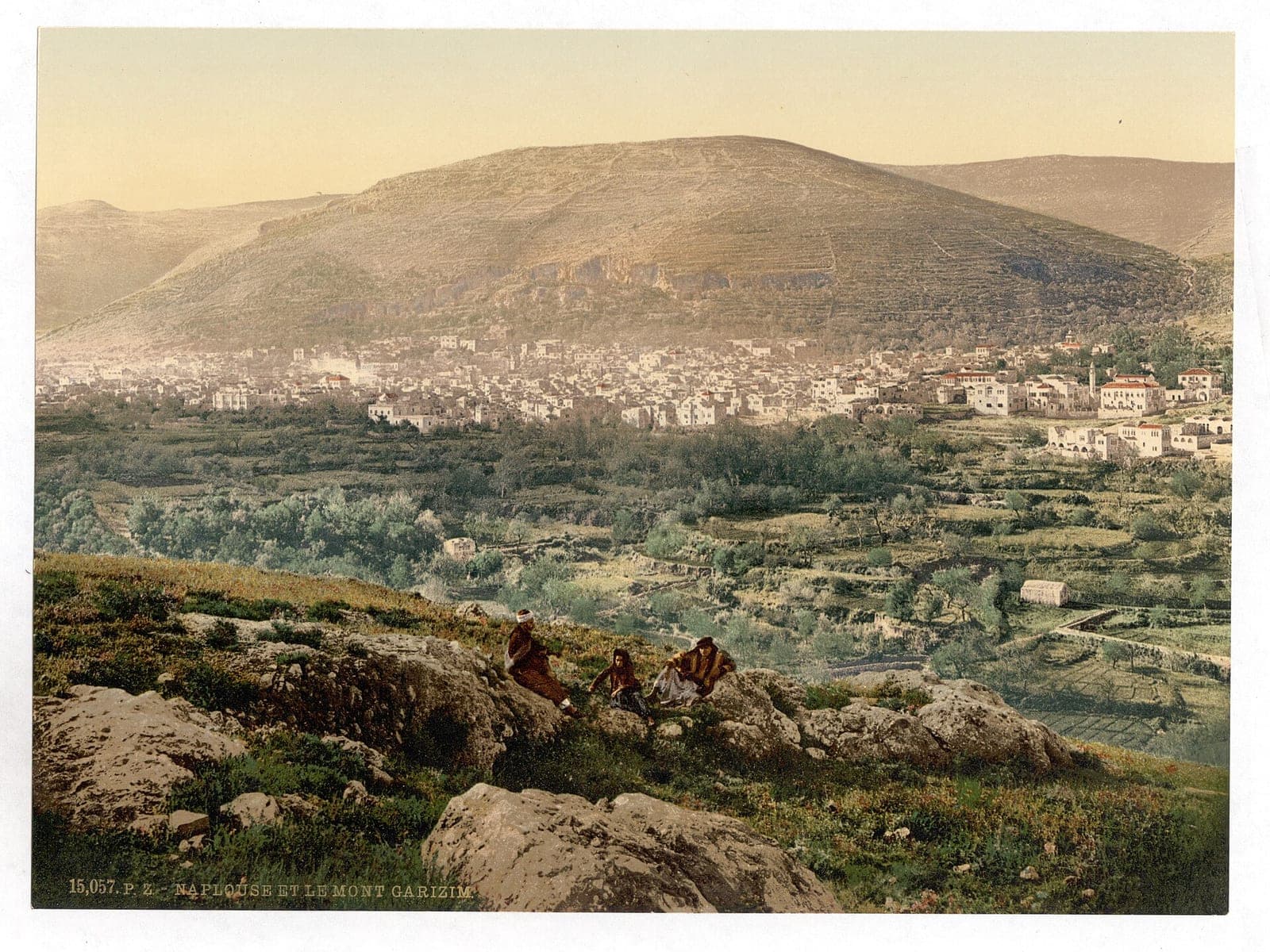
Photo: Photochrom print, Library of Congress Prints and Photographs Division (LCCN 2002725043). License: Public domain in the United States; Library of Congress states no known restrictions on publication. Source. Location: Nablus and Mount Gerizim, West Bank; print preserved by the Library of Congress. Resized for the web.
Explore the places of the Bible
See where biblical events happened, why each place matters, and what archaeology helps us understand.
Shechem
Where God promised the land to Abram, and where Joshua led Israel to renew the covenant.
Get full access with one subscription
Explore the people and places of the Bible. Read summaries of every book, with images and clear explanations covering every chapter. Access all these features and our Bible study tools with one subscription.
See PlansAsk AI about Jeremiah 11:15
Ask a question about this verse and get a clear answer, with Bible references you can read for yourself.
Every Bible book, explained chapter by chapter
Explore summaries of every book of the Bible, with images and easy-to-understand explanations covering every chapter.
Keep studying Jeremiah 11:15
Related Bible verses
Key themes
Related topics
At a Glance — the Book of Jeremiah
- Author
- Jeremiah the prophet, with Baruch
- Written
- Around 600 BC
- Genre
- Prophecy
- Original Audience
- Judah before and during the Babylonian exile
Frequently Asked Questions
Quick, clear answers about this verse
What does Jeremiah 11:15 mean?
Jeremiah 11:15 expresses God's disappointment with His people for engaging in immoral behavior while still expecting to maintain a relationship with Him. It highlights the disconnect between their sinful actions and their religious practices.
What is the significance of 'the holy flesh is no longer with you' in Jeremiah 11:15?
The phrase 'the holy flesh is no longer with you' indicates that the sacred rituals and practices have lost their meaning because of the people's sinfulness. It suggests that their commitment to holiness has been compromised.
How does Jeremiah 11:15 relate to moral integrity?
Jeremiah 11:15 emphasizes the importance of moral integrity by showing that outward religious practices are meaningless if not accompanied by genuine faithfulness and righteousness. It serves as a reminder to align one's actions with their beliefs.
What warning does Jeremiah 11:15 provide?
Jeremiah 11:15 warns against the dangers of complacency in sin and the consequences of turning away from righteousness. It calls for self-examination and a return to true repentance and integrity in one's relationship with God.
Daily Verse — straight to your inbox
A verse and a 2-sentence plain-English explanation, every morning. Free. Unsubscribe anytime.