Old Testament
Job 39:7
Read the Bible in clear, modern English—easy to understand, faithful to the meaning, and written for everyday readers.
It scorns the multitude of the city, and does not regard the crying of the driver.
Compare translations
He scorneth the multitude of the city, neither regardeth he the crying of the driver.
What Job 39:7 means
Plain-English insight for readers
In Job 39:7, the verse describes a creature that is indifferent to the chaos and noise of human society. This creature, often interpreted as a wild animal, does not pay attention to the cries of those who are trying to control or manage it. The imagery suggests a sense of freedom and autonomy that contrasts sharply with the constraints of human civilization. The verse highlights the idea that some beings exist outside the influence of human authority and societal expectations. This can be seen as a reflection on the nature of creation, where certain creatures live by their own instincts and rules, unaffected by human concerns. It serves as a reminder of the vastness of the natural world and the limitations of human control over it. The scornful attitude of the creature towards the city symbolizes a deeper truth about the relationship between humanity and nature, emphasizing that not everything can be tamed or governed by human will.
How to apply Job 39:7 to your life
This verse encourages us to recognize the limits of our control over nature and life. It reminds us to appreciate the wildness and freedom found in creation, urging us to respect the natural world and its creatures. We should also reflect on our own lives, considering areas where we might be too focused on societal expectations.
Curated for this public verse page. Job Summary
Learn the Bible through its people and places
Get to know the people in Scripture through illustrated stories, and explore the places where they lived and traveled.
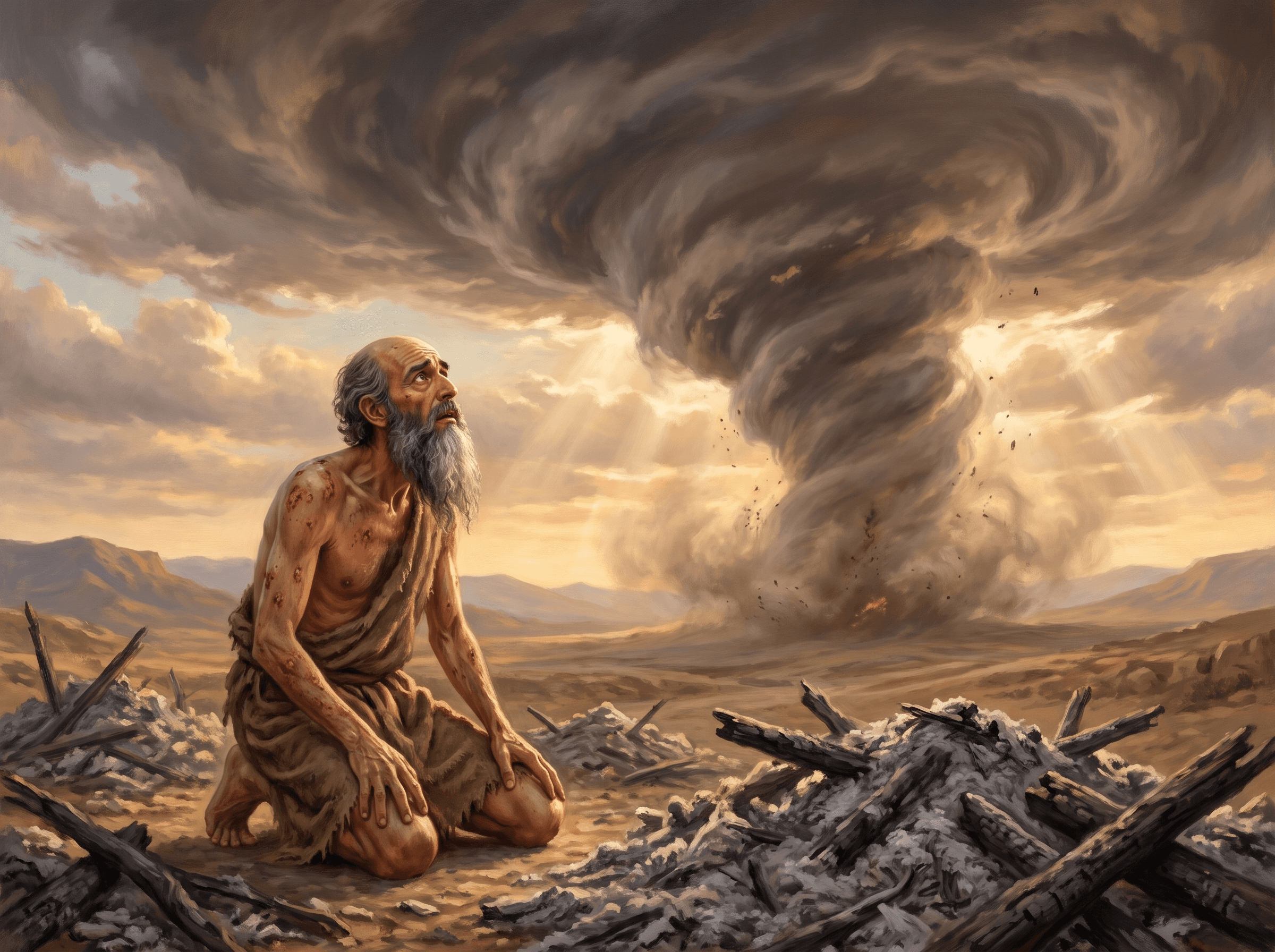
Illustrated scene from Job's story: Out of the Whirlwind (Job 38:1–41:34)
Meet the people of the Bible
Follow their lives in order, with illustrated scenes and Bible passages that tell their stories.
 Job

Photo: Zeev Stein / PikiWiki Israel, via Wikimedia Commons. License: CC BY 2.5. Source. Location: Tel Beer Sheva National Park, Israel. Resized for the web.
Explore the places of the Bible
See where biblical events happened, why each place matters, and what archaeology helps us understand.
Beersheba
Where Abraham and Isaac dug wells and worshiped the LORD, at the southern edge of the land.
Get full access with one subscription
Explore the people and places of the Bible. Read summaries of every book, with images and clear explanations covering every chapter. Access all these features and our Bible study tools with one subscription.
See PlansAsk AI about Job 39:7
Ask a question about this verse and get a clear answer, with Bible references you can read for yourself.
Every Bible book, explained chapter by chapter
Explore summaries of every book of the Bible, with images and easy-to-understand explanations covering every chapter.
Keep studying Job 39:7
Related Bible verses
Key themes
Related topics
At a Glance — the Book of Job
- Author
- Author unknown; events likely in the patriarchal era
- Written
- Date debated
- Genre
- Wisdom literature
- Original Audience
- All who suffer or question God
Frequently Asked Questions
Quick, clear answers about this verse
What does Job 39:7 mean?
Job 39:7 describes a creature that is indifferent to the noise and chaos of human society, symbolizing freedom and autonomy. It highlights how some beings exist outside human control and societal expectations.
What is the significance of the creature in Job 39:7?
The creature in Job 39:7 represents the wildness of nature, illustrating that not all beings can be tamed or governed by human authority. It serves as a reminder of the limits of human influence over the natural world.
What does 'scorns the multitude of the city' refer to in Job 39:7?
The phrase 'scorns the multitude of the city' indicates the creature's disregard for human society and its chaos. It emphasizes the creature's independence and the contrast between wild nature and human civilization.
How does Job 39:7 relate to human control over nature?
Job 39:7 illustrates the idea that certain aspects of nature cannot be controlled or influenced by humans. It encourages respect for the autonomy of wild creatures and the natural world.
Daily Verse — straight to your inbox
A verse and a 2-sentence plain-English explanation, every morning. Free. Unsubscribe anytime.