New Testament
John 13:20
Read the Bible in clear, modern English—easy to understand, faithful to the meaning, and written for everyday readers.
"Truly, truly, I tell you, whoever receives anyone I send receives me, and whoever receives me receives the one who sent me."
Compare translations
Verily, verily, I say unto you, He that receiveth whomsoever I send receiveth me; and he that receiveth me receiveth him that sent me.
What John 13:20 means
Plain-English insight for readers
In this verse, Jesus emphasizes the importance of accepting those He sends as representatives. He assures His followers that receiving His messengers is equivalent to receiving Him personally. Furthermore, accepting Jesus means accepting God the Father, who sent Him. This highlights the interconnectedness of their roles and the authority of Jesus' mission. The repetition of "truly, truly" underscores the significance of His message, urging listeners to pay close attention. It reflects the idea that how one treats Jesus' followers reflects their attitude towards Jesus Himself and ultimately towards God. This verse serves as a reminder of the responsibility believers have in welcoming and supporting those who spread the Gospel, as they are acting on behalf of Christ and God.
How to apply John 13:20 to your life
As believers, we should be mindful of how we treat those who share the message of Christ. Welcoming and supporting them is not just a kindness; it reflects our relationship with Jesus and God. We can actively seek to encourage and uplift those who serve in ministry.
Curated for this public verse page. John Summary
Learn the Bible through its people and places
Get to know the people in Scripture through illustrated stories, and explore the places where they lived and traveled.
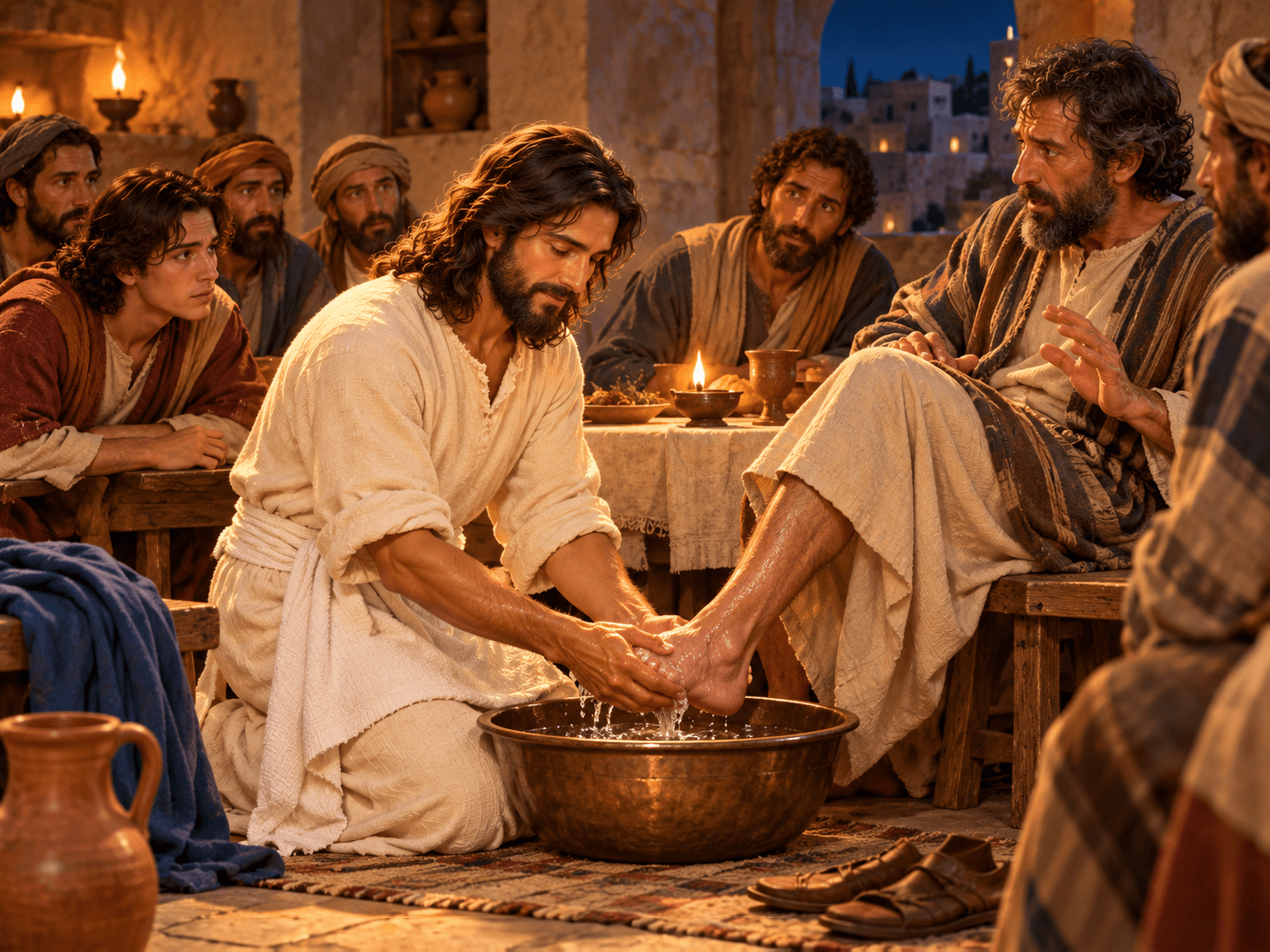
Illustrated scene from Jesus's story: Washing the Disciples' Feet (John 13:1–30)
Meet the people of the Bible
Follow their lives in order, with illustrated scenes and Bible passages that tell their stories.
 Jesus

Photo: Photochrom print, Library of Congress Prints and Photographs Division (LCCN 2002725045). License: Public domain in the United States; Library of Congress states no known restrictions on publication. Source. Location: Nazareth, Israel; print preserved by the Library of Congress. Resized for the web.
Explore the places of the Bible
See where biblical events happened, why each place matters, and what archaeology helps us understand.
Nazareth
The small town in Galilee where Jesus grew up.
Get full access with one subscription
Explore the people and places of the Bible. Read summaries of every book, with images and clear explanations covering every chapter. Access all these features and our Bible study tools with one subscription.
See PlansAsk AI about John 13:20
Ask a question about this verse and get a clear answer, with Bible references you can read for yourself.
Every Bible book, explained chapter by chapter
Explore summaries of every book of the Bible, with images and easy-to-understand explanations covering every chapter.
Keep studying John 13:20
Related Bible verses
Key themes
Related topics
At a Glance — the Book of John
- Author
- John the apostle
- Written
- Around AD 85-95
- Genre
- Gospel
- Original Audience
- All believers
Frequently Asked Questions
Quick, clear answers about this verse
What does John 13:20 mean in simple terms?
John 13:20 emphasizes the importance of accepting those whom Jesus sends as His representatives. It teaches that receiving His messengers is the same as receiving Jesus Himself, and by accepting Jesus, one also accepts God the Father. This verse highlights the close relationship between Jesus, His followers, and God, urging believers to recognize the significance of how they treat those who share the Gospel.
How can I apply John 13:20 in my life?
To apply John 13:20, focus on how you treat those who share the message of Christ. Make an effort to welcome and support church leaders, missionaries, and anyone spreading the Gospel. This not only shows kindness but also reflects your relationship with Jesus and God. Consider volunteering, offering encouragement, or providing resources to those in ministry as a way to live out this teaching.
Why does Jesus say 'truly, truly' in this verse?
The phrase 'truly, truly' in John 13:20 serves to emphasize the importance of His message. It indicates that what He is about to say is of great significance and should be taken seriously. This repetition is a way for Jesus to urge His listeners to pay close attention to the truth He is conveying about the relationship between Himself, His messengers, and God.
What is the significance of accepting Jesus' messengers?
Accepting Jesus' messengers is significant because it reflects one's attitude towards Jesus Himself. In John 13:20, Jesus teaches that how we treat those He sends is indicative of our relationship with Him and God. By welcoming and supporting His representatives, believers affirm their faith and commitment to the mission of spreading the Gospel.
Daily Verse — straight to your inbox
A verse and a 2-sentence plain-English explanation, every morning. Free. Unsubscribe anytime.