New Testament
John 18:23
Read the Bible in clear, modern English—easy to understand, faithful to the meaning, and written for everyday readers.
Jesus replied, "If I said something wrong, testify about what was wrong. But if I spoke rightly, why do you strike me?"
Compare translations
Jesus answered him, If I have spoken evil, bear witness of the evil: but if well, why smitest thou me?
What John 18:23 means
Plain-English insight for readers
In this verse, Jesus is responding to a question or accusation during His trial. He challenges His accuser to provide evidence if He has spoken wrongly. His statement highlights the importance of truth and justice, as He questions why He is being struck if He has done nothing wrong. This moment illustrates Jesus' calmness and integrity in the face of injustice. He emphasizes that accusations should be based on facts, not on violence or intimidation. This exchange reveals the tension between Jesus and the authorities, showcasing His unwavering commitment to truth even when faced with physical harm. It also serves as a reminder of the importance of standing firm in one’s beliefs and speaking out against wrongdoing, even when it is uncomfortable or dangerous. Jesus' response encourages believers to seek justice and truth in their own lives, reflecting His example of grace under pressure.
How to apply John 18:23 to your life
This verse encourages us to stand firm in our beliefs and to seek truth in our interactions. When faced with accusations or challenges, we should respond with calmness and integrity, just as Jesus did. It reminds us to advocate for justice and to speak out against wrongdoing, even when it is difficult.
Curated for this public verse page. John Summary
Learn the Bible through its people and places
Get to know the people in Scripture through illustrated stories, and explore the places where they lived and traveled.
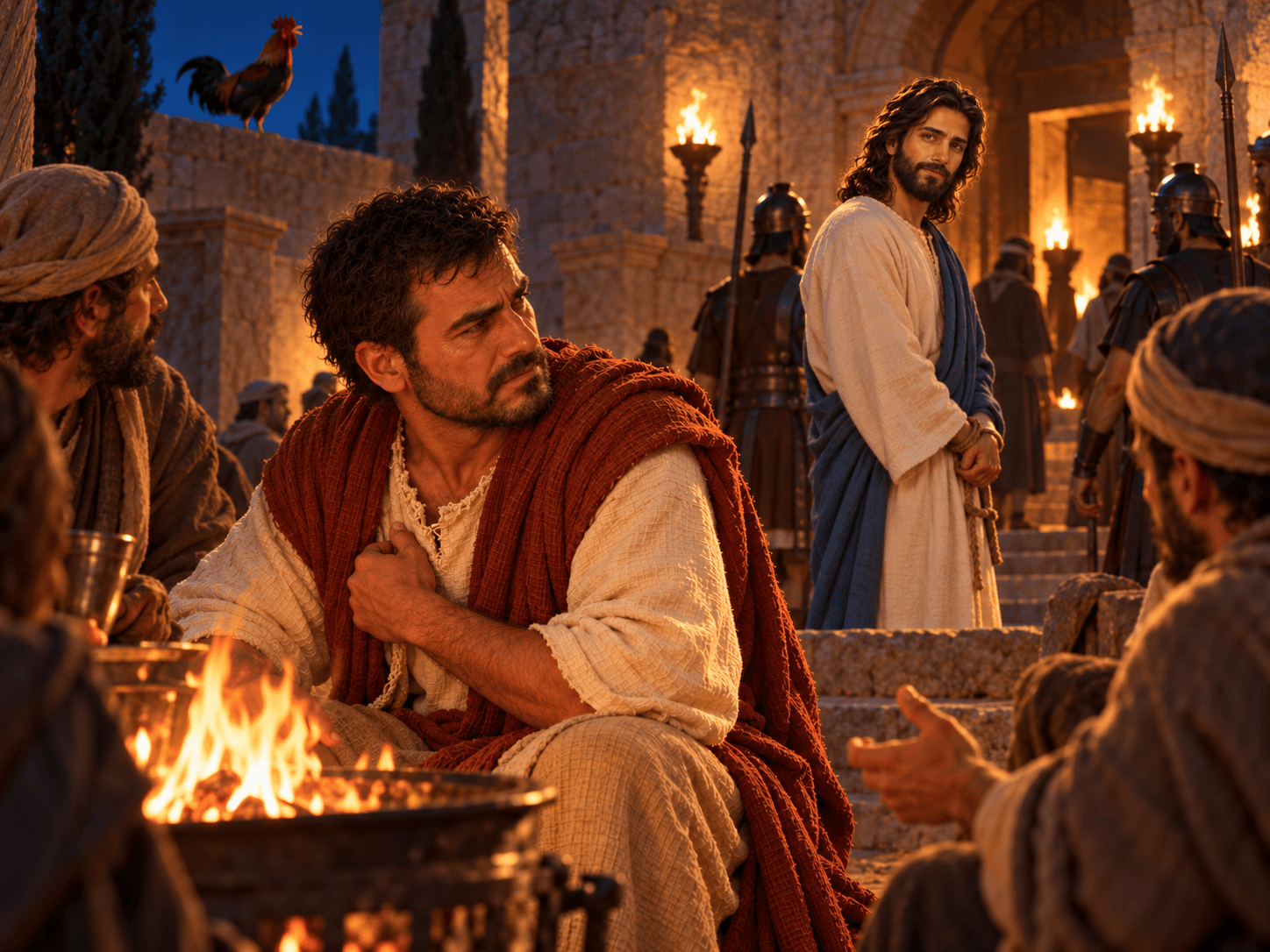
Illustrated scene from Peter's story: Peter Denies Jesus (John 18:15–27)
Meet the people of the Bible
Follow their lives in order, with illustrated scenes and Bible passages that tell their stories.
 Peter

Photo: zeevveez, via Wikimedia Commons. License: CC BY 2.0. Source. Location: Capernaum, on the northern shore of the Sea of Galilee. Resized for the web.
Explore the places of the Bible
See where biblical events happened, why each place matters, and what archaeology helps us understand.
Capernaum
Jesus' home base by the Sea of Galilee, and the town where Peter lived.
Get full access with one subscription
Explore the people and places of the Bible. Read summaries of every book, with images and clear explanations covering every chapter. Access all these features and our Bible study tools with one subscription.
See PlansAsk AI about John 18:23
Ask a question about this verse and get a clear answer, with Bible references you can read for yourself.
Every Bible book, explained chapter by chapter
Explore summaries of every book of the Bible, with images and easy-to-understand explanations covering every chapter.
Keep studying John 18:23
Related Bible verses
At a Glance — the Book of John
- Author
- John the apostle
- Written
- Around AD 85-95
- Genre
- Gospel
- Original Audience
- All believers
Frequently Asked Questions
Quick, clear answers about this verse
What does John 18:23 mean?
In John 18:23, Jesus is responding to an accusation during His trial. He challenges His accuser to provide evidence of wrongdoing, emphasizing the importance of truth and justice.
What is the significance of Jesus' response in John 18:23?
Jesus' response highlights His integrity and calmness in the face of injustice. It serves as a reminder to stand firm in one's beliefs and advocate for truth, even under pressure.
Why does Jesus ask why He is struck in John 18:23?
Jesus asks this to question the legitimacy of the violence against Him. He points out that if He has spoken rightly, there should be no reason for physical punishment.
What themes are present in John 18:23?
Key themes in John 18:23 include truth, justice, integrity, and courage. The verse illustrates the tension between Jesus and the authorities, showcasing His commitment to truth.
Daily Verse — straight to your inbox
A verse and a 2-sentence plain-English explanation, every morning. Free. Unsubscribe anytime.