New Testament
John 2:15
Read the Bible in clear, modern English—easy to understand, faithful to the meaning, and written for everyday readers.
So he made a whip out of cords and drove them all out of the temple, along with the sheep and the oxen. He poured out the money changers' coins and overturned their tables.
Compare translations
And when he had made a scourge of small cords, he drove them all out of the temple, and the sheep, and the oxen; and poured out the changers’ money, and overthrew the tables;
What John 2:15 means
Plain-English insight for readers
In this passage, Jesus demonstrates his anger towards the commercialization of the temple, which was meant to be a sacred place for worship. By making a whip from cords, he forcefully drove out the merchants and animals that were cluttering the temple area. This act symbolizes his desire to restore the temple's sanctity and purity. The money changers, who were exchanging currency for temple offerings, were also targeted as their practices were seen as corrupt and exploitative. Jesus' actions highlight the importance of reverence in worship and the need to keep sacred spaces free from greed and distraction. This event is significant as it marks the beginning of Jesus' public ministry and sets the tone for his mission to challenge the status quo and call for genuine faith and devotion.
How to apply John 2:15 to your life
This passage encourages us to reflect on our own worship practices. Are there distractions or commercial influences that detract from our spiritual focus? We should strive to keep our places of worship and our hearts pure, prioritizing genuine connection with God over material concerns.
Curated for this public verse page. John Summary
Learn the Bible through its people and places
Get to know the people in Scripture through illustrated stories, and explore the places where they lived and traveled.
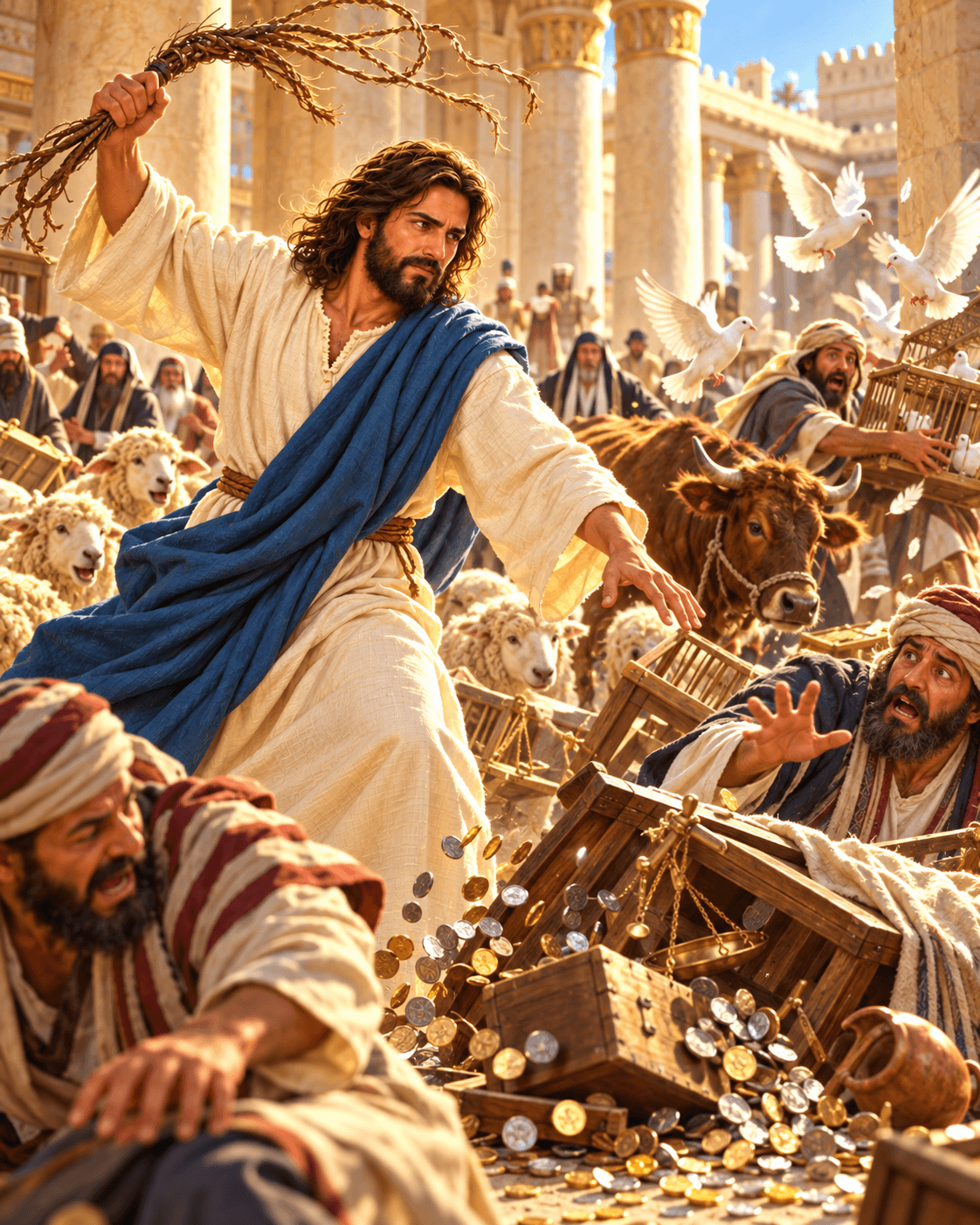
Illustrated scene from Jesus's story: Clearing the Temple at Passover (John 2:13–22)
Meet the people of the Bible
Follow their lives in order, with illustrated scenes and Bible passages that tell their stories.
 Jesus

Photo: Gary Todd (Gary Lee Todd, Ph.D.), via Wikimedia Commons. License: CC0 1.0 Universal Public Domain Dedication. Source. Location: Southern end of the Temple Mount, Jerusalem Old City. Resized for the web.
Explore the places of the Bible
See where biblical events happened, why each place matters, and what archaeology helps us understand.
Jerusalem
David's capital, the city of the temple, and the place where Jesus died and rose again.
Get full access with one subscription
Explore the people and places of the Bible. Read summaries of every book, with images and clear explanations covering every chapter. Access all these features and our Bible study tools with one subscription.
See PlansAsk AI about John 2:15
Ask a question about this verse and get a clear answer, with Bible references you can read for yourself.
Every Bible book, explained chapter by chapter
Explore summaries of every book of the Bible, with images and easy-to-understand explanations covering every chapter.
Keep studying John 2:15
Related Bible verses
At a Glance — the Book of John
- Author
- John the apostle
- Written
- Around AD 85-95
- Genre
- Gospel
- Original Audience
- All believers
Frequently Asked Questions
Quick, clear answers about this verse
What does John 2:15 mean?
John 2:15 describes Jesus driving out merchants and animals from the temple, showing his anger at the commercialization of a sacred space. This act emphasizes the need for reverence in worship and highlights Jesus' authority to challenge corrupt practices.
What is the significance of Jesus making a whip in John 2:15?
Jesus making a whip signifies his righteous anger against the exploitation occurring in the temple. It illustrates his commitment to restoring the sanctity of worship and rejecting any distractions that compromise spiritual devotion.
What does the term 'money changers' refer to in John 2:15?
In John 2:15, 'money changers' refers to those who exchanged currency for temple offerings, often charging high fees. Their presence in the temple was seen as corrupt, as it prioritized profit over genuine worship.
Why did Jesus overturn the tables in John 2:15?
Jesus overturned the tables in John 2:15 to protest against the commercialization of the temple, which was meant to be a place of worship. This act symbolized his desire to cleanse the temple of greed and restore its intended purpose.
Daily Verse — straight to your inbox
A verse and a 2-sentence plain-English explanation, every morning. Free. Unsubscribe anytime.