New Testament
John 8:28
Read the Bible in clear, modern English—easy to understand, faithful to the meaning, and written for everyday readers.
So Jesus said, "When you have lifted up the Son of Man, then you will understand that I am who I say I am, and that I do nothing on my own. I only speak what my Father has taught me.
Compare translations
Then said Jesus unto them, When ye have lifted up the Son of man, then shall ye know that I am he, and that I do nothing of myself; but as my Father hath taught me, I speak these things.
What John 8:28 means
Plain-English insight for readers
In this verse, Jesus is speaking to the people about his identity and mission. He refers to being 'lifted up,' which foreshadows his crucifixion. When he is crucified, people will come to understand his true nature as the Son of Man and recognize his divine authority. Jesus emphasizes that he does not act independently; rather, he speaks and acts according to what God the Father has revealed to him. This highlights the close relationship between Jesus and the Father, showing that his teachings are not merely his own but are rooted in divine instruction. The phrase 'I am who I say I am' asserts his identity as the Messiah, reinforcing the importance of recognizing him for who he truly is. This moment is pivotal for understanding the nature of Jesus' mission and the significance of his sacrifice.
How to apply John 8:28 to your life
This verse encourages us to seek a deeper understanding of Jesus' identity and mission. By recognizing that he speaks the words of God, we are called to listen to his teachings and apply them in our lives, fostering a closer relationship with God.
Curated for this public verse page. John Summary
Explore more of the Bible
Learn the Bible through its people and places
Get to know the people in Scripture through illustrated stories, and explore the places where they lived and traveled.
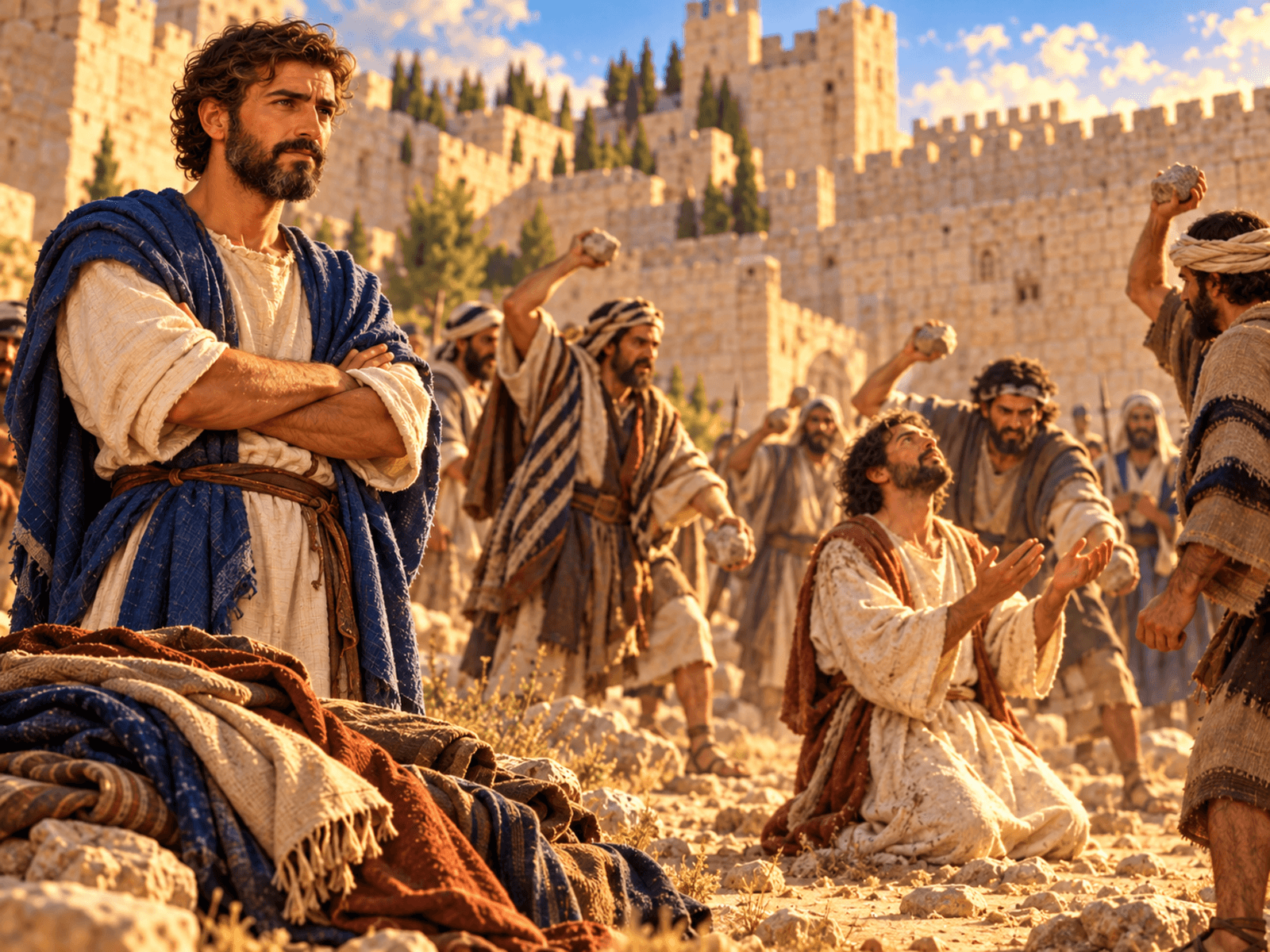
Illustrated scene from Paul's story: The Stoning of Stephen (Acts 7:57–8:2)
Meet the people of the Bible
Follow their lives in order, with illustrated scenes and Bible passages that tell their stories.
 Paul

Photo: Photochrom print, Library of Congress Prints and Photographs Division (LCCN 2002725045). License: Public domain in the United States; Library of Congress states no known restrictions on publication. Source. Location: Nazareth, Israel; print preserved by the Library of Congress. Resized for the web.
Explore the places of the Bible
See where biblical events happened, why each place matters, and what archaeology helps us understand.
Nazareth
The small town in Galilee where Jesus grew up.
Get full access with one subscription
Explore the people and places of the Bible. Read summaries of every book, with images and clear explanations covering every chapter. Access all these features and our Bible study tools with one subscription.
See PlansAsk AI about John 8:28
Ask a question about this verse and get a clear answer, with Bible references you can read for yourself.
Every Bible book, explained chapter by chapter
Explore summaries of every book of the Bible, with images and easy-to-understand explanations covering every chapter.
Keep studying John 8:28
Related Bible verses
Key themes
Related topics
At a Glance — the Book of John
- Author
- John the apostle
- Written
- Around AD 85-95
- Genre
- Gospel
- Original Audience
- All believers
Frequently Asked Questions
Quick, clear answers about this verse
What does 'lifted up' mean in John 8:28?
In John 8:28, 'lifted up' refers to Jesus' crucifixion. This phrase foreshadows the moment when Jesus will be raised on the cross, which is central to his mission of salvation. It signifies not only his physical elevation during the crucifixion but also the spiritual revelation that will occur as people come to understand his true identity as the Son of Man and the Messiah.
How does John 8:28 affirm Jesus' identity?
John 8:28 affirms Jesus' identity by stating, 'I am who I say I am.' This declaration emphasizes his role as the Messiah and the Son of Man. It invites listeners to recognize his divine authority and the truth of his teachings, which are rooted in what God the Father has revealed to him. This moment is crucial for understanding who Jesus is and the significance of his mission.
What is the significance of Jesus saying he speaks what the Father taught him?
When Jesus says he speaks what the Father taught him, it highlights the intimate relationship between him and God. This statement underscores that Jesus does not act independently but is fully aligned with God's will and purpose. It reinforces the idea that his teachings are divinely inspired, urging believers to trust in his words as they reflect God's truth and guidance.
How can we apply John 8:28 in our daily lives?
To apply John 8:28 in our daily lives, we should strive to deepen our understanding of Jesus' identity and teachings. This involves actively listening to his words and applying them in our actions. By recognizing Jesus as the source of divine truth, we can foster a closer relationship with God, allowing his teachings to guide our decisions and interactions with others.
Daily Verse — straight to your inbox
A verse and a 2-sentence plain-English explanation, every morning. Free. Unsubscribe anytime.