Old Testament
Jonah 2:1
Read the Bible in clear, modern English—easy to understand, faithful to the meaning, and written for everyday readers.
From inside the belly of the fish, Jonah prayed to the LORD his God.
Compare translations
Then Jonah prayed unto the LORD his God out of the fish’s belly,
What Jonah 2:1 means
Plain-English insight for readers
In Jonah 2:1, we see Jonah in a desperate situation, trapped inside the belly of a great fish. This moment is significant because it highlights Jonah's realization of his need for God. Despite his earlier disobedience, Jonah turns to prayer, demonstrating that no matter how far one strays, they can always seek God’s help. His prayer signifies a turning point; he acknowledges his predicament and seeks divine intervention. This act of praying from such a dark place shows that God is accessible even in our lowest moments. Jonah's prayer is a heartfelt plea for mercy and deliverance, reflecting his understanding of God’s power and grace. This verse sets the stage for Jonah's transformation and eventual obedience to God's command. It reminds us that prayer can be a lifeline in times of trouble, and that God listens to those who earnestly seek Him, regardless of their circumstances.
How to apply Jonah 2:1 to your life
When facing difficult situations, remember that turning to God in prayer is always an option. Like Jonah, we can seek God's help and guidance, no matter how dire our circumstances may seem. Trust in His mercy and willingness to listen.
Curated for this public verse page. Jonah Summary
Learn the Bible through its people and places
Get to know the people in Scripture through illustrated stories, and explore the places where they lived and traveled.
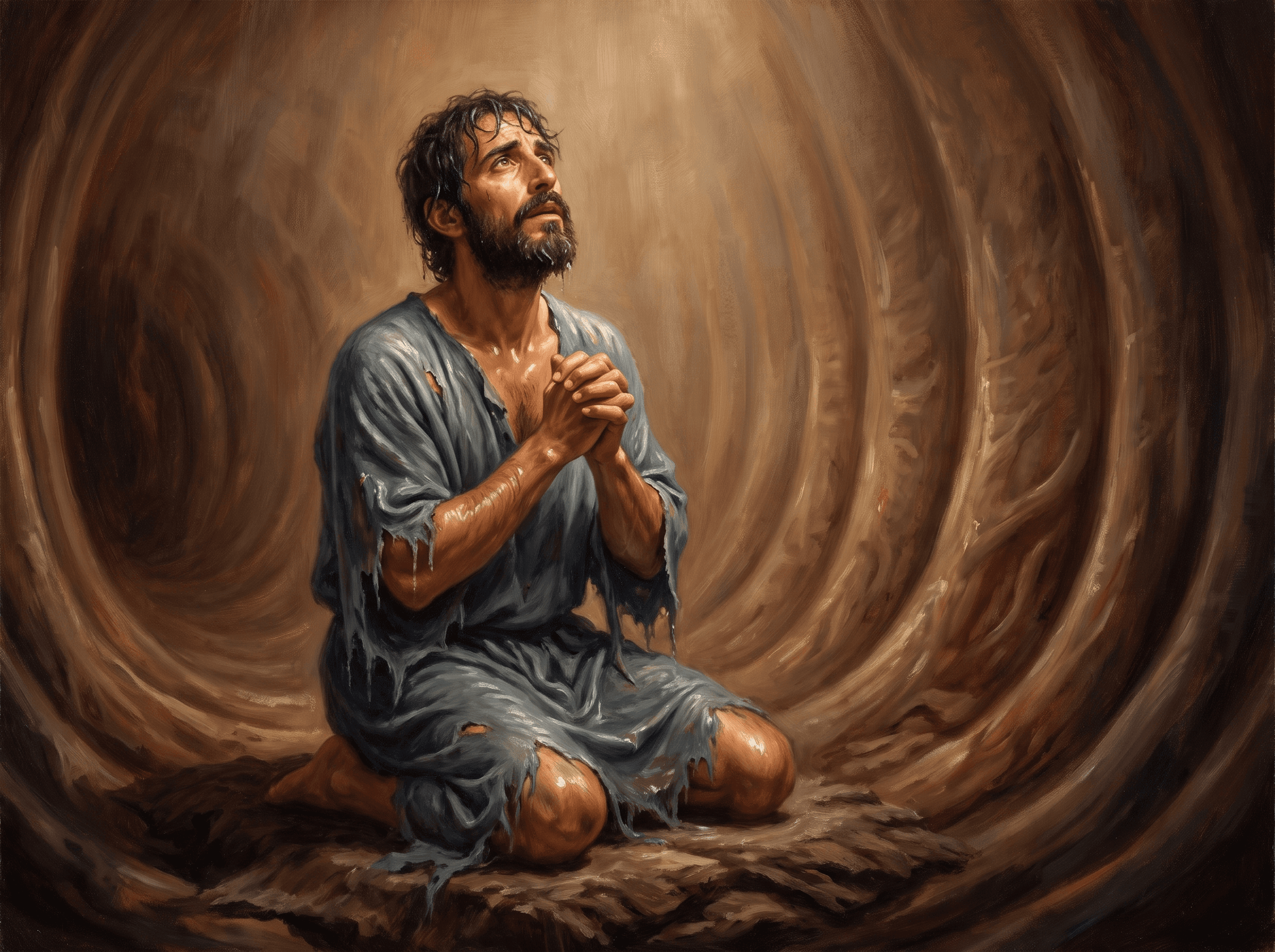
Illustrated scene from Jonah's story: Inside the Great Fish (Jonah 1:17–2:10)
Meet the people of the Bible
Follow their lives in order, with illustrated scenes and Bible passages that tell their stories.
 Jonah

Photo: Photochrom print, Library of Congress Prints and Photographs Division (LCCN 2002724987). License: Public domain in the United States; Library of Congress states no known restrictions on publication. Source. Location: Hebron, West Bank; print preserved by the Library of Congress. Resized for the web.
Explore the places of the Bible
See where biblical events happened, why each place matters, and what archaeology helps us understand.
Hebron
Where Abraham lived and buried Sarah, and where David was first made king.
Get full access with one subscription
Explore the people and places of the Bible. Read summaries of every book, with images and clear explanations covering every chapter. Access all these features and our Bible study tools with one subscription.
See PlansAsk AI about Jonah 2:1
Ask a question about this verse and get a clear answer, with Bible references you can read for yourself.
Every Bible book, explained chapter by chapter
Explore summaries of every book of the Bible, with images and easy-to-understand explanations covering every chapter.
Keep studying Jonah 2:1
Related Bible verses
Key themes
Related topics
At a Glance — the Book of Jonah
- Author
- Traditionally attributed to Jonah
- Written
- Around 760 BC
- Genre
- Prophetic narrative
- Original Audience
- Israelites and Gentile nations
Frequently Asked Questions
Quick, clear answers about this verse
What does Jonah 2:1 mean?
Jonah 2:1 describes Jonah praying to God from inside the belly of a fish. This moment signifies his recognition of his need for divine help after his disobedience, illustrating that prayer can be a source of hope even in desperate situations.
What themes are present in Jonah 2:1?
Key themes in Jonah 2:1 include prayer, desperation, divine mercy, repentance, transformation, and obedience. These themes emphasize the importance of seeking God in times of trouble.
What can we learn from Jonah 2:1 about prayer?
Jonah 2:1 teaches us that prayer is a vital lifeline during difficult times. It reminds us that God is always accessible and willing to listen to those who earnestly seek Him, regardless of their circumstances.
Daily Verse — straight to your inbox
A verse and a 2-sentence plain-English explanation, every morning. Free. Unsubscribe anytime.