Old Testament
Leviticus 9:3
Read the Bible in clear, modern English—easy to understand, faithful to the meaning, and written for everyday readers.
Then tell the children of Israel: 'Take a kid of the goats for a sin offering, and a calf and a lamb, both of the first year and without blemish, for a burnt offering.'
Compare translations
And unto the children of Israel thou shalt speak, saying, Take ye a kid of the goats for a sin offering; and a calf and a lamb, both of the first year, without blemish, for a burnt offering;
What Leviticus 9:3 means
Plain-English insight for readers
In Leviticus 9:3, God instructs the Israelites on the types of offerings they should bring to Him. A 'kid of the goats' is designated for a sin offering, which symbolizes atonement for wrongdoing. Additionally, a calf and a lamb, both young and without defects, are to be offered as burnt offerings. These offerings are significant as they represent the people's dedication and commitment to God, showcasing their desire for forgiveness and their need to maintain a right relationship with Him. The emphasis on the animals being 'without blemish' highlights the importance of purity and the seriousness of the offerings. This passage reflects the broader theme of sacrifice in the Old Testament, where offerings are a means to express repentance and devotion to God. It sets the stage for understanding the sacrificial system that was central to Israelite worship and foreshadows the ultimate sacrifice of Jesus Christ in the New Testament.
How to apply Leviticus 9:3 to your life
This verse reminds us of the importance of coming before God with a sincere heart, acknowledging our sins, and seeking forgiveness. It encourages us to offer our best to God, whether in worship, service, or our daily lives, reflecting our commitment to Him.
Curated for this public verse page. Leviticus Summary
Learn the Bible through its people and places
Get to know the people in Scripture through illustrated stories, and explore the places where they lived and traveled.
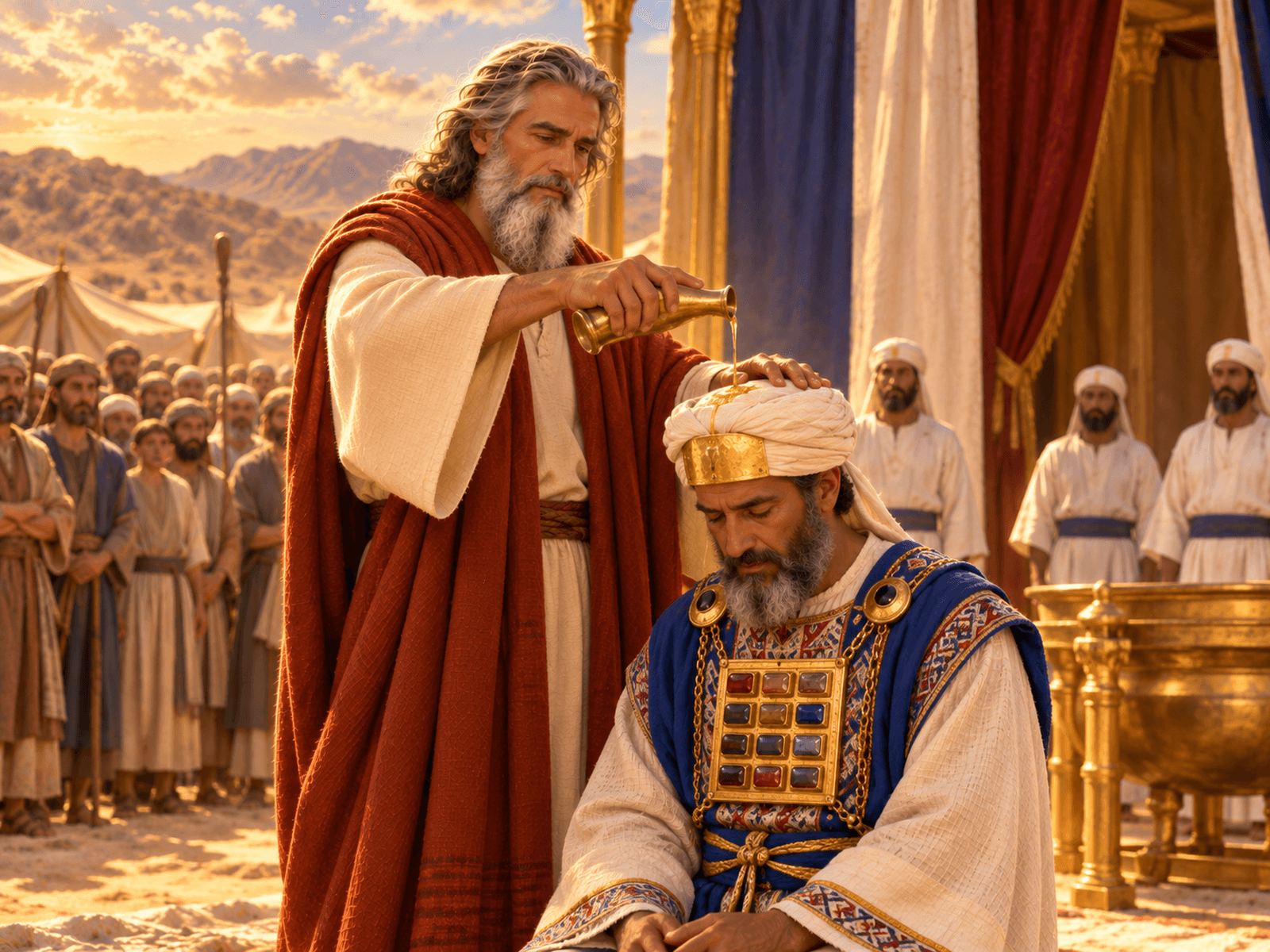
Illustrated scene from Moses's story: Aaron and His Sons Become Priests (Leviticus 8:1–9:24)
Meet the people of the Bible
Follow their lives in order, with illustrated scenes and Bible passages that tell their stories.
 Moses

Photo: Bukvoed, via Wikimedia Commons. License: CC BY 4.0. Source. Location: Burj Beitin, Beitin, Ramallah and al-Bireh Governorate, West Bank. Resized for the web.
Explore the places of the Bible
See where biblical events happened, why each place matters, and what archaeology helps us understand.
Bethel
Where Jacob dreamed of a stairway to heaven and met God.
Get full access with one subscription
Explore the people and places of the Bible. Read summaries of every book, with images and clear explanations covering every chapter. Access all these features and our Bible study tools with one subscription.
See PlansAsk AI about Leviticus 9:3
Ask a question about this verse and get a clear answer, with Bible references you can read for yourself.
Every Bible book, explained chapter by chapter
Explore summaries of every book of the Bible, with images and easy-to-understand explanations covering every chapter.
Keep studying Leviticus 9:3
Related Bible verses
At a Glance — the Book of Leviticus
- Author
- Traditionally attributed to Moses
- Written
- Around 1400 BC
- Genre
- Law (Pentateuch)
- Original Audience
- The Israelites in the wilderness
Frequently Asked Questions
Quick, clear answers about this verse
What does Leviticus 9:3 mean?
Leviticus 9:3 outlines God's instructions to the Israelites regarding specific animal offerings for sin and burnt sacrifices. It emphasizes the need for atonement and dedication to God through the presentation of unblemished animals.
What is the significance of the offerings in Leviticus 9:3?
The offerings in Leviticus 9:3 represent the Israelites' commitment to God and their desire for forgiveness. The requirement for the animals to be without blemish highlights the importance of purity in worship.
What is a sin offering according to Leviticus 9:3?
A sin offering, as mentioned in Leviticus 9:3, is an animal sacrifice intended to atone for the sins of the people. In this verse, a kid of the goats is specified for this purpose.
Why are the animals in Leviticus 9:3 described as 'without blemish'?
The phrase 'without blemish' in Leviticus 9:3 indicates that the animals offered must be perfect and unflawed, symbolizing the purity and seriousness of the sacrifices made to God.
Daily Verse — straight to your inbox
A verse and a 2-sentence plain-English explanation, every morning. Free. Unsubscribe anytime.