New Testament
Luke 13:35
Read the Bible in clear, modern English—easy to understand, faithful to the meaning, and written for everyday readers.
Look, your house is abandoned and desolate. I tell you, you won't see me again until the day comes when you say, 'Blessed is he who comes in the name of the Lord!'"
Compare translations
Behold, your house is left unto you desolate: and verily I say unto you, Ye shall not see me, until the time come when ye shall say, Blessed is he that cometh in the name of the Lord.
What Luke 13:35 means
Plain-English insight for readers
In this verse, Jesus is expressing sorrow over Jerusalem's rejection of Him. He refers to the city as 'your house' which signifies the temple and the people who inhabit it. By saying it is 'abandoned and desolate,' He indicates that without His presence, the spiritual life of the city is empty. The phrase 'you won't see me again' suggests a separation due to their unbelief. The latter part of the verse points to a future time when the people will recognize and welcome Him, quoting a messianic blessing from Psalm 118:26. This indicates hope for restoration when they finally acknowledge Him as the Messiah. Jesus' lament highlights the consequences of rejecting Him and the longing for a future reconciliation with His people.
How to apply Luke 13:35 to your life
This verse encourages us to recognize the importance of welcoming Jesus into our lives. It serves as a reminder that rejecting Him leads to spiritual emptiness. We should actively seek His presence and acknowledge Him as our Savior to avoid desolation in our spiritual journey.
Curated for this public verse page. Luke Summary
Explore more of the Bible
Learn the Bible through its people and places
Get to know the people in Scripture through illustrated stories, and explore the places where they lived and traveled.
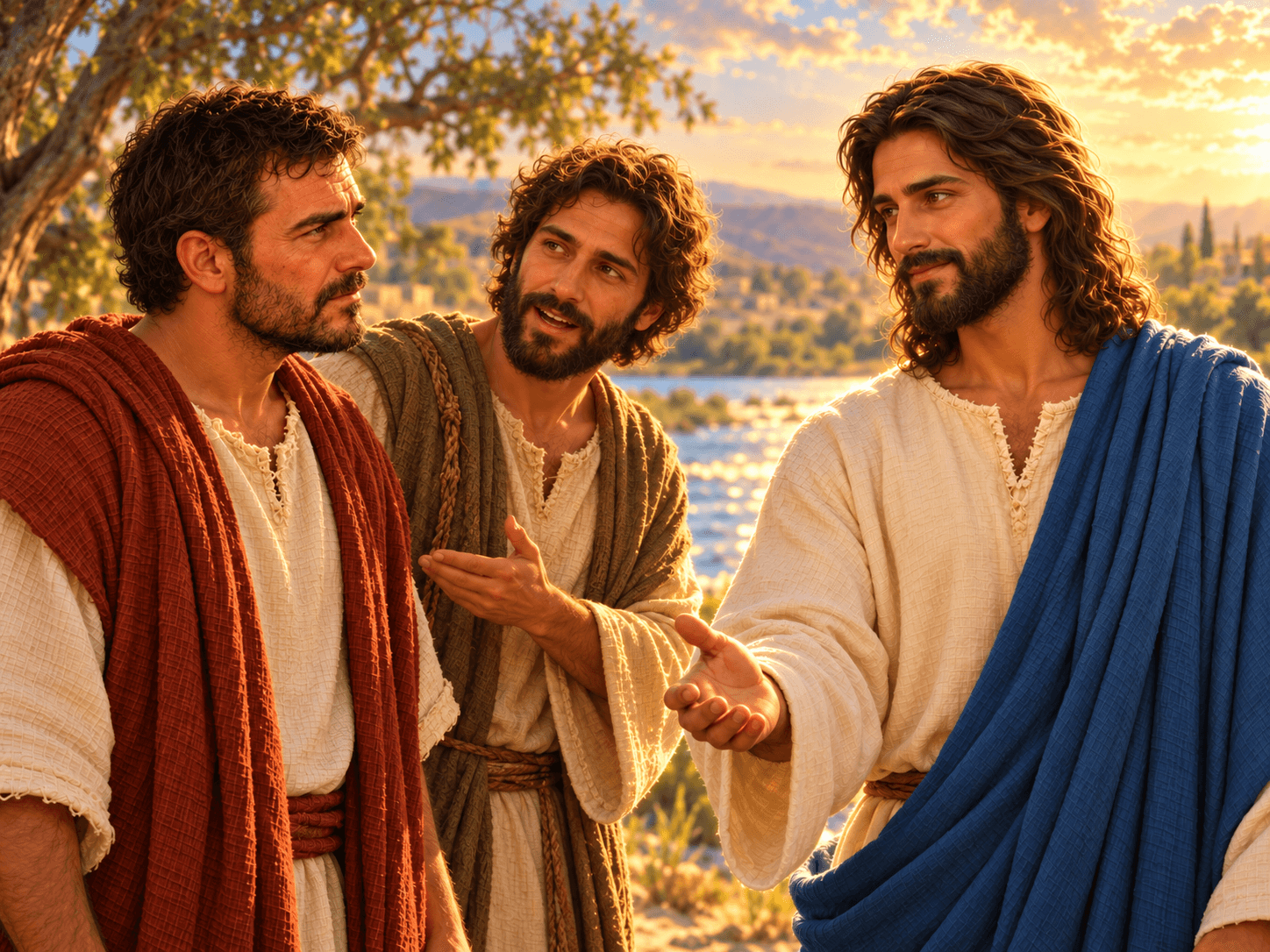
Illustrated scene from Peter's story: Andrew Brings Simon to Jesus (John 1:40–42)
Meet the people of the Bible
Follow their lives in order, with illustrated scenes and Bible passages that tell their stories.
 Peter

Photo: Gary Todd (Gary Lee Todd, Ph.D.), via Wikimedia Commons. License: CC0 1.0 Universal Public Domain Dedication. Source. Location: Southern end of the Temple Mount, Jerusalem Old City. Resized for the web.
Explore the places of the Bible
See where biblical events happened, why each place matters, and what archaeology helps us understand.
Jerusalem
David's capital, the city of the temple, and the place where Jesus died and rose again.
Get full access with one subscription
Explore the people and places of the Bible. Read summaries of every book, with images and clear explanations covering every chapter. Access all these features and our Bible study tools with one subscription.
See PlansAsk AI about Luke 13:35
Ask a question about this verse and get a clear answer, with Bible references you can read for yourself.
Every Bible book, explained chapter by chapter
Explore summaries of every book of the Bible, with images and easy-to-understand explanations covering every chapter.
Keep studying Luke 13:35
Related Bible verses
Related topics
At a Glance — the Book of Luke
- Author
- Luke the physician
- Written
- Around AD 60-62
- Genre
- Gospel and history
- Original Audience
- Gentile Christians (addressed to Theophilus)
Frequently Asked Questions
Quick, clear answers about this verse
What does Luke 13:35 mean?
In Luke 13:35, Jesus expresses sorrow over Jerusalem's rejection of Him, indicating that the city will be spiritually desolate without His presence. He also points to a future time when the people will recognize Him as the Messiah, quoting a blessing from Psalm 118:26.
What is the significance of 'your house' in Luke 13:35?
The phrase 'your house' in Luke 13:35 refers to Jerusalem and its temple, symbolizing the people and their spiritual state. Jesus uses it to highlight their abandonment of Him and the resulting desolation.
What does 'desolate' mean in Luke 13:35?
In Luke 13:35, 'desolate' means abandoned or empty, indicating that without Jesus, Jerusalem lacks spiritual life and fulfillment. It reflects the consequences of rejecting Him.
What is the messianic blessing in Luke 13:35?
The messianic blessing in Luke 13:35 is the phrase 'Blessed is he who comes in the name of the Lord!' This quote from Psalm 118:26 signifies a future recognition and acceptance of Jesus as the Messiah by the people.
Daily Verse — straight to your inbox
A verse and a 2-sentence plain-English explanation, every morning. Free. Unsubscribe anytime.