New Testament
Luke 4:11
Read the Bible in clear, modern English—easy to understand, faithful to the meaning, and written for everyday readers.
and, 'They will lift you up in their hands so that you won't even strike your foot against a stone.'"
Compare translations
And in their hands they shall bear thee up, lest at any time thou dash thy foot against a stone.
What Luke 4:11 means
Plain-English insight for readers
This verse is a quote from Psalm 91:12, where it emphasizes God's protection over those who trust in Him. The imagery of angels lifting someone up suggests that God provides safety and support, preventing harm from even minor accidents, like stubbing a toe. In the context of Luke 4, this verse is used by the devil to tempt Jesus, suggesting that He should test God's protection by throwing Himself off the temple. However, Jesus responds by affirming that one should not put God to the test. This highlights the importance of faith and trust in God's care without needing to prove it through reckless actions. The verse serves as a reminder that while God is our protector, we should not take unnecessary risks or challenge His authority.
How to apply Luke 4:11 to your life
In our daily lives, we can trust that God is watching over us and protecting us from harm. However, we should also exercise wisdom and not put ourselves in dangerous situations just to test His faithfulness. Instead, we should live with confidence in His care while making responsible choices.
Curated for this public verse page. Luke Summary
Learn the Bible through its people and places
Get to know the people in Scripture through illustrated stories, and explore the places where they lived and traveled.
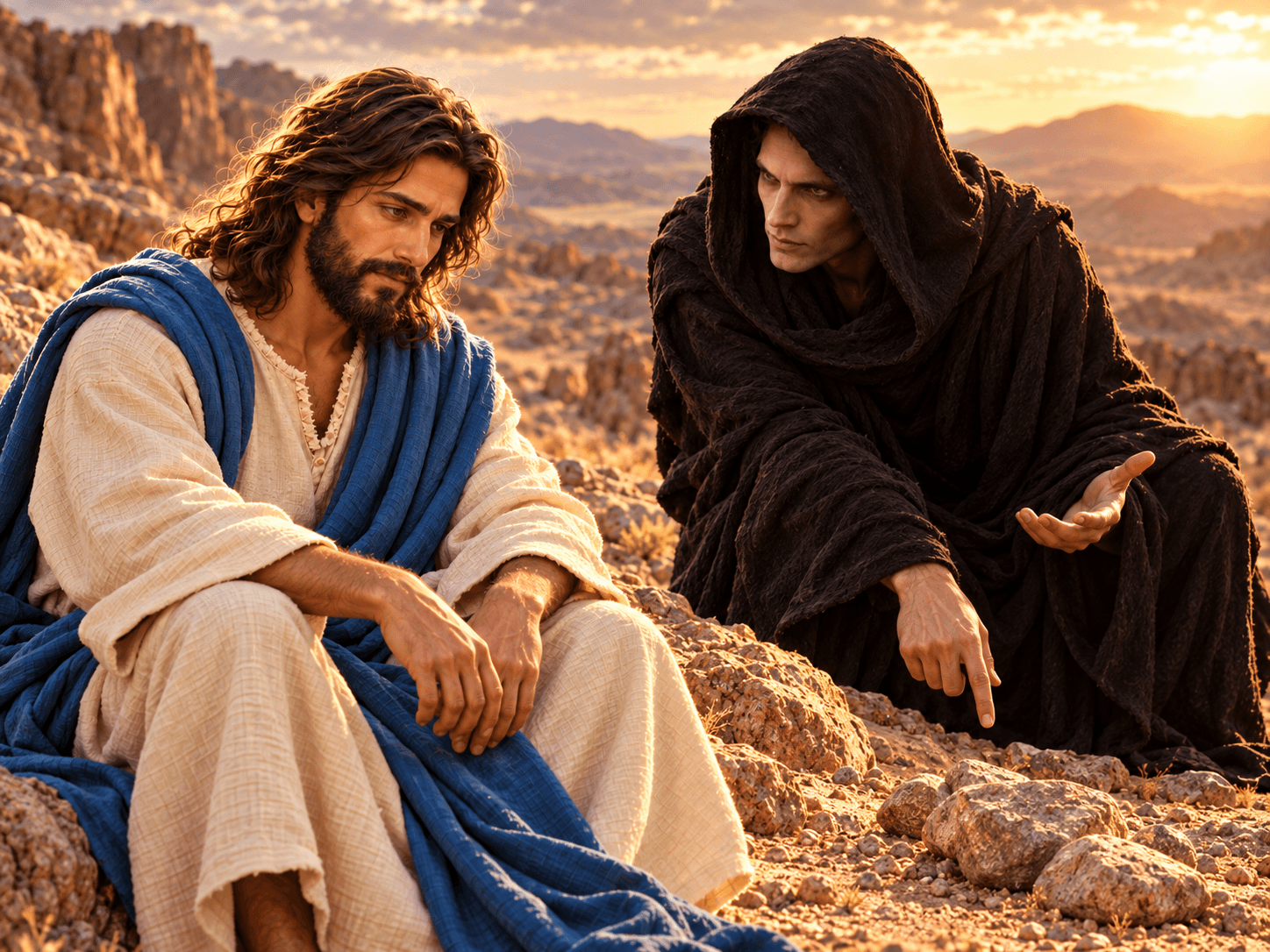
Illustrated scene from Jesus's story: Tempted in the Wilderness (Luke 4:1–13)
Meet the people of the Bible
Follow their lives in order, with illustrated scenes and Bible passages that tell their stories.
 Jesus

Photo: Gary Todd (Gary Lee Todd, Ph.D.), via Wikimedia Commons. License: CC0 1.0 Universal Public Domain Dedication. Source. Location: Southern end of the Temple Mount, Jerusalem Old City. Resized for the web.
Explore the places of the Bible
See where biblical events happened, why each place matters, and what archaeology helps us understand.
Jerusalem
David's capital, the city of the temple, and the place where Jesus died and rose again.
Get full access with one subscription
Explore the people and places of the Bible. Read summaries of every book, with images and clear explanations covering every chapter. Access all these features and our Bible study tools with one subscription.
See PlansAsk AI about Luke 4:11
Ask a question about this verse and get a clear answer, with Bible references you can read for yourself.
Every Bible book, explained chapter by chapter
Explore summaries of every book of the Bible, with images and easy-to-understand explanations covering every chapter.
Keep studying Luke 4:11
Related Bible verses
Key themes
Related topics
At a Glance — the Book of Luke
- Author
- Luke the physician
- Written
- Around AD 60-62
- Genre
- Gospel and history
- Original Audience
- Gentile Christians (addressed to Theophilus)
Frequently Asked Questions
Quick, clear answers about this verse
What does Luke 4:11 mean?
Luke 4:11 quotes Psalm 91:12, emphasizing God's protection for those who trust Him. It illustrates that God provides safety and support, preventing harm from even minor accidents.
What is the significance of angels in Luke 4:11?
In Luke 4:11, angels symbolize God's care and protection. The verse suggests that God sends angels to safeguard those who have faith, ensuring they are not harmed.
How does Luke 4:11 relate to temptation?
In Luke 4:11, the devil uses this verse to tempt Jesus into testing God's protection by jumping off the temple. Jesus responds by affirming that one should not put God to the test, highlighting the importance of faith.
What is the context of Luke 4:11?
Luke 4:11 occurs during Jesus' temptation in the wilderness, where the devil challenges Him to prove God's protection. It serves to illustrate the importance of trusting God without needing to test Him.
Daily Verse — straight to your inbox
A verse and a 2-sentence plain-English explanation, every morning. Free. Unsubscribe anytime.