New Testament
Mark 13:14
Read the Bible in clear, modern English—easy to understand, faithful to the meaning, and written for everyday readers.
When you see the abomination of desolation — the thing Daniel the prophet spoke about — standing where it should never be (let the reader understand what this means), then everyone in Judea must flee to the mountains.
Compare translations
But when ye shall see the abomination of desolation, spoken of by Daniel the prophet, standing where it ought not, (let him that readeth understand,) then let them that be in Judaea flee to the mountains:
What Mark 13:14 means
Plain-English insight for readers
In this verse, Jesus refers to a prophecy from the book of Daniel about a significant event known as the 'abomination of desolation.' This term describes a desecration of the holy place, indicating a time of great distress and judgment. Jesus warns that when this event occurs, it will signal a critical moment for the people in Judea. He urges them to flee to the mountains for safety, highlighting the urgency of the situation. The phrase 'let the reader understand' suggests that this message is meant to be taken seriously and requires discernment. The abomination signifies a turning point, and the call to action emphasizes the need for preparedness and swift response in times of crisis. This warning serves as a reminder of the importance of being alert to spiritual and physical dangers, especially in relation to faith and worship.
How to apply Mark 13:14 to your life
This verse encourages us to be vigilant and aware of the signs of the times. In our lives, we should remain spiritually alert and prepared to respond to challenges. Just as the people were urged to flee for safety, we too must seek refuge in our faith during difficult times, trusting in God's guidance and protection.
Curated for this public verse page. Mark Summary
Learn the Bible through its people and places
Get to know the people in Scripture through illustrated stories, and explore the places where they lived and traveled.
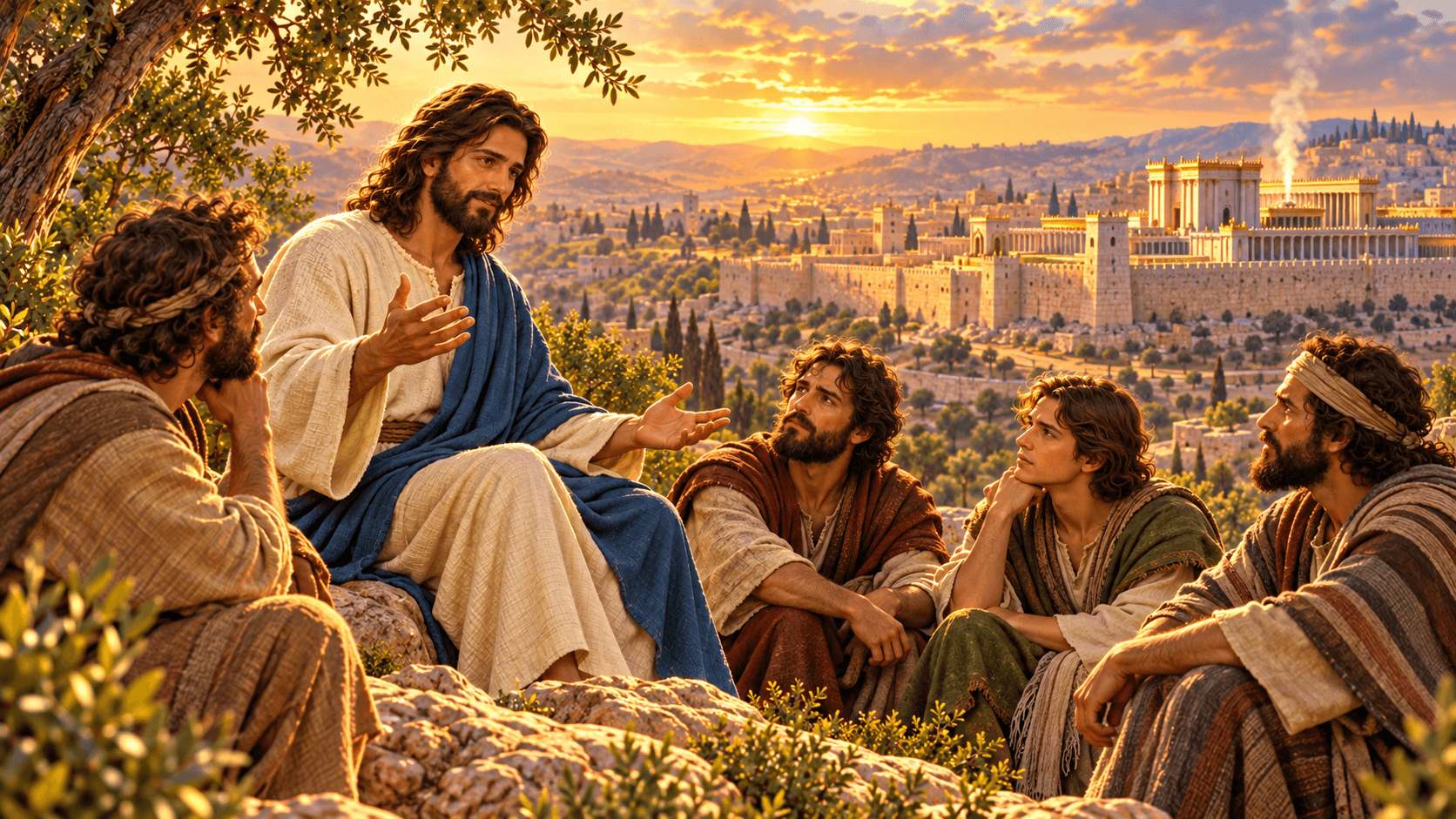
Illustrated scene from Jesus's story: Teaching on the Mount of Olives (Mark 13:1–37)
Meet the people of the Bible
Follow their lives in order, with illustrated scenes and Bible passages that tell their stories.
 Jesus

Photo: Photochrom print, Library of Congress Prints and Photographs Division (LCCN 2002725045). License: Public domain in the United States; Library of Congress states no known restrictions on publication. Source. Location: Nazareth, Israel; print preserved by the Library of Congress. Resized for the web.
Explore the places of the Bible
See where biblical events happened, why each place matters, and what archaeology helps us understand.
Nazareth
The small town in Galilee where Jesus grew up.
Get full access with one subscription
Explore the people and places of the Bible. Read summaries of every book, with images and clear explanations covering every chapter. Access all these features and our Bible study tools with one subscription.
See PlansAsk AI about Mark 13:14
Ask a question about this verse and get a clear answer, with Bible references you can read for yourself.
Every Bible book, explained chapter by chapter
Explore summaries of every book of the Bible, with images and easy-to-understand explanations covering every chapter.
Keep studying Mark 13:14
Related Bible verses
Related topics
At a Glance — the Book of Mark
- Author
- John Mark
- Written
- Around AD 55-65
- Genre
- Gospel
- Original Audience
- Roman and Gentile Christians
Frequently Asked Questions
Quick, clear answers about this verse
What does Mark 13:14 mean?
Mark 13:14 refers to a prophecy about a significant event called the 'abomination of desolation,' which indicates a time of great distress. Jesus warns that when this event occurs, people in Judea should flee to the mountains for safety.
What is the abomination of desolation in Mark 13:14?
The 'abomination of desolation' is a term from the book of Daniel that signifies a desecration of a holy place. In Mark 13:14, it represents a critical moment of judgment and distress that requires immediate action from the people.
Why does Jesus say to flee to the mountains in Mark 13:14?
Jesus instructs people to flee to the mountains as a means of escape during a time of impending crisis. This emphasizes the urgency of the situation and the need for quick action to ensure safety.
What does 'let the reader understand' mean in Mark 13:14?
The phrase 'let the reader understand' in Mark 13:14 indicates that the message is significant and requires careful consideration. It serves as a reminder to be alert and discerning about the implications of the prophecy.
Daily Verse — straight to your inbox
A verse and a 2-sentence plain-English explanation, every morning. Free. Unsubscribe anytime.