New Testament
Mark 14:44
Read the Bible in clear, modern English—easy to understand, faithful to the meaning, and written for everyday readers.
Judas had arranged a signal with them: "The one I kiss is the man you want. Grab him and take him away under guard."
Compare translations
And he that betrayed him had given them a token, saying, Whomsoever I shall kiss, that same is he; take him, and lead him away safely.
What Mark 14:44 means
Plain-English insight for readers
In this verse, Judas Iscariot, one of Jesus' twelve disciples, betrays Jesus by agreeing to identify him to the authorities with a kiss. This act of betrayal is significant because a kiss is typically a sign of affection and friendship, making Judas' actions even more treacherous. He had previously conspired with the religious leaders to hand Jesus over to them, and this signal was a prearranged way to ensure that the guards would know exactly who to arrest. The phrase 'take him away under guard' indicates that they intended to secure Jesus and prevent any escape or rescue. This moment marks a pivotal point in the narrative of Jesus' arrest and sets in motion the events leading to his crucifixion. Judas' betrayal highlights themes of loyalty, deception, and the consequences of greed, as he had been motivated by money to betray his teacher and friend.
How to apply Mark 14:44 to your life
This verse reminds us to examine our own relationships and commitments. Are we being loyal to those we care about, or are we allowing greed or other motivations to lead us astray? It encourages us to choose integrity and honesty in our interactions with others.
Curated for this public verse page. Mark Summary
Learn the Bible through its people and places
Get to know the people in Scripture through illustrated stories, and explore the places where they lived and traveled.
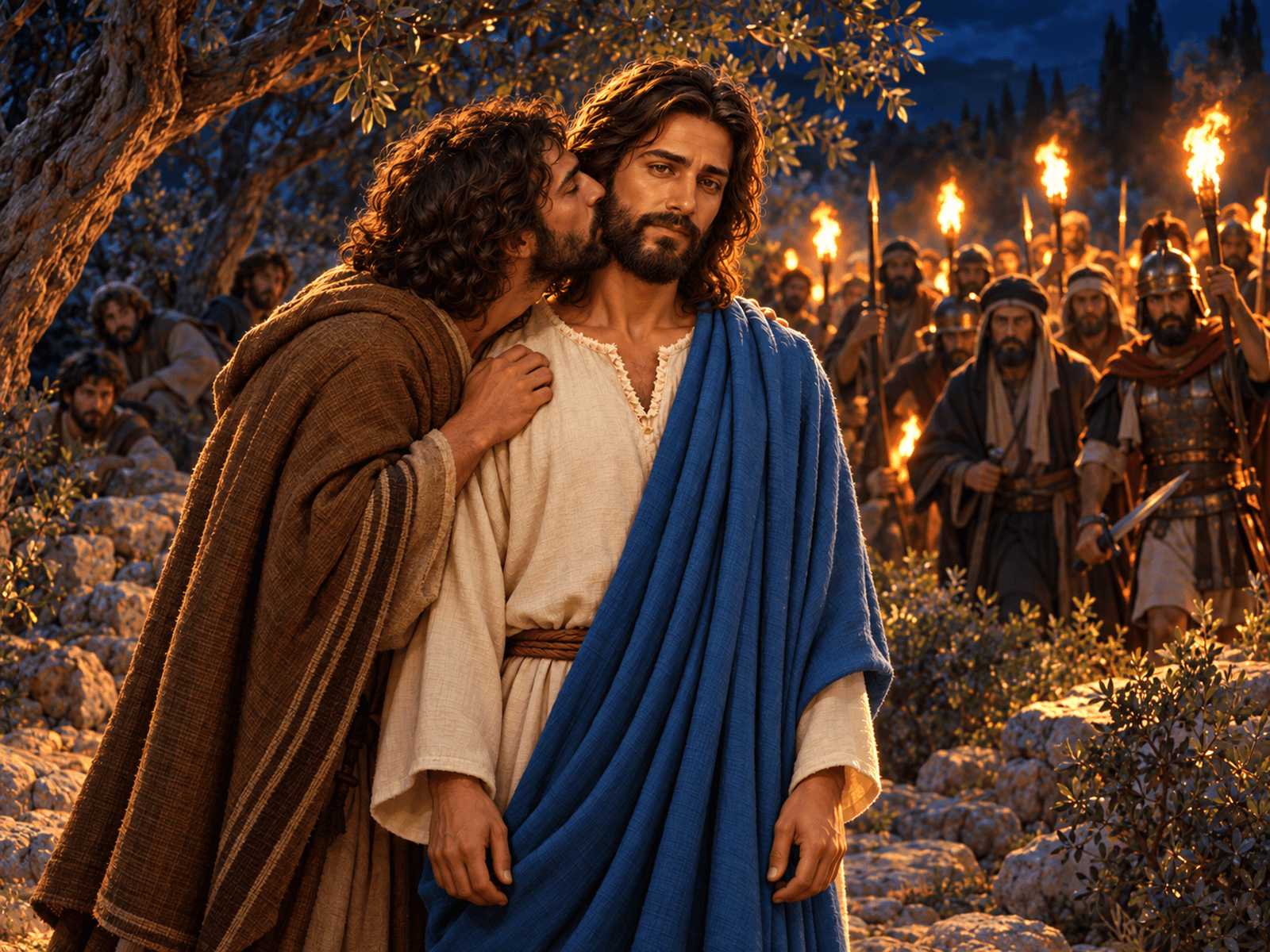
Illustrated scene from Jesus's story: The Arrest (Mark 14:43–52)
Meet the people of the Bible
Follow their lives in order, with illustrated scenes and Bible passages that tell their stories.
 Jesus

Photo: zeevveez, via Wikimedia Commons. License: CC BY 2.0. Source. Location: Capernaum, on the northern shore of the Sea of Galilee. Resized for the web.
Explore the places of the Bible
See where biblical events happened, why each place matters, and what archaeology helps us understand.
Capernaum
Jesus' home base by the Sea of Galilee, and the town where Peter lived.
Get full access with one subscription
Explore the people and places of the Bible. Read summaries of every book, with images and clear explanations covering every chapter. Access all these features and our Bible study tools with one subscription.
See PlansAsk AI about Mark 14:44
Ask a question about this verse and get a clear answer, with Bible references you can read for yourself.
Every Bible book, explained chapter by chapter
Explore summaries of every book of the Bible, with images and easy-to-understand explanations covering every chapter.
Keep studying Mark 14:44
Related Bible verses
At a Glance — the Book of Mark
- Author
- John Mark
- Written
- Around AD 55-65
- Genre
- Gospel
- Original Audience
- Roman and Gentile Christians
Frequently Asked Questions
Quick, clear answers about this verse
What does Mark 14:44 mean?
Mark 14:44 describes Judas Iscariot betraying Jesus by using a kiss as a signal to identify him to the authorities. This act of betrayal is significant because it contrasts the expected affection of a kiss with the treachery of handing over a friend.
What is the significance of the kiss in Mark 14:44?
The kiss in Mark 14:44 symbolizes betrayal, as it is typically a gesture of love and friendship. Judas' use of a kiss to identify Jesus highlights the depth of his treachery and the painful nature of his betrayal.
Why did Judas betray Jesus in Mark 14:44?
Judas betrayed Jesus for money, having conspired with religious leaders to hand him over. His actions reflect themes of greed and the consequences of turning against those we care about.
What themes are present in Mark 14:44?
Mark 14:44 presents themes of betrayal, loyalty, deception, and the consequences of greed. It illustrates how personal motivations can lead to significant moral failures.
Daily Verse — straight to your inbox
A verse and a 2-sentence plain-English explanation, every morning. Free. Unsubscribe anytime.