New Testament
Mark 14:64
Read the Bible in clear, modern English—easy to understand, faithful to the meaning, and written for everyday readers.
You've heard the blasphemy! What's your verdict?" They all condemned him as deserving death.
Compare translations
Ye have heard the blasphemy: what think ye? And they all condemned him to be guilty of death.
What Mark 14:64 means
Plain-English insight for readers
In this verse, the religious leaders are reacting to Jesus' claims, which they consider blasphemous. They have heard His statements about His identity and authority, which challenge their beliefs and threaten their power. The question posed, 'What think ye?' invites them to express their judgment. Their unanimous decision to condemn Him to death reflects their rejection of His message and their determination to eliminate what they see as a threat to their religious order. This moment is pivotal as it marks the culmination of their opposition to Jesus, leading to His crucifixion. The term 'blasphemy' indicates that they believe He has spoken irreverently about God, which, in their view, warrants the death penalty. This event highlights the tension between Jesus and the religious authorities, showcasing the conflict between divine truth and human tradition.
How to apply Mark 14:64 to your life
This verse challenges us to consider how we respond to truth, especially when it conflicts with our beliefs or traditions. It encourages self-reflection on our judgments of others and reminds us to seek understanding rather than condemnation. We should be open to the truth, even when it is uncomfortable.
Curated for this public verse page. Mark Summary
Learn the Bible through its people and places
Get to know the people in Scripture through illustrated stories, and explore the places where they lived and traveled.
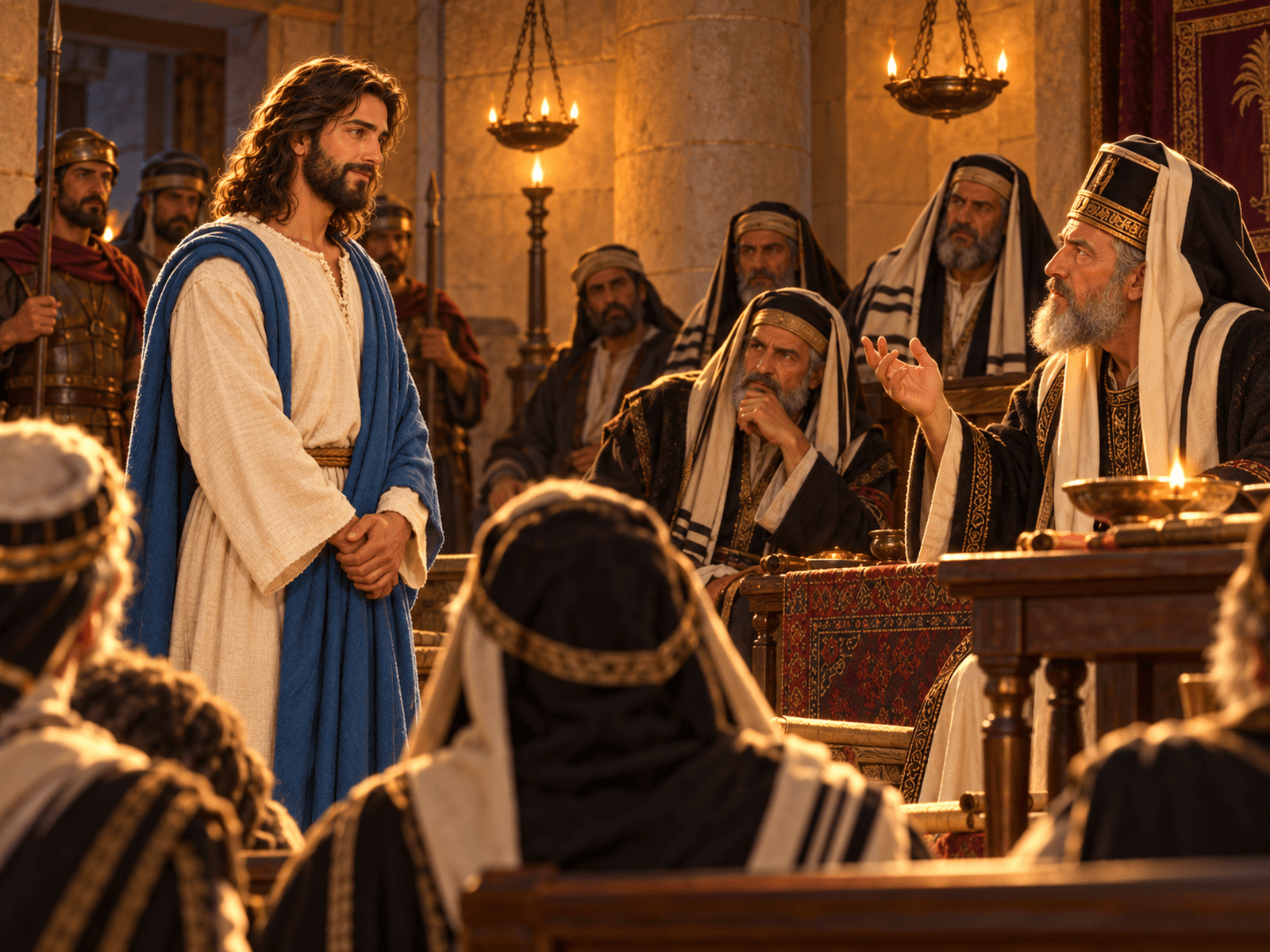
Illustrated scene from Jesus's story: Before the High Priest (Mark 14:53–65)
Meet the people of the Bible
Follow their lives in order, with illustrated scenes and Bible passages that tell their stories.
 Jesus

Photo: zeevveez, via Wikimedia Commons. License: CC BY 2.0. Source. Location: Capernaum, on the northern shore of the Sea of Galilee. Resized for the web.
Explore the places of the Bible
See where biblical events happened, why each place matters, and what archaeology helps us understand.
Capernaum
Jesus' home base by the Sea of Galilee, and the town where Peter lived.
Get full access with one subscription
Explore the people and places of the Bible. Read summaries of every book, with images and clear explanations covering every chapter. Access all these features and our Bible study tools with one subscription.
See PlansAsk AI about Mark 14:64
Ask a question about this verse and get a clear answer, with Bible references you can read for yourself.
Every Bible book, explained chapter by chapter
Explore summaries of every book of the Bible, with images and easy-to-understand explanations covering every chapter.
Keep studying Mark 14:64
Related Bible verses
Key themes
At a Glance — the Book of Mark
- Author
- John Mark
- Written
- Around AD 55-65
- Genre
- Gospel
- Original Audience
- Roman and Gentile Christians
Frequently Asked Questions
Quick, clear answers about this verse
What does Mark 14:64 say about blasphemy?
In Mark 14:64, the religious leaders accuse Jesus of blasphemy based on His claims about His identity and authority. They believe that His statements are irreverent and challenge their understanding of God, leading them to unanimously condemn Him to death. This highlights the seriousness with which they viewed His words and the conflict between Jesus' divine truth and their established beliefs.
Why did the religious leaders condemn Jesus to death?
The religious leaders condemned Jesus to death because they perceived His claims as blasphemous. In their view, He was speaking irreverently about God and challenging their authority. Their decision reflects their fear of losing power and control over the religious narrative, as well as their unwillingness to accept the truth of His message, which threatened their traditions.
What is the significance of the phrase 'What think ye?' in this verse?
The phrase 'What think ye?' serves as an invitation for the religious leaders to express their judgment on Jesus' claims. It underscores the gravity of the moment, as they are being asked to make a definitive decision about His fate. This question highlights the tension between their authority and the truth of Jesus' identity, ultimately leading to their collective condemnation of Him.
How does Mark 14:64 relate to the theme of truth vs. tradition?
Mark 14:64 exemplifies the theme of truth versus tradition by showcasing the conflict between Jesus' divine message and the established beliefs of the religious leaders. Their condemnation of Him reveals their commitment to tradition over the acceptance of truth, illustrating how adherence to human authority can lead to the rejection of divine revelation.
Daily Verse — straight to your inbox
A verse and a 2-sentence plain-English explanation, every morning. Free. Unsubscribe anytime.