New Testament
Mark 15:31
Read the Bible in clear, modern English—easy to understand, faithful to the meaning, and written for everyday readers.
The chief priests and scribes mocked him the same way among themselves: "He saved others, but he can't save himself.
Compare translations
Likewise also the chief priests mocking said among themselves with the scribes, He saved others; himself he cannot save.
What Mark 15:31 means
Plain-English insight for readers
In this verse, the chief priests and scribes ridicule Jesus while he is on the cross. They point out the irony of his situation: he has performed miracles and saved many people, yet he seems powerless to save himself from crucifixion. This mocking highlights their disbelief and contempt for Jesus, as they fail to understand his mission. Instead of recognizing him as the Messiah, they see him as a failure. Their words reflect a common misunderstanding of Jesus' purpose; he did not come to save himself but to sacrifice himself for humanity's sins. This moment captures the tension between worldly expectations of power and the divine plan of salvation through suffering. It serves as a poignant reminder of the rejection Jesus faced, even from religious leaders, and emphasizes the depth of his sacrifice for others.
How to apply Mark 15:31 to your life
This verse challenges us to reflect on our own understanding of Jesus' sacrifice. Are we sometimes like the chief priests, focusing on worldly expectations rather than the deeper spiritual truths? We should strive to appreciate the significance of Jesus' actions and embrace the humility and love he demonstrated, even in suffering.
Curated for this public verse page. Mark Summary
Learn the Bible through its people and places
Get to know the people in Scripture through illustrated stories, and explore the places where they lived and traveled.
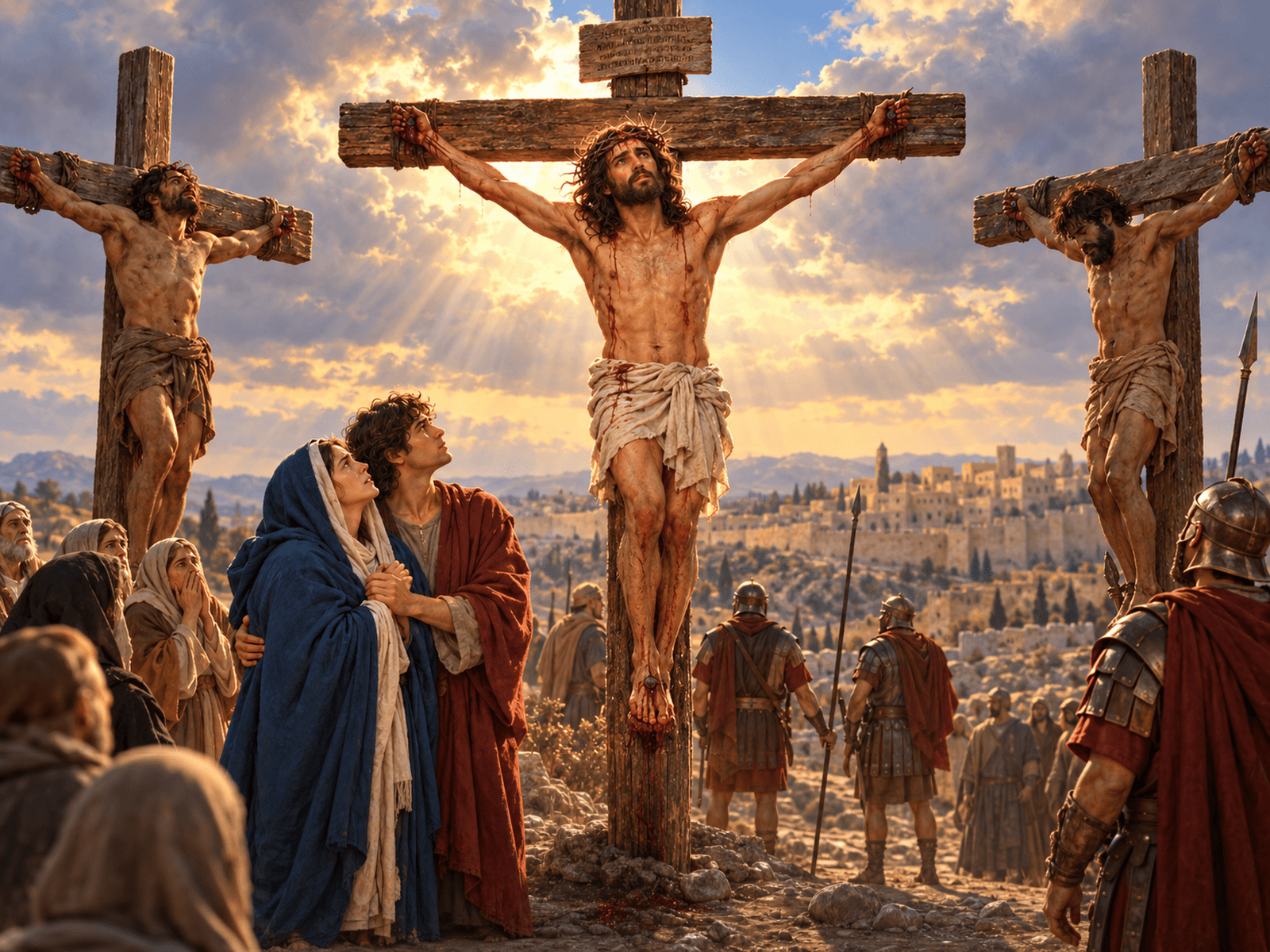
Illustrated scene from Jesus's story: The Crucifixion (Mark 15:21–32)
Meet the people of the Bible
Follow their lives in order, with illustrated scenes and Bible passages that tell their stories.
 Jesus

Photo: Gary Todd (Gary Lee Todd, Ph.D.), via Wikimedia Commons. License: CC0 1.0 Universal Public Domain Dedication. Source. Location: Southern end of the Temple Mount, Jerusalem Old City. Resized for the web.
Explore the places of the Bible
See where biblical events happened, why each place matters, and what archaeology helps us understand.
Jerusalem
David's capital, the city of the temple, and the place where Jesus died and rose again.
Get full access with one subscription
Explore the people and places of the Bible. Read summaries of every book, with images and clear explanations covering every chapter. Access all these features and our Bible study tools with one subscription.
See PlansAsk AI about Mark 15:31
Ask a question about this verse and get a clear answer, with Bible references you can read for yourself.
Every Bible book, explained chapter by chapter
Explore summaries of every book of the Bible, with images and easy-to-understand explanations covering every chapter.
Keep studying Mark 15:31
Related Bible verses
Related topics
At a Glance — the Book of Mark
- Author
- John Mark
- Written
- Around AD 55-65
- Genre
- Gospel
- Original Audience
- Roman and Gentile Christians
Frequently Asked Questions
Quick, clear answers about this verse
What does Mark 15:31 mean?
Mark 15:31 describes the chief priests and scribes mocking Jesus while he is crucified. They highlight the irony that although he saved others, he appears unable to save himself, reflecting their disbelief and misunderstanding of his true mission.
What is the significance of the mocking in Mark 15:31?
The mocking in Mark 15:31 emphasizes the rejection Jesus faced from religious leaders. It illustrates their failure to recognize him as the Messiah and highlights the contrast between worldly expectations of power and Jesus' purpose of sacrificial love.
What does 'He saved others; himself he cannot save' mean?
This phrase reflects the irony of Jesus' situation, as the chief priests point out that he performed miracles for others but seems powerless to save himself. It underscores their misunderstanding of his mission, which was to sacrifice himself for humanity.
How does Mark 15:31 relate to the theme of sacrifice?
Mark 15:31 relates to the theme of sacrifice by showing that Jesus' inability to save himself was part of his greater purpose. His crucifixion was a deliberate act of love and sacrifice for the sins of humanity, contrasting with the expectations of his critics.
Daily Verse — straight to your inbox
A verse and a 2-sentence plain-English explanation, every morning. Free. Unsubscribe anytime.