New Testament
Mark 15:7
Read the Bible in clear, modern English—easy to understand, faithful to the meaning, and written for everyday readers.
A man named Barabbas was in prison with others who had taken part in an uprising with him, and he had committed murder during the insurrection.
Compare translations
And there was one named Barabbas, which lay bound with them that had made insurrection with him, who had committed murder in the insurrection.
What Mark 15:7 means
Plain-English insight for readers
In this verse, we learn about Barabbas, a prisoner who was involved in a rebellion against the Roman authorities. He was not just a participant; he had committed murder during this uprising, which indicates the severity of his actions. Barabbas represents a figure of rebellion and violence, contrasting sharply with Jesus, who is known for His teachings of peace and love. The mention of Barabbas in the context of Jesus' trial highlights the choice that the crowd would soon face: to release a violent criminal or to free Jesus, who had done no wrong. This moment is significant as it sets the stage for the events leading to the crucifixion of Jesus, illustrating the theme of injustice and the complexities of human choice. Barabbas' story serves as a reminder of the consequences of rebellion and the nature of forgiveness, as he was ultimately released while Jesus was condemned.
How to apply Mark 15:7 to your life
This verse challenges us to reflect on our choices and the consequences they carry. Just as the crowd had to choose between Barabbas and Jesus, we too face daily decisions that reflect our values. Choosing compassion and peace over violence is essential in our lives.
Curated for this public verse page. Mark Summary
Learn the Bible through its people and places
Get to know the people in Scripture through illustrated stories, and explore the places where they lived and traveled.
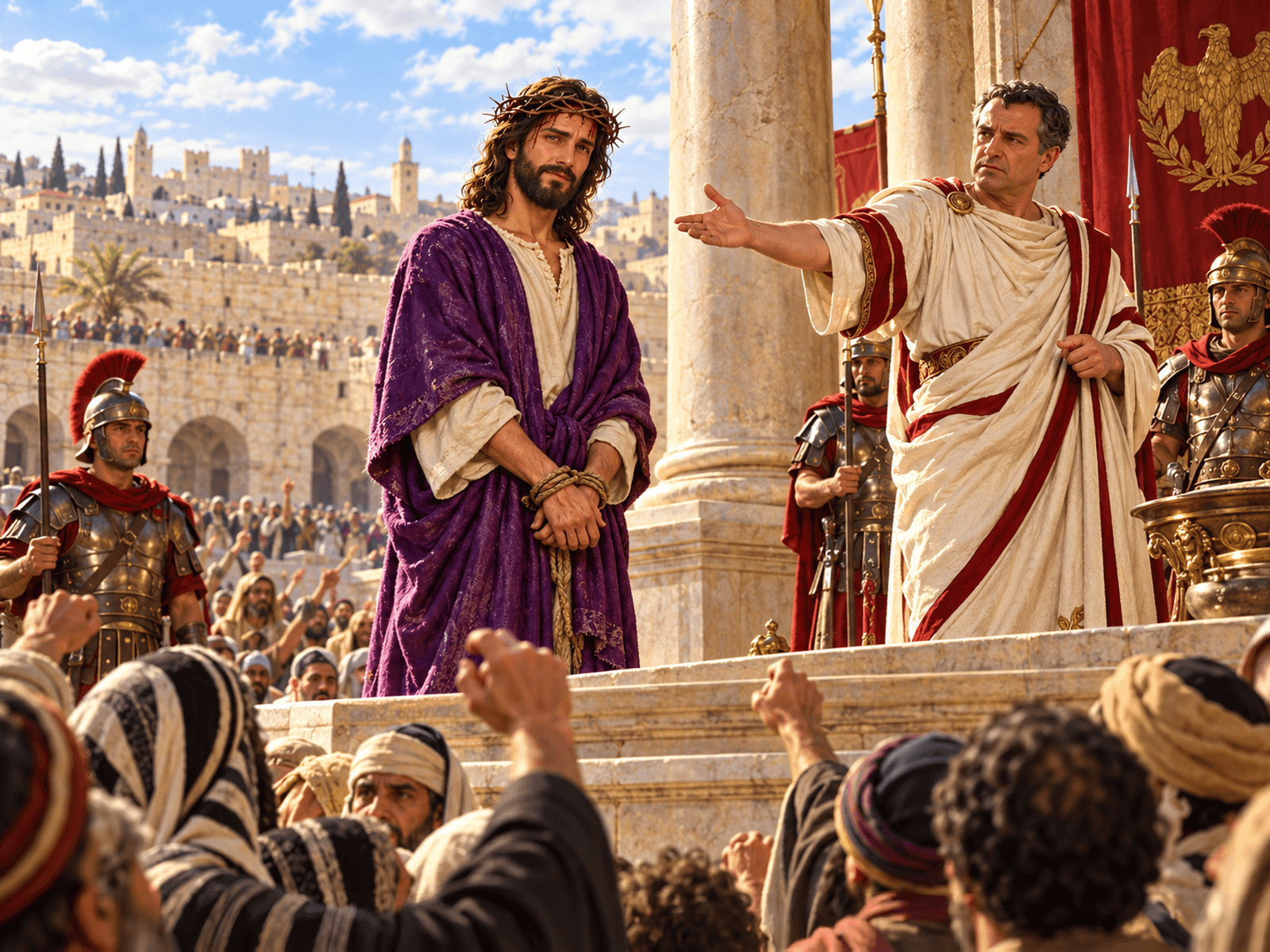
Illustrated scene from Jesus's story: On Trial Before Pilate (Mark 15:1–20)
Meet the people of the Bible
Follow their lives in order, with illustrated scenes and Bible passages that tell their stories.
 Jesus

Photo: Gary Todd (Gary Lee Todd, Ph.D.), via Wikimedia Commons. License: CC0 1.0 Universal Public Domain Dedication. Source. Location: Southern end of the Temple Mount, Jerusalem Old City. Resized for the web.
Explore the places of the Bible
See where biblical events happened, why each place matters, and what archaeology helps us understand.
Jerusalem
David's capital, the city of the temple, and the place where Jesus died and rose again.
Get full access with one subscription
Explore the people and places of the Bible. Read summaries of every book, with images and clear explanations covering every chapter. Access all these features and our Bible study tools with one subscription.
See PlansAsk AI about Mark 15:7
Ask a question about this verse and get a clear answer, with Bible references you can read for yourself.
Every Bible book, explained chapter by chapter
Explore summaries of every book of the Bible, with images and easy-to-understand explanations covering every chapter.
Keep studying Mark 15:7
Related Bible verses
At a Glance — the Book of Mark
- Author
- John Mark
- Written
- Around AD 55-65
- Genre
- Gospel
- Original Audience
- Roman and Gentile Christians
Frequently Asked Questions
Quick, clear answers about this verse
Who was Barabbas in Mark 15:7?
Barabbas was a prisoner mentioned in Mark 15:7 who had participated in an insurrection against Roman rule and had committed murder during this uprising. His actions represent rebellion and violence, contrasting with Jesus' message of peace.
What does Barabbas symbolize in the context of Jesus' trial?
Barabbas symbolizes rebellion and the choice between violence and peace. His release instead of Jesus highlights the theme of injustice and the difficult choices people face, reflecting the complexities of human nature and societal values.
Why was Barabbas chosen over Jesus by the crowd?
The crowd chose Barabbas over Jesus due to a combination of factors, including the influence of the religious leaders, the desire for a revolutionary figure, and the societal pressures of the time. This choice underscores the theme of injustice and the fickleness of public opinion.
What lessons can we learn from Barabbas' story?
Barabbas' story teaches us about the consequences of our choices and the nature of forgiveness. It challenges us to reflect on our values and decisions, encouraging us to choose compassion and peace over rebellion and violence in our daily lives.
Daily Verse — straight to your inbox
A verse and a 2-sentence plain-English explanation, every morning. Free. Unsubscribe anytime.