New Testament
Mark 15:9
Read the Bible in clear, modern English—easy to understand, faithful to the meaning, and written for everyday readers.
Pilate responded, "Do you want me to release the King of the Jews to you?"
Compare translations
But Pilate answered them, saying, Will ye that I release unto you the King of the Jews?
What Mark 15:9 means
Plain-English insight for readers
In this verse, Pilate, the Roman governor, addresses the crowd that has gathered to demand the execution of Jesus. He offers to release a prisoner as part of a Passover tradition, specifically asking if they want him to release Jesus, whom he refers to as 'the King of the Jews.' This question highlights the tension between the political authority of Rome and the religious aspirations of the Jewish people. Pilate's use of the title 'King of the Jews' is significant; it reflects the accusations against Jesus and the expectations of the crowd. Pilate seems to be trying to gauge the crowd's feelings about Jesus, perhaps hoping to find a way to avoid executing someone he perceives as innocent. This moment sets the stage for the crowd's response, which ultimately leads to Jesus' crucifixion, illustrating the conflict between justice and public opinion.
How to apply Mark 15:9 to your life
This verse reminds us of the importance of standing up for what is right, even when faced with public pressure. It challenges us to consider how we respond to injustice and whether we prioritize truth over popular opinion. We should strive to seek justice and advocate for those who are wronged.
Curated for this public verse page. Mark Summary
Learn the Bible through its people and places
Get to know the people in Scripture through illustrated stories, and explore the places where they lived and traveled.
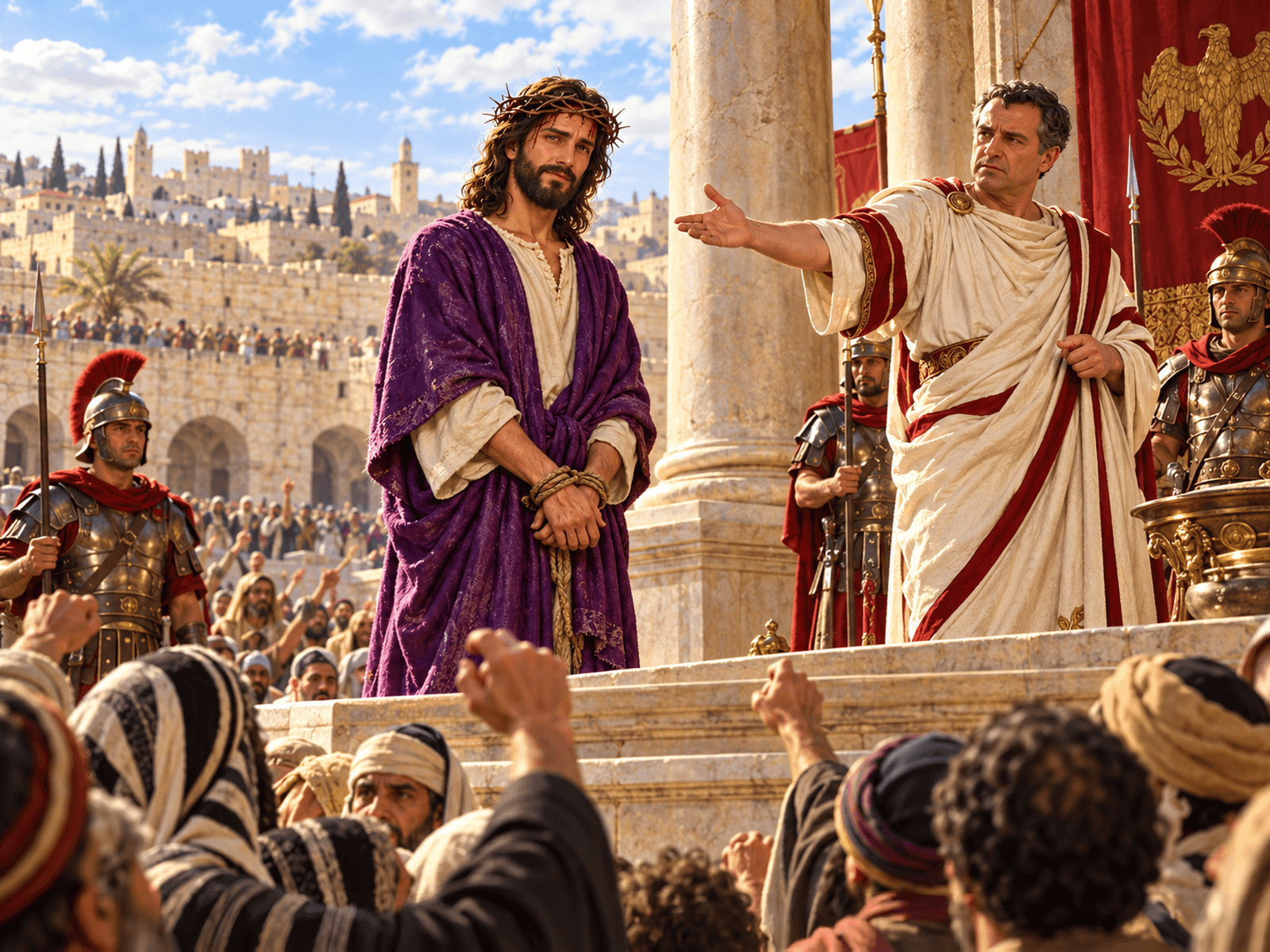
Illustrated scene from Jesus's story: On Trial Before Pilate (Mark 15:1–20)
Meet the people of the Bible
Follow their lives in order, with illustrated scenes and Bible passages that tell their stories.
 Jesus

Photo: Gary Todd (Gary Lee Todd, Ph.D.), via Wikimedia Commons. License: CC0 1.0 Universal Public Domain Dedication. Source. Location: Southern end of the Temple Mount, Jerusalem Old City. Resized for the web.
Explore the places of the Bible
See where biblical events happened, why each place matters, and what archaeology helps us understand.
Jerusalem
David's capital, the city of the temple, and the place where Jesus died and rose again.
Get full access with one subscription
Explore the people and places of the Bible. Read summaries of every book, with images and clear explanations covering every chapter. Access all these features and our Bible study tools with one subscription.
See PlansAsk AI about Mark 15:9
Ask a question about this verse and get a clear answer, with Bible references you can read for yourself.
Every Bible book, explained chapter by chapter
Explore summaries of every book of the Bible, with images and easy-to-understand explanations covering every chapter.
Keep studying Mark 15:9
Related Bible verses
At a Glance — the Book of Mark
- Author
- John Mark
- Written
- Around AD 55-65
- Genre
- Gospel
- Original Audience
- Roman and Gentile Christians
Frequently Asked Questions
Quick, clear answers about this verse
What does Mark 15:9 mean?
Mark 15:9 captures Pilate's question to the crowd about releasing Jesus, referred to as 'the King of the Jews.' This moment highlights the tension between Roman authority and Jewish expectations, as Pilate seeks to understand the crowd's feelings about Jesus before making a decision.
What is the significance of 'King of the Jews' in Mark 15:9?
In Mark 15:9, the title 'King of the Jews' reflects the accusations against Jesus and the hopes of the Jewish people for a Messiah. Pilate's use of this title underscores the political and religious conflict surrounding Jesus' identity and mission.
How does Mark 15:9 relate to themes of authority and injustice?
Mark 15:9 highlights the authority of Pilate as a Roman governor and the injustice faced by Jesus, who is wrongfully accused. The verse reflects the struggle between political power and the quest for truth, emphasizing how public opinion can influence justice.
What can we learn from Mark 15:9 about public opinion?
Mark 15:9 teaches us about the impact of public opinion on decision-making, especially in matters of justice. It challenges us to consider how we respond to societal pressures and the importance of advocating for what is right, even when it is unpopular.
Daily Verse — straight to your inbox
A verse and a 2-sentence plain-English explanation, every morning. Free. Unsubscribe anytime.