New Testament
Mark 4:32
Read the Bible in clear, modern English—easy to understand, faithful to the meaning, and written for everyday readers.
But once it's planted, it grows up and becomes the largest of all garden plants, putting out branches so big that birds can nest in its shade."
Compare translations
But when it is sown, it groweth up, and becometh greater than all herbs, and shooteth out great branches; so that the fowls of the air may lodge under the shadow of it.
What Mark 4:32 means
Plain-English insight for readers
This verse uses the imagery of a mustard seed, which is very small when planted, to illustrate how something seemingly insignificant can grow into something great. Once the seed is sown, it grows into a large plant, larger than all other garden plants. Its branches become so extensive that birds can find shelter and build nests in its shade. This metaphor highlights the Kingdom of God, suggesting that it starts small but has the potential to expand and provide refuge and support for many. The growth of the mustard plant symbolizes the transformative power of faith and the way God's influence can spread and encompass a wide community, offering safety and comfort to those who seek it.
How to apply Mark 4:32 to your life
This verse encourages us to have faith in small beginnings. Just as the mustard seed grows into a large plant, our small acts of kindness and faith can lead to significant impacts in our communities. We should not underestimate the power of our contributions, no matter how small they may seem.
Curated for this public verse page. Mark Summary
Learn the Bible through its people and places
Get to know the people in Scripture through illustrated stories, and explore the places where they lived and traveled.
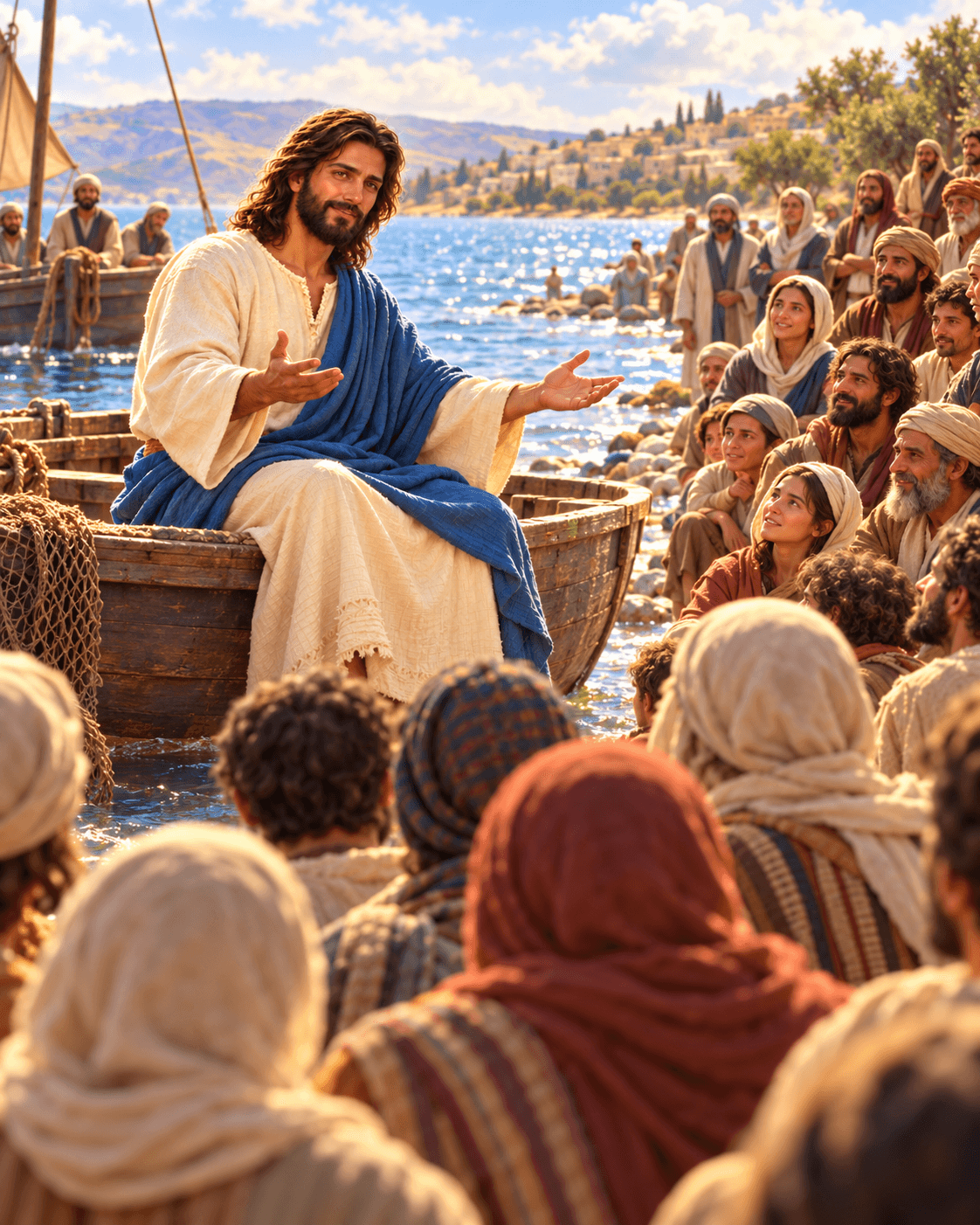
Illustrated scene from Jesus's story: Parables by the Sea (Mark 4:1–34)
Meet the people of the Bible
Follow their lives in order, with illustrated scenes and Bible passages that tell their stories.
 Jesus

Photo: Photochrom print, Library of Congress Prints and Photographs Division (LCCN 2002725045). License: Public domain in the United States; Library of Congress states no known restrictions on publication. Source. Location: Nazareth, Israel; print preserved by the Library of Congress. Resized for the web.
Explore the places of the Bible
See where biblical events happened, why each place matters, and what archaeology helps us understand.
Nazareth
The small town in Galilee where Jesus grew up.
Get full access with one subscription
Explore the people and places of the Bible. Read summaries of every book, with images and clear explanations covering every chapter. Access all these features and our Bible study tools with one subscription.
See PlansAsk AI about Mark 4:32
Ask a question about this verse and get a clear answer, with Bible references you can read for yourself.
Every Bible book, explained chapter by chapter
Explore summaries of every book of the Bible, with images and easy-to-understand explanations covering every chapter.
Keep studying Mark 4:32
Related Bible verses
Related topics
At a Glance — the Book of Mark
- Author
- John Mark
- Written
- Around AD 55-65
- Genre
- Gospel
- Original Audience
- Roman and Gentile Christians
Frequently Asked Questions
Quick, clear answers about this verse
What does the mustard seed represent in Mark 4:32?
In Mark 4:32, the mustard seed represents the Kingdom of God and its growth from small beginnings to something significant. The imagery illustrates how faith, even when it starts small, can lead to great outcomes and impact many lives, emphasizing the transformative power of God's influence.
How can Mark 4:32 inspire us in our daily lives?
Mark 4:32 inspires us to recognize the potential in small actions and beginnings. It encourages us to have faith that our small contributions, whether acts of kindness or efforts in our communities, can lead to significant change and provide support and shelter to others, just as the mustard plant does for birds.
What is the significance of birds nesting in the mustard plant's shade?
The birds nesting in the shade of the mustard plant symbolize safety, refuge, and community. This imagery conveys that the growth of the Kingdom of God not only benefits individuals but also creates a supportive environment where people can find comfort and shelter, highlighting the communal aspect of faith.
Why does Jesus use the mustard seed as a metaphor?
Jesus uses the mustard seed as a metaphor to illustrate the contrast between the smallness of the seed and the greatness of the plant it becomes. This serves to show that the Kingdom of God, though it may start small and seem insignificant, has the potential to grow immensely and impact many, reinforcing the idea that faith can lead to extraordinary results.
Daily Verse — straight to your inbox
A verse and a 2-sentence plain-English explanation, every morning. Free. Unsubscribe anytime.