Matthew 1:3
Judah was the father of Perez and Zerah, whose mother was Tamar. Perez was the father of Hezron. Hezron was the father of Ram.
What Matthew 1:3 means
Plain-English insight for readers
This verse is part of the genealogy of Jesus, tracing His lineage back to Judah, one of the twelve sons of Jacob. Judah had twin sons, Perez and Zerah, through Tamar, who was his daughter-in-law. This highlights the importance of family lineage in Jewish culture and shows how God can work through complex family situations. Perez is noted as the ancestor of Hezron, who continues the line leading to King David and ultimately to Jesus. The mention of Tamar is significant as it emphasizes the inclusion of women in the genealogy, showcasing God's grace and the diverse backgrounds of those in Jesus' family tree. This lineage not only establishes Jesus' rightful place in Jewish history but also illustrates God's plan of redemption through unexpected means.
How to apply Matthew 1:3 to your life
Understanding this genealogy reminds us that God can use anyone, regardless of their background or circumstances, to fulfill His purposes. It encourages us to embrace our own stories and recognize that our past does not define our future in God's plan.
In the King James Version
And Judas begat Phares and Zara of Thamar; and Phares begat Esrom; and Esrom begat Aram;
Ask about this verse
Ask anything about Matthew 1:3 and get a clear answer from Scripture.
Have a question about this verse? Explore it with ClearBible.
Premium answers your questions about any verse from Scripture itself, shows the verses it rests on, and opens Clear on every passage. You also get all 66 book summaries.
7 days free, then $99/year. Card required. Cancel anytime.
Explore more of the Bible
Learn the Bible through its people and places
Get to know the people in Scripture through illustrated stories, and explore the places where they lived and traveled.
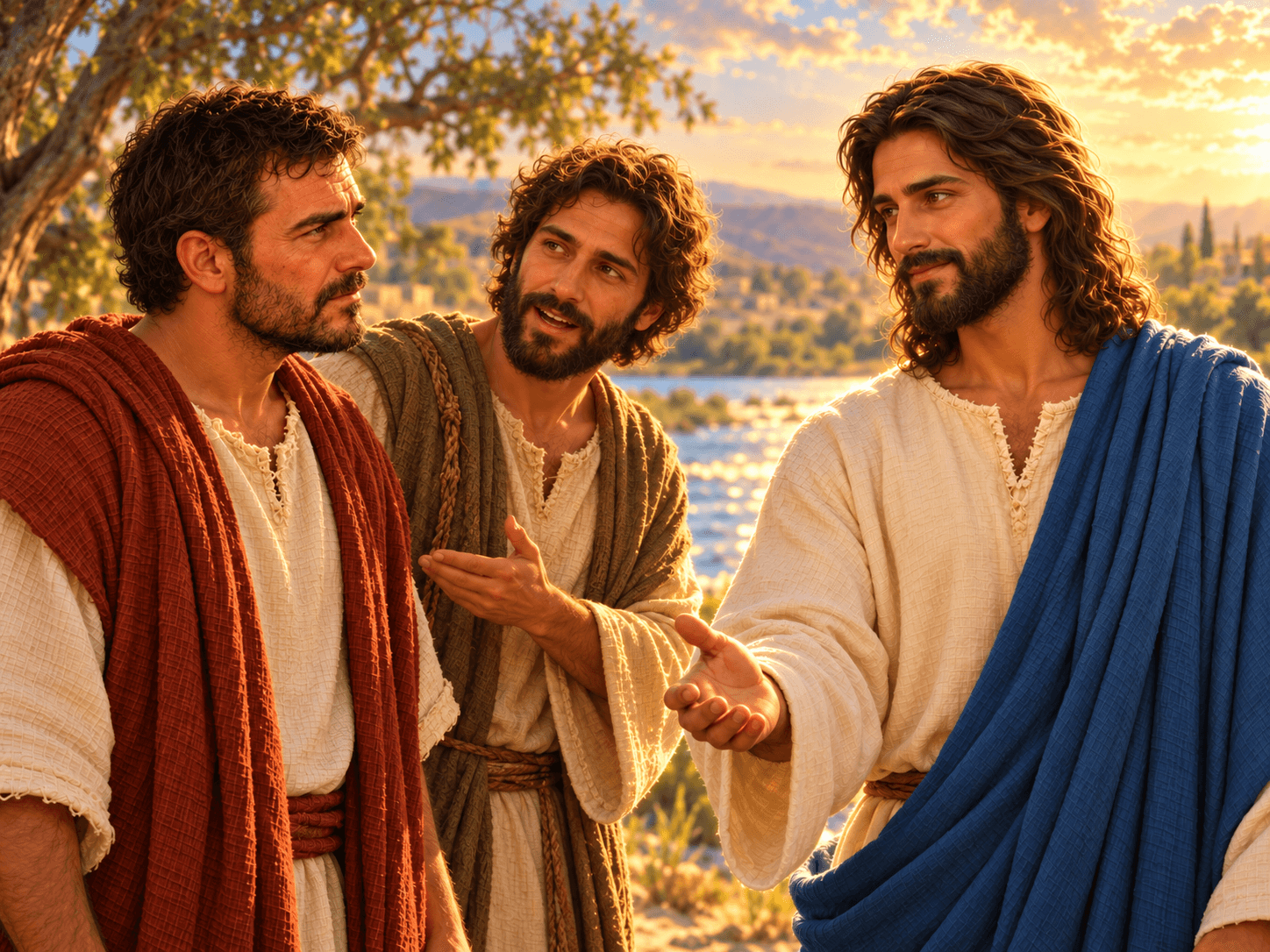
Illustrated scene from Peter's story: Andrew Brings Simon to Jesus (John 1:40–42)
Meet the people of the Bible
Follow their lives in order, with illustrated scenes and Bible passages that tell their stories.
 Peter
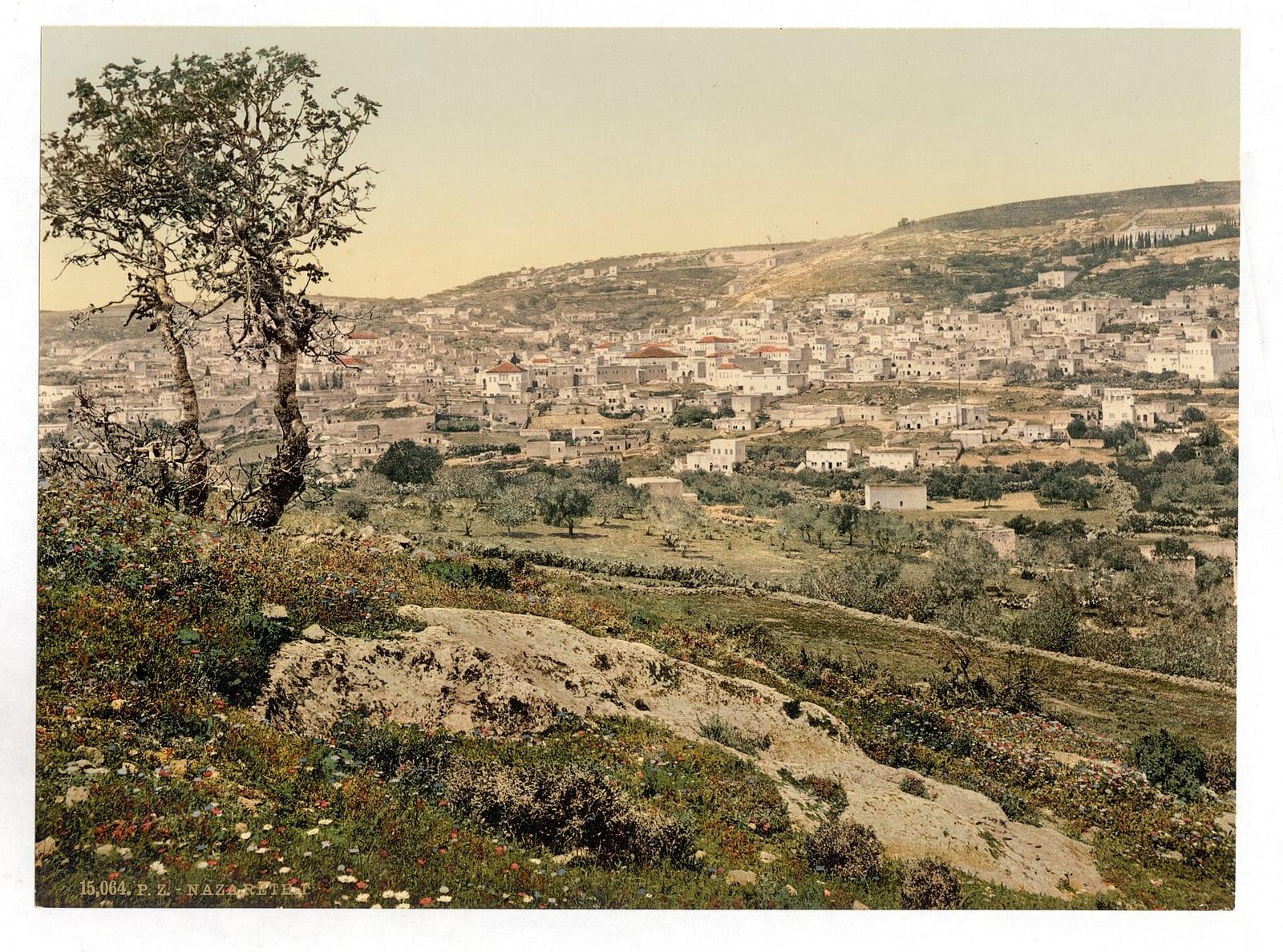
Photo: Photochrom print, Library of Congress Prints and Photographs Division (LCCN 2002725045). License: Public domain in the United States; Library of Congress states no known restrictions on publication. Source. Location: Nazareth, Israel; print preserved by the Library of Congress. Resized for the web.
Explore the places of the Bible
See where biblical events happened, why each place matters, and what archaeology helps us understand.
Nazareth
The small town in Galilee where Jesus grew up.
Every Bible book, explained chapter by chapter
Explore summaries of every book of the Bible, with images and easy-to-understand explanations covering every chapter.
Keep studying Matthew 1:3
Related Bible verses
Key themes
Related topics
At a Glance — the Book of Matthew
- Author
- Matthew the apostle
- Written
- Around AD 60-70
- Genre
- Gospel
- Original Audience
- Jewish Christians
Frequently Asked Questions
Quick, clear answers about this verse
What does Matthew 1:3 mean?
Matthew 1:3 is part of the genealogy of Jesus, showing that He is a descendant of Judah, who had twin sons, Perez and Zerah, through Tamar. This verse highlights the significance of family lineage in Jewish culture and God's ability to work through complex family situations.
Who are the key figures mentioned in Matthew 1:3?
The key figures in Matthew 1:3 are Judah, his daughter-in-law Tamar, and their sons Perez and Zerah. Perez is particularly important as he is an ancestor of Jesus, linking the genealogy to King David.
What is the significance of Tamar in Matthew 1:3?
Tamar's inclusion in Matthew 1:3 is significant as it emphasizes the role of women in the genealogy of Jesus and illustrates God's grace in using diverse backgrounds to fulfill His purposes.
Why is genealogy important in Matthew 1:3?
Genealogy in Matthew 1:3 establishes Jesus' rightful place in Jewish history, tracing His lineage back to significant figures like Judah and ultimately to King David, which is crucial for understanding His identity as the Messiah.
Daily Verse — straight to your inbox
A verse and a 2-sentence plain-English explanation, every morning. Free. Unsubscribe anytime.