New Testament
Matthew 19:30
Read the Bible in clear, modern English—easy to understand, faithful to the meaning, and written for everyday readers.
But many who are first will end up last, and many who are last will end up first."
Compare translations
But many that are first shall be last; and the last shall be first.
What Matthew 19:30 means
Plain-English insight for readers
In this verse, Jesus teaches a profound lesson about the values of the Kingdom of Heaven. He contrasts the worldly view of success and status with God's perspective. Those who are considered 'first' in society—wealthy, powerful, or influential—may find themselves at the back of the line in God's Kingdom. Conversely, those who are marginalized or overlooked, often seen as 'last' in the eyes of the world, may be exalted by God. This statement challenges our understanding of merit and reward, emphasizing that God's grace does not operate on human standards. It serves as a reminder that humility and faithfulness are valued over status and achievement. Ultimately, this verse encourages believers to reassess their priorities and to seek a life that aligns with God's values, where the last can become first through faith and service.
How to apply Matthew 19:30 to your life
This verse encourages us to evaluate our own lives and priorities. Instead of striving for worldly success, we should focus on humility and serving others. By doing so, we align ourselves with God's values, ensuring that we are prepared for His Kingdom, where the last will be honored.
Curated for this public verse page. Matthew Summary
Learn the Bible through its people and places
Get to know the people in Scripture through illustrated stories, and explore the places where they lived and traveled.
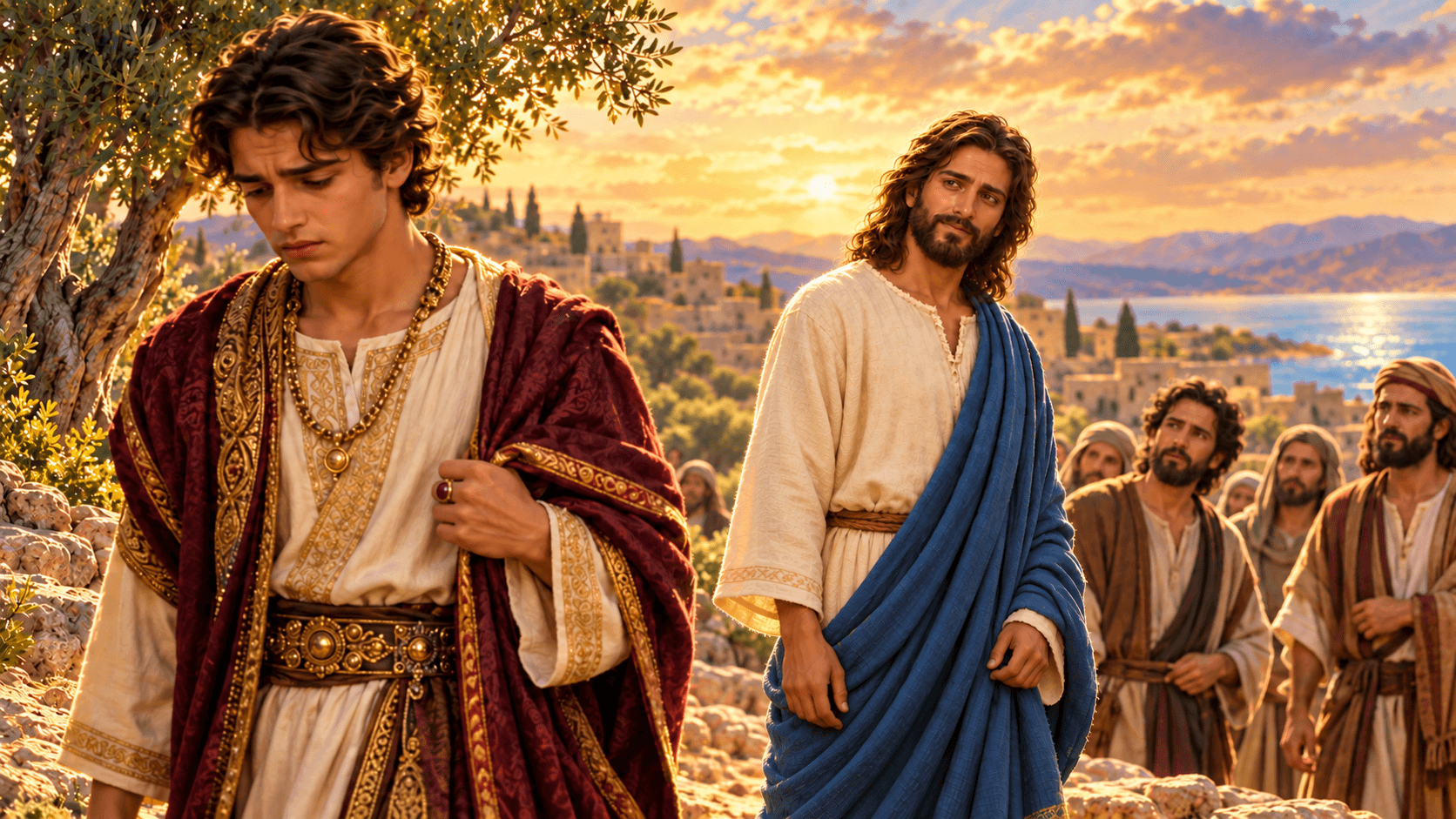
Illustrated scene from Jesus's story: The Rich Young Ruler (Matthew 19:16–30)
Meet the people of the Bible
Follow their lives in order, with illustrated scenes and Bible passages that tell their stories.
 Jesus
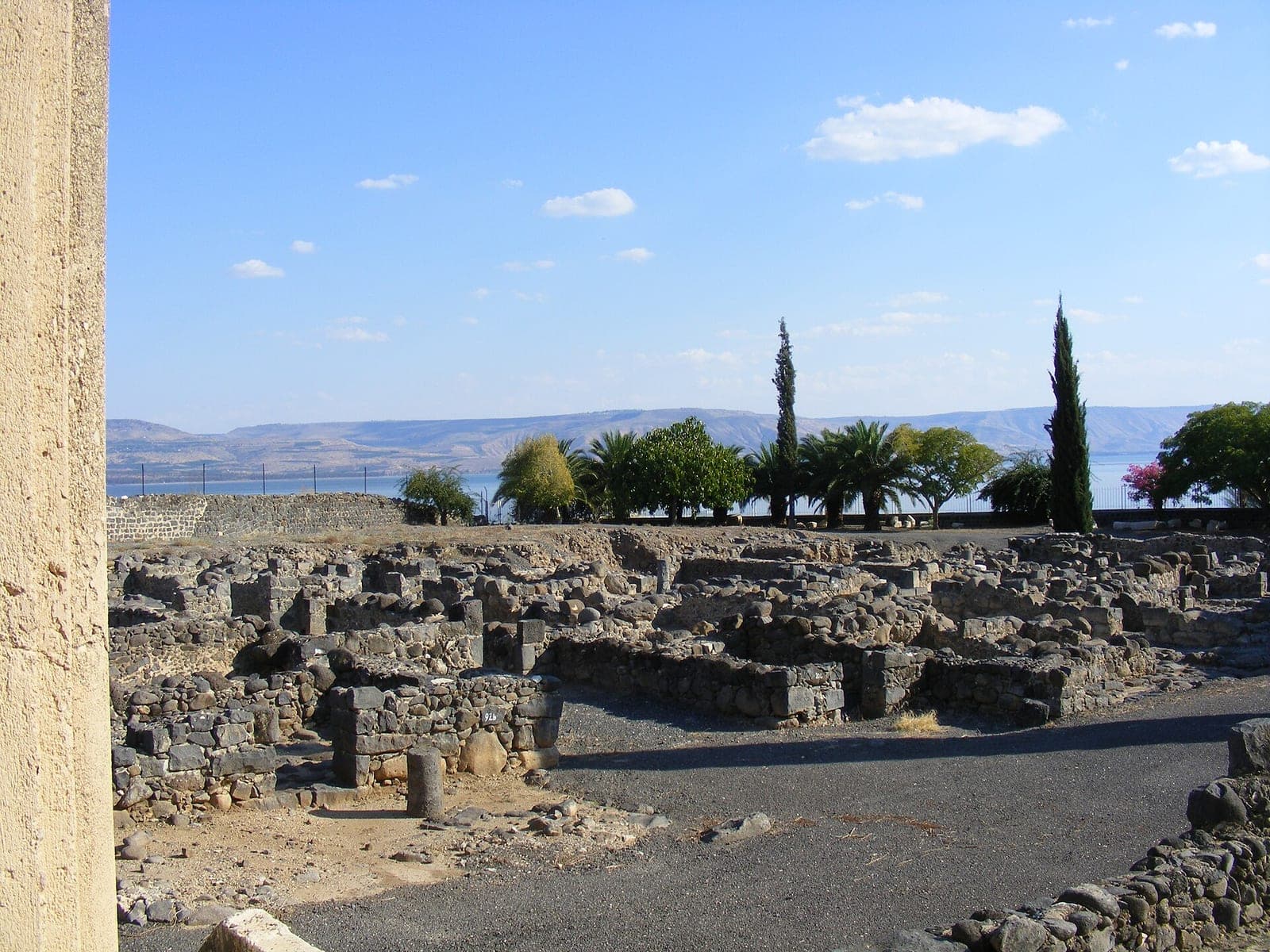
Photo: zeevveez, via Wikimedia Commons. License: CC BY 2.0. Source. Location: Capernaum, on the northern shore of the Sea of Galilee. Resized for the web.
Explore the places of the Bible
See where biblical events happened, why each place matters, and what archaeology helps us understand.
Capernaum
Jesus' home base by the Sea of Galilee, and the town where Peter lived.
Get full access with one subscription
Explore the people and places of the Bible. Read summaries of every book, with images and clear explanations covering every chapter. Access all these features and our Bible study tools with one subscription.
See PlansAsk AI about Matthew 19:30
Ask a question about this verse and get a clear answer, with Bible references you can read for yourself.
Every Bible book, explained chapter by chapter
Explore summaries of every book of the Bible, with images and easy-to-understand explanations covering every chapter.
Keep studying Matthew 19:30
Related Bible verses
Related topics
At a Glance — the Book of Matthew
- Author
- Matthew the apostle
- Written
- Around AD 60-70
- Genre
- Gospel
- Original Audience
- Jewish Christians
Frequently Asked Questions
Quick, clear answers about this verse
What does Matthew 19:30 mean?
Matthew 19:30 means that in God's Kingdom, the values of success and status are reversed. Those who are seen as important in the world may find themselves last, while those who are overlooked may be honored by God.
What is the meaning of 'first will be last' in Matthew 19:30?
'First will be last' in Matthew 19:30 highlights that worldly success does not guarantee a place in God's Kingdom. It emphasizes that humility and faithfulness are more important than social status.
How does Matthew 19:30 relate to humility?
Matthew 19:30 relates to humility by showing that those who are humble and serve others may be exalted in God's eyes, while the proud and powerful may find themselves at the back.
What themes are present in Matthew 19:30?
The themes present in Matthew 19:30 include humility, the values of God's Kingdom, the reversal of fortunes, grace, and the importance of faithfulness over social status.
Daily Verse — straight to your inbox
A verse and a 2-sentence plain-English explanation, every morning. Free. Unsubscribe anytime.