New Testament
Matthew 27:19
Read the Bible in clear, modern English—easy to understand, faithful to the meaning, and written for everyday readers.
While Pilate was sitting on the judgment seat, his wife sent him a message: "Don't have anything to do with that righteous man. I had a terrible dream about him today."
Compare translations
When he was set down on the judgment seat, his wife sent unto him, saying, Have thou nothing to do with that just man: for I have suffered many things this day in a dream because of him.
What Matthew 27:19 means
Plain-English insight for readers
In this verse, we see a significant moment during Jesus' trial. Pilate, the Roman governor, is about to make a crucial decision regarding Jesus' fate. His wife, troubled by a dream, warns him not to harm Jesus, whom she refers to as a 'righteous' or 'just' man. This indicates her belief in Jesus' innocence and perhaps a divine warning about the consequences of condemning an innocent person. Dreams in biblical times were often seen as messages from God, and her distress suggests that she felt a strong spiritual connection to the situation. This moment highlights the tension between political power and moral responsibility, as Pilate is caught between his duty to maintain order and the moral implications of condemning an innocent man. It serves as a reminder of the importance of listening to our conscience and the warnings we receive, especially when making significant decisions that affect others' lives.
How to apply Matthew 27:19 to your life
This verse encourages us to heed warnings and guidance from others, especially when making difficult decisions. It reminds us to consider the moral implications of our choices and to seek wisdom in moments of uncertainty, just as Pilate's wife did.
Curated for this public verse page. Matthew Summary
Learn the Bible through its people and places
Get to know the people in Scripture through illustrated stories, and explore the places where they lived and traveled.
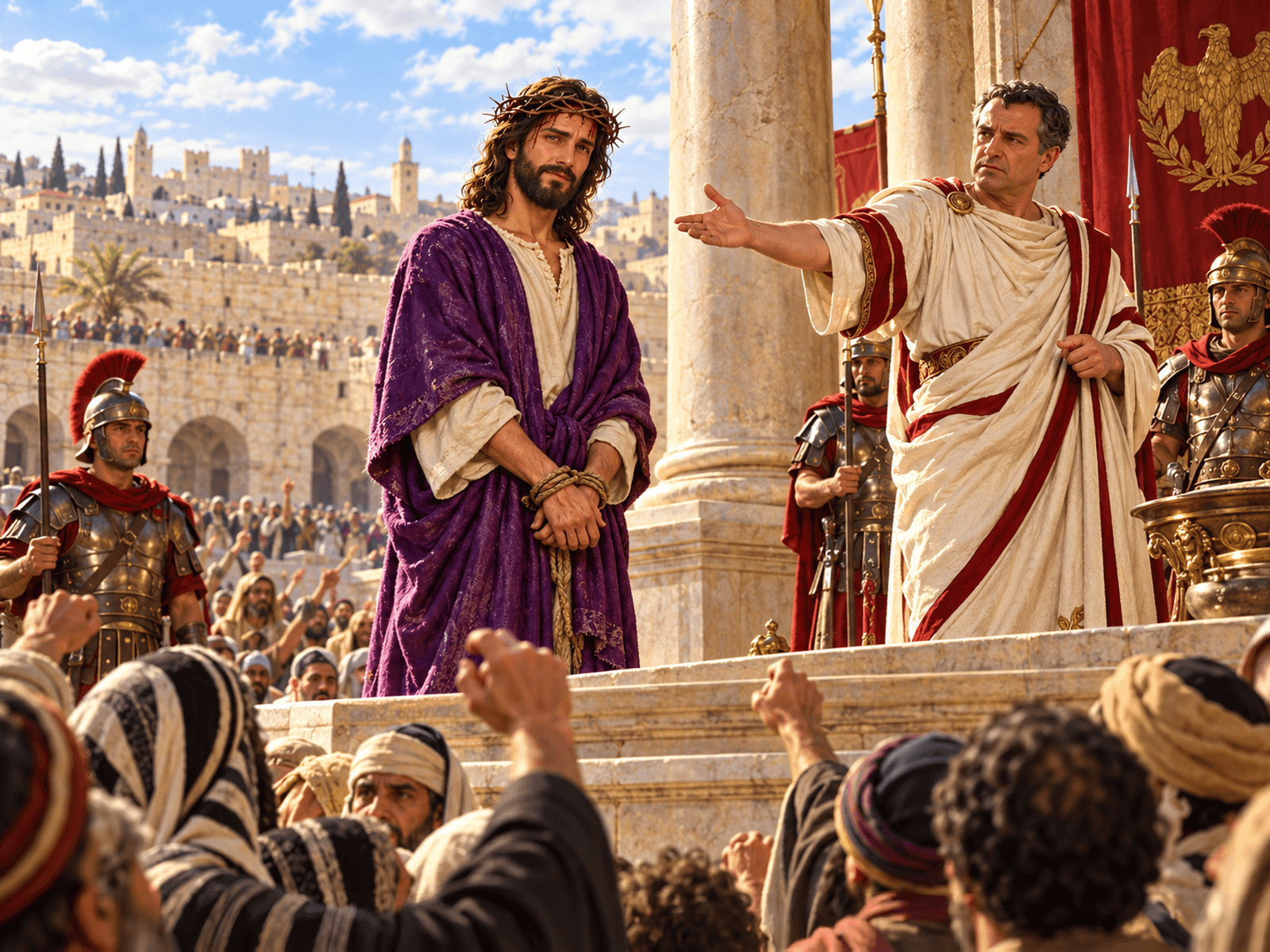
Illustrated scene from Jesus's story: On Trial Before Pilate (Matthew 27:11–31)
Meet the people of the Bible
Follow their lives in order, with illustrated scenes and Bible passages that tell their stories.
 Jesus

Photo: Photochrom print, Library of Congress Prints and Photographs Division (LCCN 2002725045). License: Public domain in the United States; Library of Congress states no known restrictions on publication. Source. Location: Nazareth, Israel; print preserved by the Library of Congress. Resized for the web.
Explore the places of the Bible
See where biblical events happened, why each place matters, and what archaeology helps us understand.
Nazareth
The small town in Galilee where Jesus grew up.
Get full access with one subscription
Explore the people and places of the Bible. Read summaries of every book, with images and clear explanations covering every chapter. Access all these features and our Bible study tools with one subscription.
See PlansAsk AI about Matthew 27:19
Ask a question about this verse and get a clear answer, with Bible references you can read for yourself.
Every Bible book, explained chapter by chapter
Explore summaries of every book of the Bible, with images and easy-to-understand explanations covering every chapter.
Keep studying Matthew 27:19
Related Bible verses
Related topics
At a Glance — the Book of Matthew
- Author
- Matthew the apostle
- Written
- Around AD 60-70
- Genre
- Gospel
- Original Audience
- Jewish Christians
Frequently Asked Questions
Quick, clear answers about this verse
What does Matthew 27:19 mean?
Matthew 27:19 describes a moment during Jesus' trial when Pilate's wife warns him not to harm Jesus, whom she calls a 'righteous man.' This indicates her belief in Jesus' innocence and suggests a divine warning about the consequences of condemning an innocent person.
What is the significance of Pilate's wife's dream in Matthew 27:19?
Pilate's wife's dream in Matthew 27:19 serves as a divine warning about Jesus' innocence. Her distress over the dream highlights the moral implications of Pilate's decision and emphasizes the importance of listening to one's conscience.
What does the term 'righteous man' mean in Matthew 27:19?
In Matthew 27:19, the term 'righteous man' refers to Jesus, indicating his innocence and moral integrity. Pilate's wife uses this term to express her belief that Jesus does not deserve to be harmed.
How does Matthew 27:19 relate to moral responsibility?
Matthew 27:19 illustrates the tension between political duty and moral responsibility, as Pilate faces pressure to condemn Jesus despite his wife's warning. It emphasizes the need to consider the ethical implications of our decisions.
Daily Verse — straight to your inbox
A verse and a 2-sentence plain-English explanation, every morning. Free. Unsubscribe anytime.