New Testament
Matthew 27:50
Read the Bible in clear, modern English—easy to understand, faithful to the meaning, and written for everyday readers.
Jesus cried out once more in a loud voice and yielded up his spirit.
Compare translations
Jesus, when he had cried again with a loud voice, yielded up the ghost.
What Matthew 27:50 means
Plain-English insight for readers
In this verse, we see the moment of Jesus' death on the cross. He cries out loudly, indicating a final expression of His humanity and the intensity of His suffering. The phrase 'yielded up his spirit' signifies that Jesus willingly gave up His life, fulfilling His mission to atone for humanity's sins. This act is central to Christian belief, as it represents the ultimate sacrifice for salvation. The loud voice suggests that His death was not a defeat but a powerful declaration of His authority and purpose. By yielding His spirit, Jesus demonstrated His control over life and death, showing that His death was a part of God's divine plan. This moment is pivotal in the narrative of the crucifixion, marking the end of His earthly ministry and the beginning of the hope of resurrection for believers.
How to apply Matthew 27:50 to your life
This verse encourages believers to reflect on the significance of Jesus' sacrifice. It reminds us that His death was intentional and for our benefit. We are called to live in gratitude for this gift, sharing the message of hope and salvation with others, and embracing the transformative power of His love in our lives.
Curated for this public verse page. Matthew Summary
Learn the Bible through its people and places
Get to know the people in Scripture through illustrated stories, and explore the places where they lived and traveled.
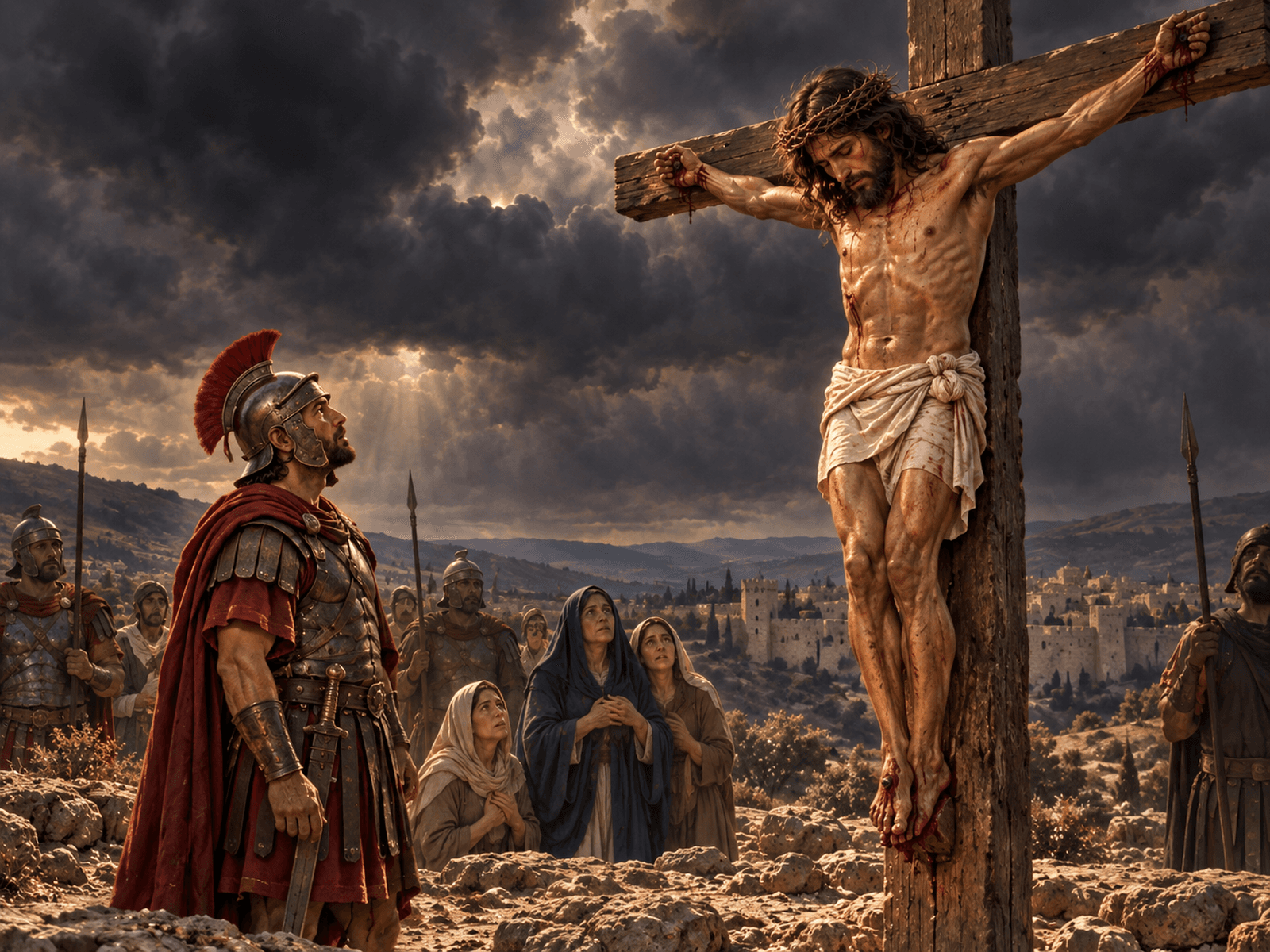
Illustrated scene from Jesus's story: The Death of Jesus (Matthew 27:45–56)
Meet the people of the Bible
Follow their lives in order, with illustrated scenes and Bible passages that tell their stories.
 Jesus

Photo: Photochrom print, Library of Congress Prints and Photographs Division (LCCN 2002725045). License: Public domain in the United States; Library of Congress states no known restrictions on publication. Source. Location: Nazareth, Israel; print preserved by the Library of Congress. Resized for the web.
Explore the places of the Bible
See where biblical events happened, why each place matters, and what archaeology helps us understand.
Nazareth
The small town in Galilee where Jesus grew up.
Get full access with one subscription
Explore the people and places of the Bible. Read summaries of every book, with images and clear explanations covering every chapter. Access all these features and our Bible study tools with one subscription.
See PlansAsk AI about Matthew 27:50
Ask a question about this verse and get a clear answer, with Bible references you can read for yourself.
Every Bible book, explained chapter by chapter
Explore summaries of every book of the Bible, with images and easy-to-understand explanations covering every chapter.
Keep studying Matthew 27:50
Related Bible verses
Key themes
At a Glance — the Book of Matthew
- Author
- Matthew the apostle
- Written
- Around AD 60-70
- Genre
- Gospel
- Original Audience
- Jewish Christians
Frequently Asked Questions
Quick, clear answers about this verse
What does Matthew 27:50 mean?
Matthew 27:50 describes the moment of Jesus' death on the cross, where He cries out loudly and willingly gives up His spirit. This signifies the culmination of His suffering and His role in atoning for humanity's sins.
What is the significance of Jesus yielding up His spirit in Matthew 27:50?
Jesus yielding up His spirit indicates that His death was a deliberate act, fulfilling His mission. It highlights His authority over life and death, showing that His sacrifice was part of God's divine plan for salvation.
What does the phrase 'yielded up the ghost' mean in Matthew 27:50?
The phrase 'yielded up the ghost' means that Jesus voluntarily gave up His life. It reflects His control over His death, emphasizing that it was a planned and purposeful act for the redemption of humanity.
Why did Jesus cry out in a loud voice before His death in Matthew 27:50?
Jesus cried out in a loud voice to express the intensity of His suffering and humanity at that moment. This loud declaration serves as a powerful statement of His authority and the significance of His sacrifice.
Daily Verse — straight to your inbox
A verse and a 2-sentence plain-English explanation, every morning. Free. Unsubscribe anytime.