New Testament
Matthew 5:36
Read the Bible in clear, modern English—easy to understand, faithful to the meaning, and written for everyday readers.
Don't even swear by your own head, because you can't make a single hair white or black.
Compare translations
Neither shalt thou swear by thy head, because thou canst not make one hair white or black.
What Matthew 5:36 means
Plain-English insight for readers
In this verse, Jesus teaches that swearing by one's own head is pointless because humans have no control over their own hair color. This highlights the futility of making oaths based on things we cannot truly govern. The underlying message is about the importance of honesty and integrity in our speech. Instead of relying on oaths to validate our words, we should be truthful in all our communications. Jesus emphasizes that our words should be trustworthy enough that we do not need to invoke anything greater to prove our sincerity. This teaching encourages a lifestyle of authenticity and accountability, urging us to let our yes be yes and our no be no, reflecting a character that is consistent and reliable.
How to apply Matthew 5:36 to your life
In daily life, we should strive to be honest without needing to make promises or oaths. This means being reliable in our commitments and ensuring our words reflect our true intentions. By doing so, we build trust with others and honor our integrity.
Curated for this public verse page. Matthew Summary
Learn the Bible through its people and places
Get to know the people in Scripture through illustrated stories, and explore the places where they lived and traveled.
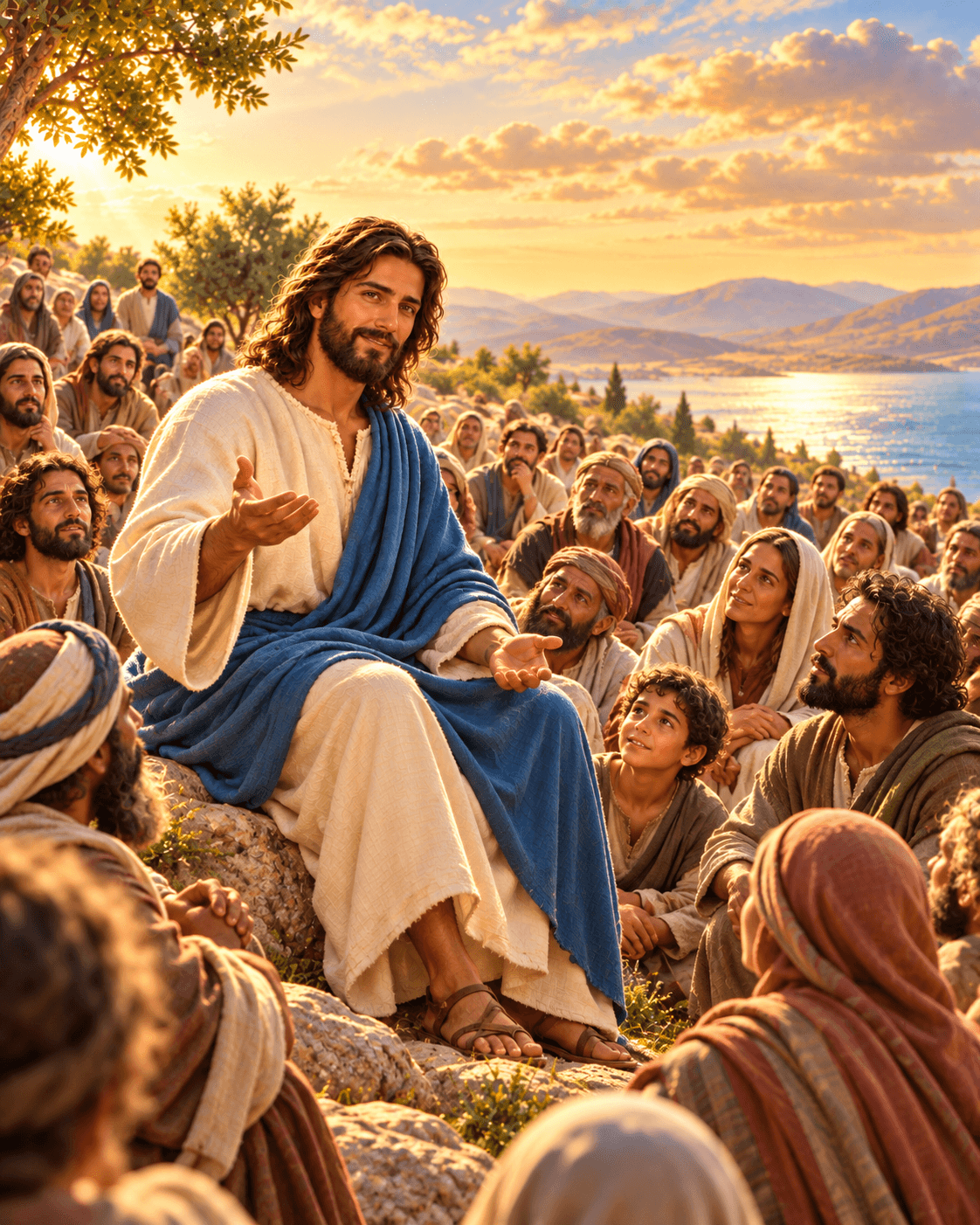
Illustrated scene from Jesus's story: The Sermon on the Mount (Matthew 5:1–7:29)
Meet the people of the Bible
Follow their lives in order, with illustrated scenes and Bible passages that tell their stories.
 Jesus

Photo: Photochrom print, Library of Congress Prints and Photographs Division (LCCN 2002725045). License: Public domain in the United States; Library of Congress states no known restrictions on publication. Source. Location: Nazareth, Israel; print preserved by the Library of Congress. Resized for the web.
Explore the places of the Bible
See where biblical events happened, why each place matters, and what archaeology helps us understand.
Nazareth
The small town in Galilee where Jesus grew up.
Get full access with one subscription
Explore the people and places of the Bible. Read summaries of every book, with images and clear explanations covering every chapter. Access all these features and our Bible study tools with one subscription.
See PlansAsk AI about Matthew 5:36
Ask a question about this verse and get a clear answer, with Bible references you can read for yourself.
Every Bible book, explained chapter by chapter
Explore summaries of every book of the Bible, with images and easy-to-understand explanations covering every chapter.
Keep studying Matthew 5:36
Related Bible verses
Related topics
At a Glance — the Book of Matthew
- Author
- Matthew the apostle
- Written
- Around AD 60-70
- Genre
- Gospel
- Original Audience
- Jewish Christians
Frequently Asked Questions
Quick, clear answers about this verse
What does Matthew 5:36 mean?
Matthew 5:36 means that swearing by your own head is pointless because you cannot control your hair color. It emphasizes the futility of making oaths based on things beyond our control and encourages honesty in our speech.
What is the meaning of swearing by your head in Matthew 5:36?
Swearing by your head in Matthew 5:36 refers to making oaths based on your own authority or appearance. Jesus teaches that such oaths are meaningless since we cannot change fundamental aspects of ourselves, highlighting the need for integrity in our words.
How can I apply Matthew 5:36 in my life?
You can apply Matthew 5:36 by being honest in your daily interactions without relying on promises or oaths. Focus on being reliable and ensuring your words reflect your true intentions to build trust with others.
What themes are present in Matthew 5:36?
The themes in Matthew 5:36 include integrity, honesty, simplicity in speech, the authority of God, and human limitations. These themes encourage a lifestyle of authenticity and accountability in our communication.
Daily Verse — straight to your inbox
A verse and a 2-sentence plain-English explanation, every morning. Free. Unsubscribe anytime.