New Testament
Matthew 5:39
Read the Bible in clear, modern English—easy to understand, faithful to the meaning, and written for everyday readers.
But I tell you, don't resist an evil person. If someone strikes you on the right cheek, turn the other cheek to them as well.
Compare translations
But I say unto you, That ye resist not evil: but whosoever shall smite thee on thy right cheek, turn to him the other also.
What Matthew 5:39 means
Plain-English insight for readers
In this verse, Jesus teaches about responding to wrongdoing with grace rather than retaliation. When someone strikes you on the right cheek, it symbolizes an insult or offense. Instead of seeking revenge or standing up for yourself aggressively, Jesus encourages a radical response: to turn the other cheek. This act signifies a willingness to endure further insult rather than escalate conflict. It challenges the common instinct to retaliate and instead promotes a spirit of humility and forgiveness. By not resisting evil, believers are called to demonstrate love and mercy, reflecting the character of Christ. This teaching emphasizes the importance of inner strength and the transformative power of non-violence in the face of aggression. It invites followers to rethink their approach to conflict and to respond in a way that can lead to reconciliation rather than further division.
How to apply Matthew 5:39 to your life
In daily life, practice turning the other cheek by responding to insults or conflicts with kindness instead of anger. This can mean letting go of grudges, choosing to forgive, and seeking peaceful resolutions in disagreements. Such actions can transform relationships and promote harmony.
Curated for this public verse page. Matthew Summary
Learn the Bible through its people and places
Get to know the people in Scripture through illustrated stories, and explore the places where they lived and traveled.
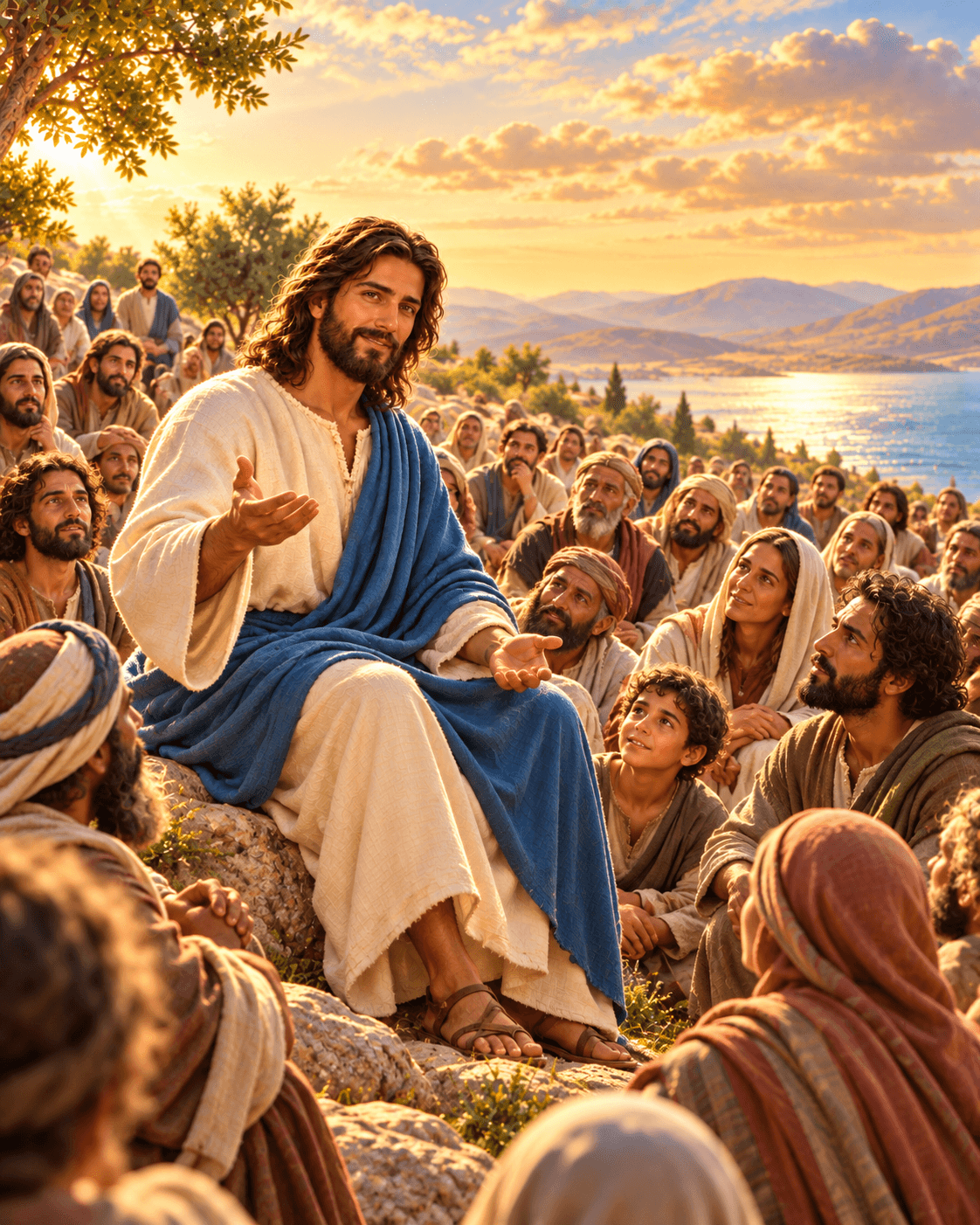
Illustrated scene from Jesus's story: The Sermon on the Mount (Matthew 5:1–7:29)
Meet the people of the Bible
Follow their lives in order, with illustrated scenes and Bible passages that tell their stories.
 Jesus

Photo: Photochrom print, Library of Congress Prints and Photographs Division (LCCN 2002725045). License: Public domain in the United States; Library of Congress states no known restrictions on publication. Source. Location: Nazareth, Israel; print preserved by the Library of Congress. Resized for the web.
Explore the places of the Bible
See where biblical events happened, why each place matters, and what archaeology helps us understand.
Nazareth
The small town in Galilee where Jesus grew up.
Get full access with one subscription
Explore the people and places of the Bible. Read summaries of every book, with images and clear explanations covering every chapter. Access all these features and our Bible study tools with one subscription.
See PlansAsk AI about Matthew 5:39
Ask a question about this verse and get a clear answer, with Bible references you can read for yourself.
Every Bible book, explained chapter by chapter
Explore summaries of every book of the Bible, with images and easy-to-understand explanations covering every chapter.
Keep studying Matthew 5:39
Related Bible verses
Key themes
Related topics
At a Glance — the Book of Matthew
- Author
- Matthew the apostle
- Written
- Around AD 60-70
- Genre
- Gospel
- Original Audience
- Jewish Christians
Frequently Asked Questions
Quick, clear answers about this verse
What does Matthew 5:39 mean?
Matthew 5:39 teaches that instead of retaliating against wrongdoing, one should respond with grace. Jesus encourages turning the other cheek as a way to demonstrate humility and forgiveness, promoting peace over conflict.
What is the meaning of 'turn the other cheek' in Matthew 5:39?
'Turn the other cheek' means to respond to an insult or offense without seeking revenge. It signifies a willingness to endure further harm rather than escalating the situation, reflecting a spirit of non-violence and love.
How can I apply Matthew 5:39 in my life?
You can apply Matthew 5:39 by choosing to respond to insults or conflicts with kindness instead of anger. This might involve forgiving others, letting go of grudges, and seeking peaceful resolutions in disagreements.
What themes are present in Matthew 5:39?
The themes in Matthew 5:39 include non-retaliation, forgiveness, humility, love, peace, and inner strength. These themes encourage a transformative approach to conflict and relationships.
Daily Verse — straight to your inbox
A verse and a 2-sentence plain-English explanation, every morning. Free. Unsubscribe anytime.