New Testament
Matthew 6:19
Read the Bible in clear, modern English—easy to understand, faithful to the meaning, and written for everyday readers.
"Don't store up treasures for yourselves here on earth, where moths and rust destroy them and thieves break in and steal them.
Compare translations
Lay not up for yourselves treasures upon earth, where moth and rust doth corrupt, and where thieves break through and steal:
What Matthew 6:19 means
Plain-English insight for readers
In this verse, Jesus teaches that accumulating material wealth on earth is unwise because it is temporary and vulnerable. Earthly treasures can be destroyed by natural elements like moths and rust, and they can be stolen by thieves. Instead of focusing on material possessions, Jesus encourages people to invest in spiritual treasures that have eternal value. These spiritual treasures include acts of kindness, love, and faithfulness, which cannot be taken away or diminished. The message emphasizes the importance of prioritizing what truly matters in life, which is our relationship with God and the impact we have on others. By shifting our focus from earthly possessions to spiritual growth, we can find lasting fulfillment and security.
How to apply Matthew 6:19 to your life
To apply this teaching, consider evaluating your priorities. Instead of accumulating material goods, invest time and resources in relationships, community service, and spiritual growth. Focus on what brings lasting joy and fulfillment, such as helping others and deepening your faith.
Curated for this public verse page. Matthew Summary
Learn the Bible through its people and places
Get to know the people in Scripture through illustrated stories, and explore the places where they lived and traveled.
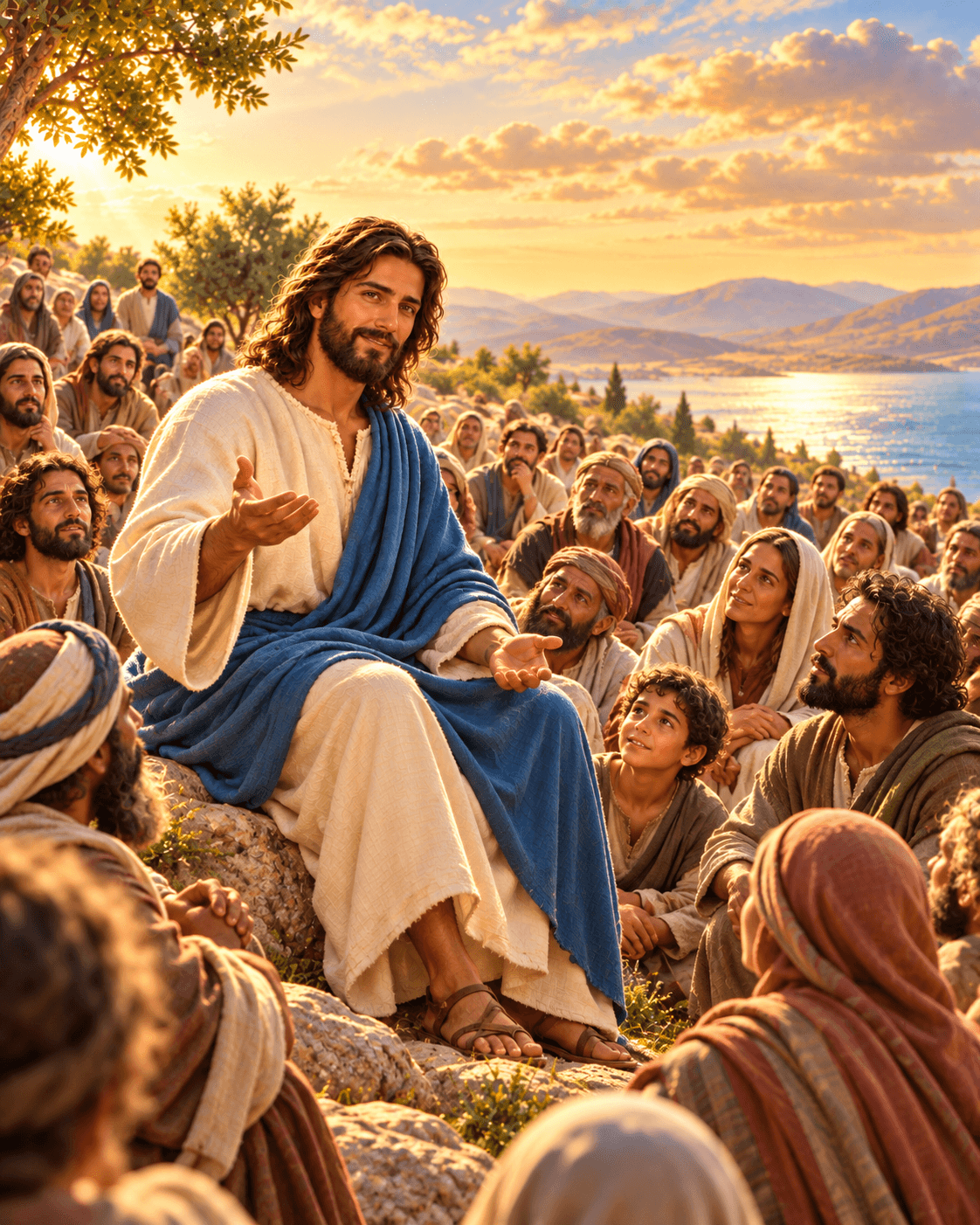
Illustrated scene from Jesus's story: The Sermon on the Mount (Matthew 5:1–7:29)
Meet the people of the Bible
Follow their lives in order, with illustrated scenes and Bible passages that tell their stories.
 Jesus

Photo: zeevveez, via Wikimedia Commons. License: CC BY 2.0. Source. Location: Capernaum, on the northern shore of the Sea of Galilee. Resized for the web.
Explore the places of the Bible
See where biblical events happened, why each place matters, and what archaeology helps us understand.
Capernaum
Jesus' home base by the Sea of Galilee, and the town where Peter lived.
Get full access with one subscription
Explore the people and places of the Bible. Read summaries of every book, with images and clear explanations covering every chapter. Access all these features and our Bible study tools with one subscription.
See PlansAsk AI about Matthew 6:19
Ask a question about this verse and get a clear answer, with Bible references you can read for yourself.
Every Bible book, explained chapter by chapter
Explore summaries of every book of the Bible, with images and easy-to-understand explanations covering every chapter.
Keep studying Matthew 6:19
Related Bible verses
Key themes
Related topics
At a Glance — the Book of Matthew
- Author
- Matthew the apostle
- Written
- Around AD 60-70
- Genre
- Gospel
- Original Audience
- Jewish Christians
Frequently Asked Questions
Quick, clear answers about this verse
What does Matthew 6:19 mean?
Matthew 6:19 teaches that accumulating material wealth on earth is unwise because it is temporary and can be easily lost or destroyed. Instead, Jesus encourages focusing on spiritual treasures that have lasting value.
What is the meaning of treasures in Matthew 6:19?
In Matthew 6:19, 'treasures' refer to material possessions and wealth that people often seek to accumulate. Jesus warns that these earthly treasures are vulnerable to decay and theft, urging a focus on spiritual investments instead.
How can I apply Matthew 6:19 to my life?
To apply Matthew 6:19, evaluate your priorities and focus on building relationships, serving others, and growing spiritually rather than accumulating material possessions. This shift can lead to greater fulfillment and joy.
What does Jesus mean by moths and rust in Matthew 6:19?
In Matthew 6:19, 'moths and rust' symbolize the natural decay and deterioration that can affect material possessions. Jesus uses this imagery to illustrate the vulnerability of earthly treasures.
Daily Verse — straight to your inbox
A verse and a 2-sentence plain-English explanation, every morning. Free. Unsubscribe anytime.