New Testament
Matthew 7:13
Read the Bible in clear, modern English—easy to understand, faithful to the meaning, and written for everyday readers.
Enter through the narrow gate, for the gate is wide and the way is broad that leads to destruction, and many enter through it.
Compare translations
Enter ye in at the strait gate: for wide is the gate, and broad is the way, that leadeth to destruction, and many there be which go in thereat:
What Matthew 7:13 means
Plain-English insight for readers
In this verse, Jesus uses the metaphor of gates and paths to illustrate the choices people make in life. The 'narrow gate' represents the difficult and less popular path that leads to eternal life and righteousness, while the 'wide gate' symbolizes the easy, tempting way that leads to destruction. Many people choose the wide path because it seems more appealing and requires less effort, but it ultimately leads to negative consequences. The narrow gate, though challenging, is the way to true fulfillment and salvation. This teaching encourages individuals to reflect on their life choices and consider the long-term effects of their decisions, urging them to choose the path that may be harder but leads to a better outcome.
How to apply Matthew 7:13 to your life
This verse challenges us to evaluate our life choices. Are we following the easy path that many take, or are we willing to choose the narrow path that leads to true fulfillment? It encourages us to seek wisdom and discernment in our decisions, prioritizing spiritual growth over immediate gratification.
Curated for this public verse page. Matthew Summary
Learn the Bible through its people and places
Get to know the people in Scripture through illustrated stories, and explore the places where they lived and traveled.
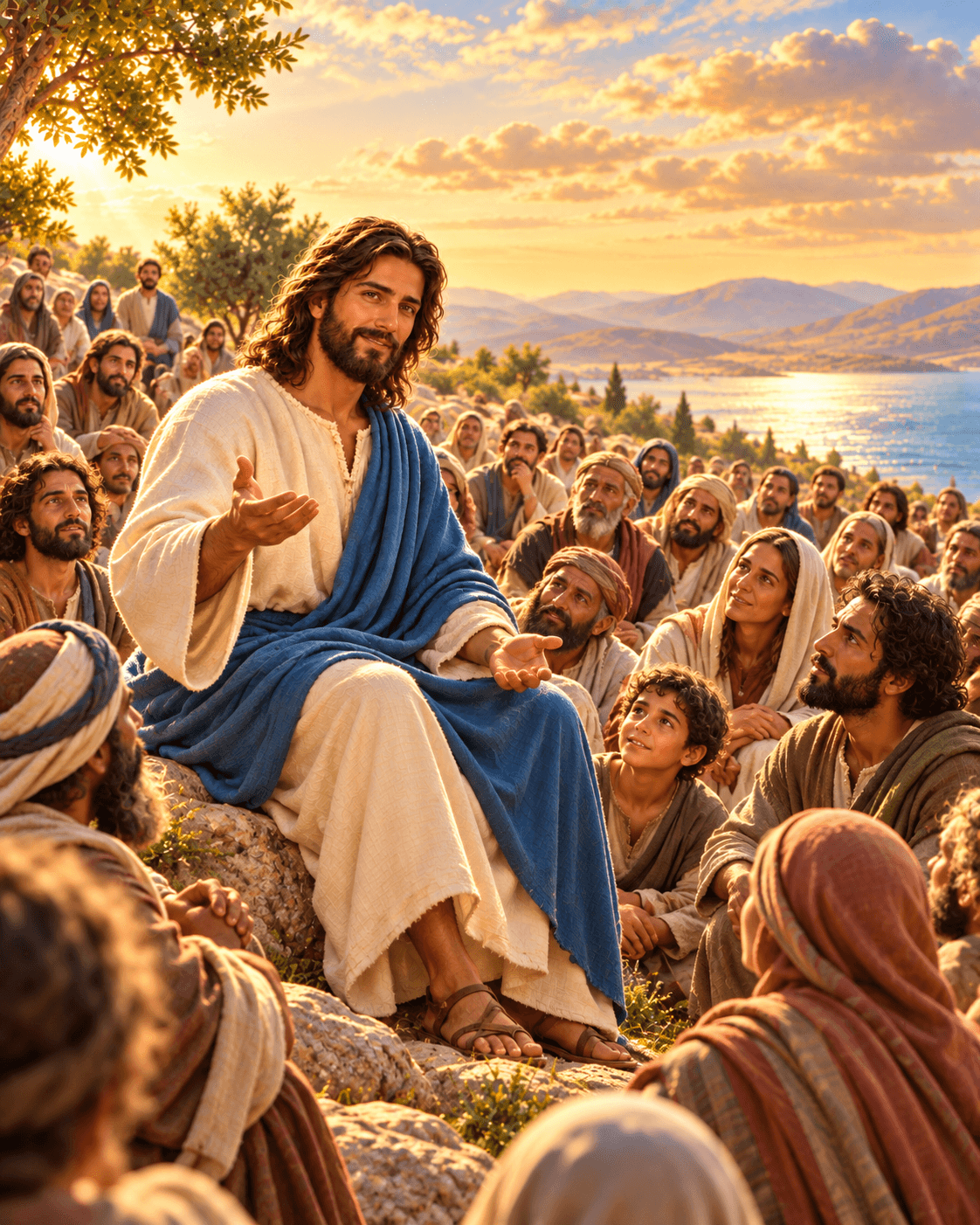
Illustrated scene from Jesus's story: The Sermon on the Mount (Matthew 5:1–7:29)
Meet the people of the Bible
Follow their lives in order, with illustrated scenes and Bible passages that tell their stories.
 Jesus

Photo: Gary Todd (Gary Lee Todd, Ph.D.), via Wikimedia Commons. License: CC0 1.0 Universal Public Domain Dedication. Source. Location: Southern end of the Temple Mount, Jerusalem Old City. Resized for the web.
Explore the places of the Bible
See where biblical events happened, why each place matters, and what archaeology helps us understand.
Jerusalem
David's capital, the city of the temple, and the place where Jesus died and rose again.
Get full access with one subscription
Explore the people and places of the Bible. Read summaries of every book, with images and clear explanations covering every chapter. Access all these features and our Bible study tools with one subscription.
See PlansAsk AI about Matthew 7:13
Ask a question about this verse and get a clear answer, with Bible references you can read for yourself.
Every Bible book, explained chapter by chapter
Explore summaries of every book of the Bible, with images and easy-to-understand explanations covering every chapter.
Keep studying Matthew 7:13
Related Bible verses
Key themes
Related topics
At a Glance — the Book of Matthew
- Author
- Matthew the apostle
- Written
- Around AD 60-70
- Genre
- Gospel
- Original Audience
- Jewish Christians
Frequently Asked Questions
Quick, clear answers about this verse
What does the narrow gate symbolize in Matthew 7:13?
In Matthew 7:13, the narrow gate symbolizes the difficult and less popular path that leads to eternal life and righteousness. It represents the choices that require effort, commitment, and sacrifice, contrasting with the wide gate that signifies an easier, more tempting route leading to destruction.
Why is the wide gate described as leading to destruction?
The wide gate leads to destruction because it represents the choices and lifestyle that prioritize immediate gratification and societal approval over spiritual truth and moral integrity. Many people are drawn to this path due to its ease and allure, but it ultimately results in negative consequences and separation from God.
How can I choose the narrow path in my life?
Choosing the narrow path involves making conscious decisions that align with your values and faith, even when they are challenging. It requires seeking wisdom through prayer, studying scripture, and surrounding yourself with supportive community. Focus on long-term fulfillment and spiritual growth rather than short-term pleasures.
What are some examples of the narrow path in everyday life?
Examples of the narrow path include choosing honesty in difficult situations, prioritizing relationships over material success, practicing forgiveness instead of holding grudges, and committing to personal growth through discipline and self-reflection. These choices may be harder but lead to deeper fulfillment and alignment with your values.
Daily Verse — straight to your inbox
A verse and a 2-sentence plain-English explanation, every morning. Free. Unsubscribe anytime.