Old Testament
Numbers 27:9
Read the Bible in clear, modern English—easy to understand, faithful to the meaning, and written for everyday readers.
If he has no daughter, give his inheritance to his brothers.
Compare translations
And if he have no daughter, then ye shall give his inheritance unto his brethren.
What Numbers 27:9 means
Plain-English insight for readers
In this verse, God provides guidance on inheritance laws for the Israelites. If a man dies without having a daughter, his inheritance should be passed on to his brothers instead. This instruction ensures that family property remains within the family line, preserving the family's legacy and resources. The emphasis is on maintaining the integrity of the family unit and ensuring that the deceased's assets are not lost or transferred to outsiders. This law reflects the importance of familial relationships and the responsibilities that come with them. It also highlights the value placed on male heirs in ancient Israelite society, where lineage and inheritance were crucial for maintaining tribal identity and stability. Overall, this verse underscores the significance of family ties and the need for clear guidelines in matters of inheritance to prevent disputes and ensure fairness among relatives.
How to apply Numbers 27:9 to your life
This verse reminds us of the importance of planning for the future and ensuring that our assets are passed on according to our values. It encourages us to consider how we can support our family and maintain our legacy, whether through financial planning or by fostering strong family relationships.
Curated for this public verse page. Numbers Summary
Learn the Bible through its people and places
Get to know the people in Scripture through illustrated stories, and explore the places where they lived and traveled.
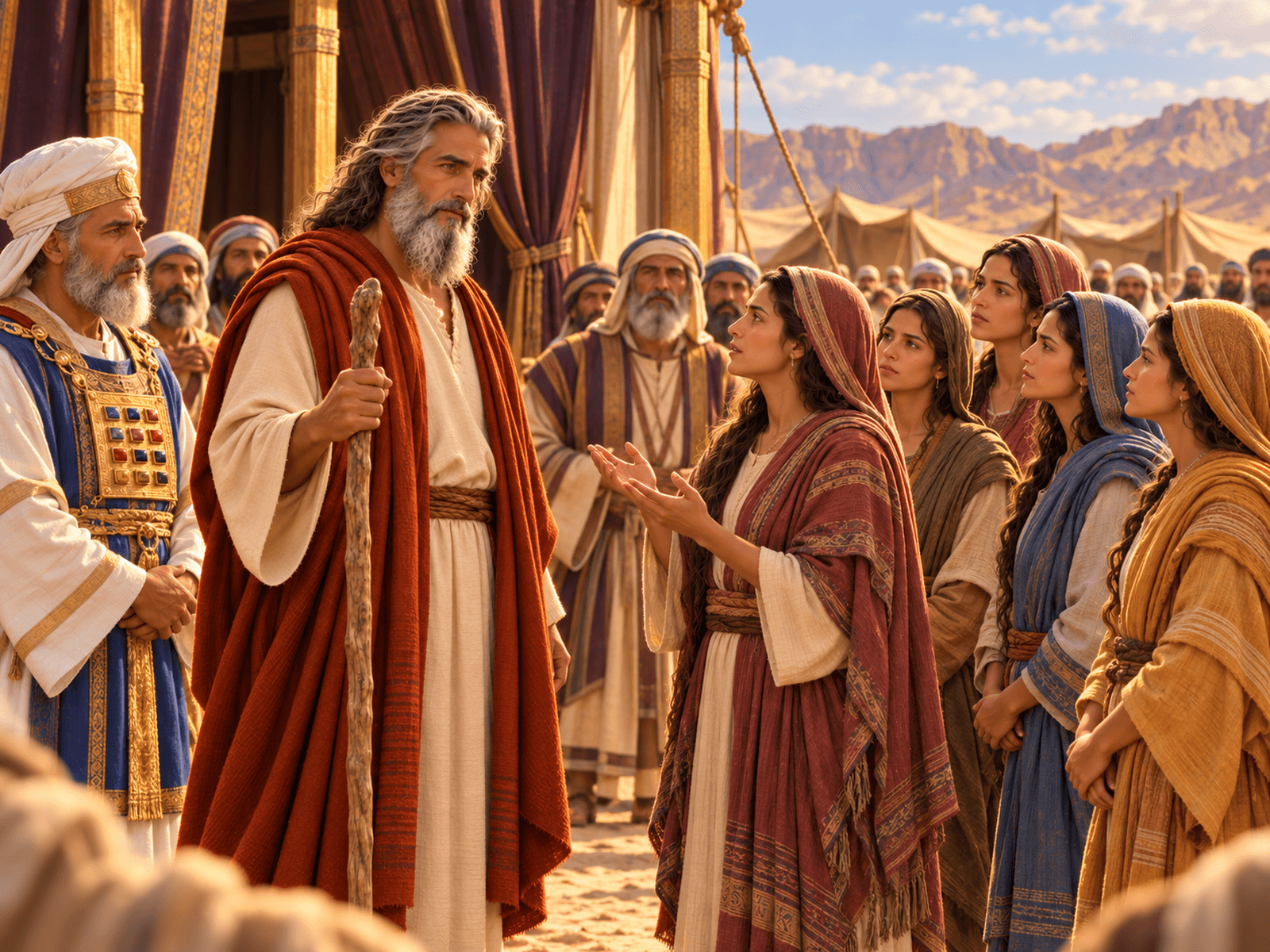
Illustrated scene from Moses's story: The Daughters of Zelophehad (Numbers 27:1–11)
Meet the people of the Bible
Follow their lives in order, with illustrated scenes and Bible passages that tell their stories.
 Moses

Photo: Diego Delso, via Wikimedia Commons. License: CC BY-SA 3.0. Source. Location: Tell es-Sultan, Jericho, West Bank. Resized for the web.
Explore the places of the Bible
See where biblical events happened, why each place matters, and what archaeology helps us understand.
Jericho
The city of palm trees, whose walls fell in Joshua's day.
Get full access with one subscription
Explore the people and places of the Bible. Read summaries of every book, with images and clear explanations covering every chapter. Access all these features and our Bible study tools with one subscription.
See PlansAsk AI about Numbers 27:9
Ask a question about this verse and get a clear answer, with Bible references you can read for yourself.
Every Bible book, explained chapter by chapter
Explore summaries of every book of the Bible, with images and easy-to-understand explanations covering every chapter.
Keep studying Numbers 27:9
Related Bible verses
Key themes
At a Glance — the Book of Numbers
- Author
- Traditionally attributed to Moses
- Written
- Around 1400 BC
- Genre
- Law (Pentateuch)
- Original Audience
- The Israelites in the wilderness
Frequently Asked Questions
Quick, clear answers about this verse
What does Numbers 27:9 say about inheritance?
Numbers 27:9 states that if a man dies without a daughter, his inheritance should be given to his brothers. This law was established to ensure that family property remains within the family, preserving the legacy and resources of the deceased.
Why is the focus on brothers in inheritance laws?
The focus on brothers in Numbers 27:9 reflects the cultural context of ancient Israel, where male heirs were prioritized for inheritance. This practice was important for maintaining tribal identity and stability, as property and lineage were closely tied to family and community.
How does this verse apply to modern inheritance planning?
This verse encourages modern individuals to think about how they want their assets distributed after their death. It highlights the importance of planning for the future and ensuring that one's values are reflected in the distribution of wealth, whether through legal wills or fostering strong family ties.
What are the implications of this verse for family relationships?
Numbers 27:9 emphasizes the importance of family responsibility and the preservation of property within the family unit. It serves as a reminder that clear guidelines in inheritance can help prevent disputes and ensure fairness among relatives, reinforcing the value of strong familial relationships.
Daily Verse — straight to your inbox
A verse and a 2-sentence plain-English explanation, every morning. Free. Unsubscribe anytime.