New Testament
Revelation 19:20
Read the Bible in clear, modern English—easy to understand, faithful to the meaning, and written for everyday readers.
But the beast was captured, along with the false prophet who had performed miraculous signs in front of him—signs that deceived those who had received the mark of the beast and worshiped his image. Both of them were thrown alive into the lake of fire that burns with sulfur.
Compare translations
And the beast was taken, and with him the false prophet that wrought miracles before him, with which he deceived them that had received the mark of the beast, and them that worshipped his image. These both were cast alive into a lake of fire burning with brimstone.
What Revelation 19:20 means
Plain-English insight for readers
In this verse, we see the ultimate defeat of the beast and the false prophet, who are symbolic of evil and deception. The beast represents oppressive power, while the false prophet signifies false teachings and miracles meant to mislead people. Together, they led many astray by promoting the worship of the beast and encouraging people to accept his mark, which symbolizes allegiance to evil. Their capture signifies that no matter how powerful evil may seem, it will ultimately be judged and punished. Being thrown into the lake of fire, which burns with sulfur, represents eternal separation from God and the finality of their defeat. This imagery serves as a warning about the consequences of following falsehood and the importance of remaining faithful to the truth of God.
How to apply Revelation 19:20 to your life
This verse reminds us to be vigilant against deception in our lives. We should seek the truth in our beliefs and be cautious of influences that lead us away from God. Staying grounded in faith and scripture helps us resist false teachings and remain faithful to God.
Curated for this public verse page. Revelation Summary
Explore more of the Bible
Learn the Bible through its people and places
Get to know the people in Scripture through illustrated stories, and explore the places where they lived and traveled.
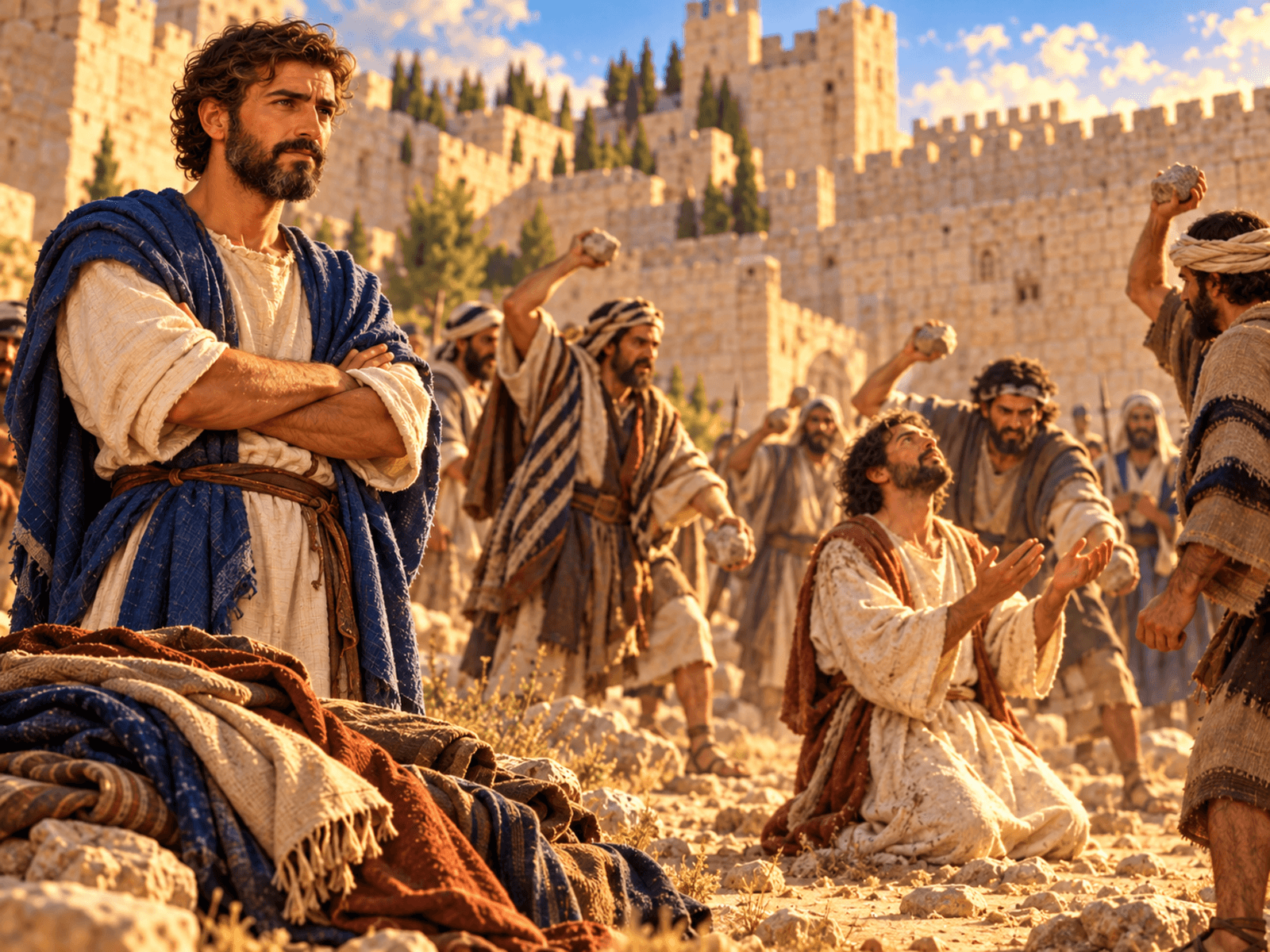
Illustrated scene from Paul's story: The Stoning of Stephen (Acts 7:57–8:2)
Meet the people of the Bible
Follow their lives in order, with illustrated scenes and Bible passages that tell their stories.
 Paul

Photo: Photochrom print, Library of Congress Prints and Photographs Division (LCCN 2002725045). License: Public domain in the United States; Library of Congress states no known restrictions on publication. Source. Location: Nazareth, Israel; print preserved by the Library of Congress. Resized for the web.
Explore the places of the Bible
See where biblical events happened, why each place matters, and what archaeology helps us understand.
Nazareth
The small town in Galilee where Jesus grew up.
Get full access with one subscription
Explore the people and places of the Bible. Read summaries of every book, with images and clear explanations covering every chapter. Access all these features and our Bible study tools with one subscription.
See PlansAsk AI about Revelation 19:20
Ask a question about this verse and get a clear answer, with Bible references you can read for yourself.
Every Bible book, explained chapter by chapter
Explore summaries of every book of the Bible, with images and easy-to-understand explanations covering every chapter.
Keep studying Revelation 19:20
Related Bible verses
Key themes
Related topics
At a Glance — the Book of Revelation
- Author
- John the apostle
- Written
- Around AD 95
- Genre
- Apocalyptic prophecy
- Original Audience
- The seven churches of Asia Minor
Frequently Asked Questions
Quick, clear answers about this verse
What does Revelation 19:20 mean?
Revelation 19:20 describes the capture and punishment of the beast and the false prophet, symbolizing the ultimate defeat of evil and deception. They are thrown into the lake of fire, representing eternal separation from God and the consequences of leading others astray.
What is the significance of the lake of fire in Revelation 19:20?
The lake of fire in Revelation 19:20 symbolizes eternal punishment and separation from God. It serves as a warning about the fate of those who promote evil and deception, emphasizing the seriousness of rejecting God's truth.
Who are the beast and the false prophet in Revelation 19:20?
In Revelation 19:20, the beast represents oppressive power and authority, while the false prophet signifies deceptive teachings and miracles. Together, they mislead people into worshiping falsehoods and accepting the mark of the beast.
What does the mark of the beast refer to in Revelation 19:20?
The mark of the beast in Revelation 19:20 symbolizes allegiance to evil and rejection of God. It represents the choice to follow the beast and the false prophet, leading to spiritual deception and ultimate judgment.
Daily Verse — straight to your inbox
A verse and a 2-sentence plain-English explanation, every morning. Free. Unsubscribe anytime.