New Testament
Romans 9:31
Read the Bible in clear, modern English—easy to understand, faithful to the meaning, and written for everyday readers.
But Israel, who pursued a law of righteousness, did not attain that law.
Compare translations
But Israel, which followed after the law of righteousness, hath not attained to the law of righteousness.
What Romans 9:31 means
Plain-English insight for readers
In this verse, Paul highlights a significant issue faced by Israel. Despite their zealous pursuit of righteousness through the law, they ultimately failed to achieve it. This failure is not due to the law itself, which is good, but rather their misunderstanding of how righteousness is attained. They relied on their own efforts and adherence to the law instead of faith in God. This illustrates a broader spiritual truth: righteousness cannot be earned through works but is a gift received through faith. Paul is emphasizing that true righteousness comes from trusting in Christ, not merely following rules. This serves as a reminder that human effort alone cannot secure a right standing before God; it requires a heart aligned with faith and grace. The verse challenges believers to reflect on their own reliance on works versus faith in their relationship with God.
How to apply Romans 9:31 to your life
This verse encourages us to examine our own lives and motivations. Are we relying on our actions to earn God's favor, or are we placing our faith in Christ? Understanding that righteousness is a gift can free us from the burden of performance and lead us to a deeper relationship with God.
Curated for this public verse page. Romans Summary
Explore more of the Bible
Learn the Bible through its people and places
Get to know the people in Scripture through illustrated stories, and explore the places where they lived and traveled.
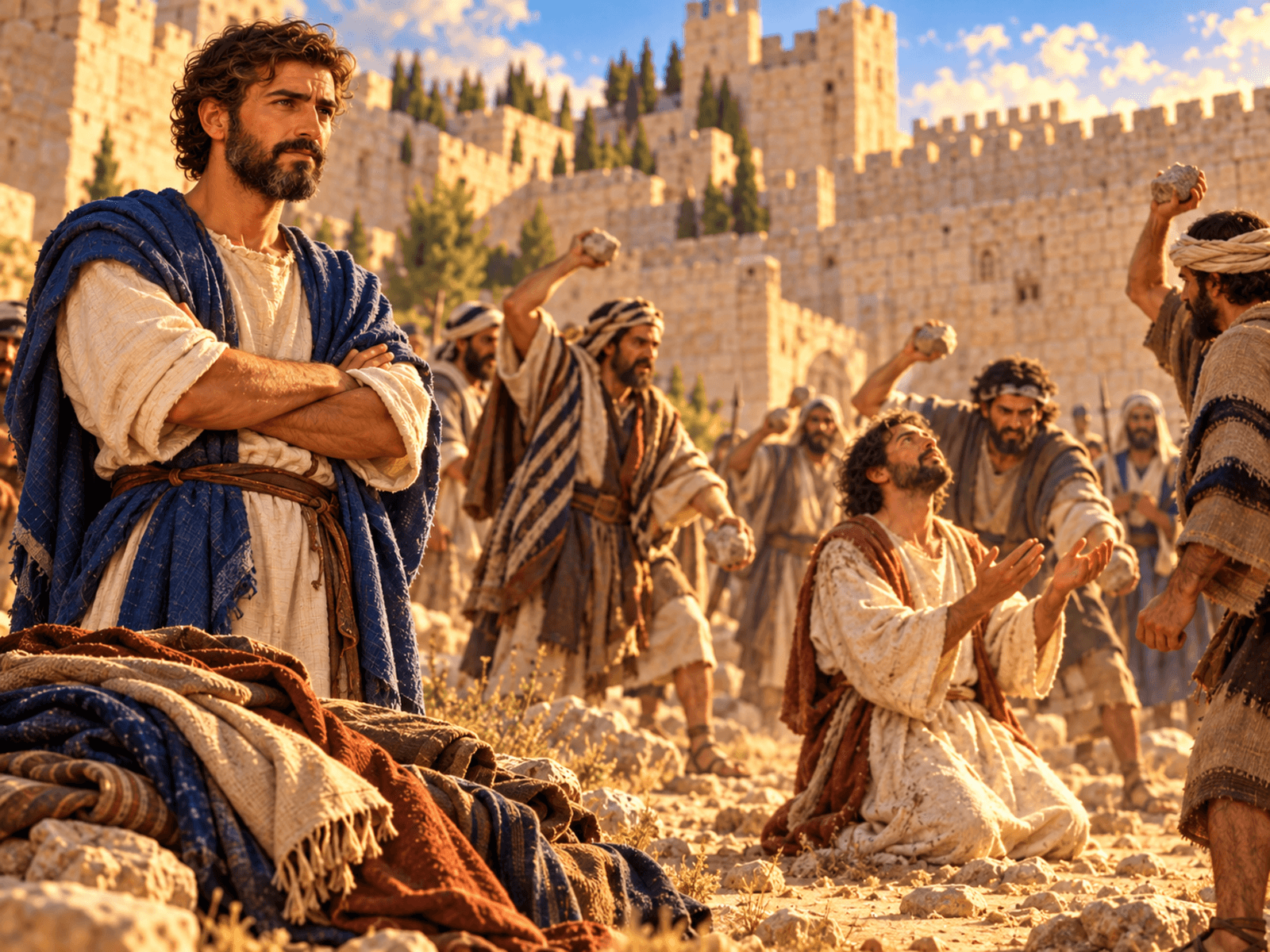
Illustrated scene from Paul's story: The Stoning of Stephen (Acts 7:57–8:2)
Meet the people of the Bible
Follow their lives in order, with illustrated scenes and Bible passages that tell their stories.
 Paul

Photo: Gary Todd (Gary Lee Todd, Ph.D.), via Wikimedia Commons. License: CC0 1.0 Universal Public Domain Dedication. Source. Location: Southern end of the Temple Mount, Jerusalem Old City. Resized for the web.
Explore the places of the Bible
See where biblical events happened, why each place matters, and what archaeology helps us understand.
Jerusalem
David's capital, the city of the temple, and the place where Jesus died and rose again.
Get full access with one subscription
Explore the people and places of the Bible. Read summaries of every book, with images and clear explanations covering every chapter. Access all these features and our Bible study tools with one subscription.
See PlansAsk AI about Romans 9:31
Ask a question about this verse and get a clear answer, with Bible references you can read for yourself.
Every Bible book, explained chapter by chapter
Explore summaries of every book of the Bible, with images and easy-to-understand explanations covering every chapter.
Keep studying Romans 9:31
Related Bible verses
Key themes
Related topics
At a Glance — the Book of Romans
- Author
- Paul the apostle
- Written
- Around AD 57
- Genre
- Letter (epistle)
- Original Audience
- Christians in Rome
Frequently Asked Questions
Quick, clear answers about this verse
What does Romans 9:31 mean?
Romans 9:31 explains that Israel, despite their efforts to follow the law to achieve righteousness, did not succeed. This highlights the idea that righteousness cannot be earned through strict adherence to the law but is instead obtained through faith.
What is the meaning of righteousness in Romans 9:31?
In Romans 9:31, righteousness refers to a right standing before God. The verse emphasizes that true righteousness is not achieved through human effort or the law, but through faith in God.
How does Romans 9:31 relate to faith and works?
Romans 9:31 contrasts the reliance on works, represented by the law, with the necessity of faith for attaining righteousness. It teaches that human effort alone cannot secure a relationship with God; faith is essential.
What lesson can we learn from Romans 9:31?
The lesson from Romans 9:31 is to evaluate our own reliance on actions for God's approval. It encourages believers to understand that righteousness is a gift from God, accessible through faith rather than mere adherence to rules.
Daily Verse — straight to your inbox
A verse and a 2-sentence plain-English explanation, every morning. Free. Unsubscribe anytime.