New Testament
Romans 9:8
Read the Bible in clear, modern English—easy to understand, faithful to the meaning, and written for everyday readers.
That is, it is not the children of the flesh who are God's children, but the children of the promise are counted as the true offspring.
Compare translations
That is, They which are the children of the flesh, these are not the children of God: but the children of the promise are counted for the seed.
What Romans 9:8 means
Plain-English insight for readers
In Romans 9:8, Paul emphasizes that being a child of God is not determined by physical lineage or heritage, but rather by faith in God's promises. The 'children of the flesh' refers to those who are born into a particular family or nation, like the Israelites. However, true children of God are those who believe in His promises, which includes both Jews and Gentiles who have faith in Christ. This verse highlights the importance of spiritual identity over physical ancestry, showing that God's covenant is fulfilled through faith rather than mere biological descent. It reassures believers that they are part of God's family based on their trust in Him, not their ethnic background or works. This understanding encourages unity among believers, as all who accept God's promise are considered His children.
How to apply Romans 9:8 to your life
This verse encourages us to focus on our faith in God's promises rather than our backgrounds or achievements. It reminds us that anyone who believes in Christ is part of God's family, fostering inclusivity and acceptance within the church. We should embrace and support one another as fellow children of God.
Curated for this public verse page. Romans Summary
Explore more of the Bible
Learn the Bible through its people and places
Get to know the people in Scripture through illustrated stories, and explore the places where they lived and traveled.
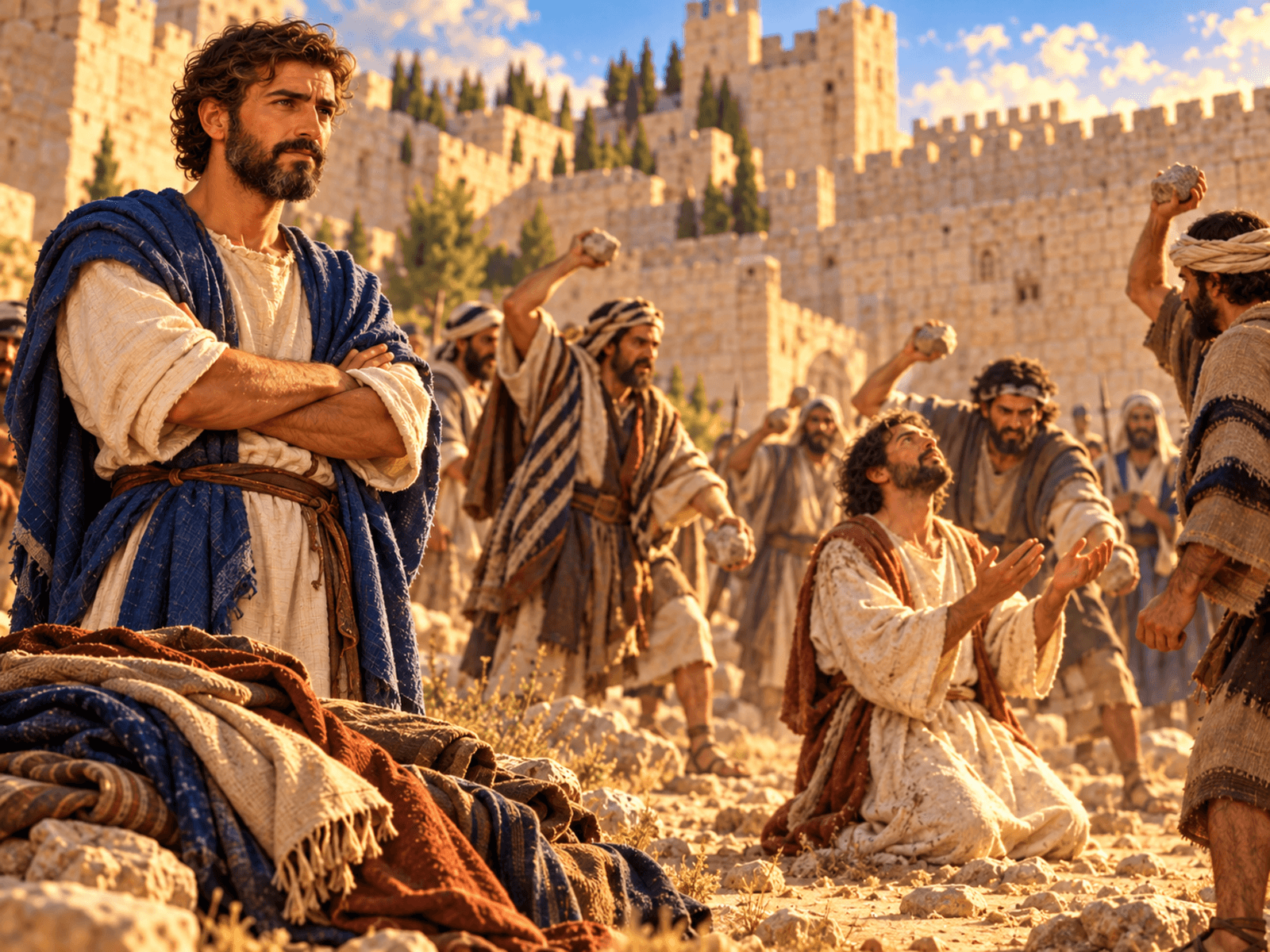
Illustrated scene from Paul's story: The Stoning of Stephen (Acts 7:57–8:2)
Meet the people of the Bible
Follow their lives in order, with illustrated scenes and Bible passages that tell their stories.
 Paul

Photo: Gary Todd (Gary Lee Todd, Ph.D.), via Wikimedia Commons. License: CC0 1.0 Universal Public Domain Dedication. Source. Location: Southern end of the Temple Mount, Jerusalem Old City. Resized for the web.
Explore the places of the Bible
See where biblical events happened, why each place matters, and what archaeology helps us understand.
Jerusalem
David's capital, the city of the temple, and the place where Jesus died and rose again.
Get full access with one subscription
Explore the people and places of the Bible. Read summaries of every book, with images and clear explanations covering every chapter. Access all these features and our Bible study tools with one subscription.
See PlansAsk AI about Romans 9:8
Ask a question about this verse and get a clear answer, with Bible references you can read for yourself.
Every Bible book, explained chapter by chapter
Explore summaries of every book of the Bible, with images and easy-to-understand explanations covering every chapter.
Keep studying Romans 9:8
Related Bible verses
Key themes
Related topics
At a Glance — the Book of Romans
- Author
- Paul the apostle
- Written
- Around AD 57
- Genre
- Letter (epistle)
- Original Audience
- Christians in Rome
Frequently Asked Questions
Quick, clear answers about this verse
What does Romans 9:8 mean?
Romans 9:8 means that being a child of God is based on faith in His promises rather than physical descent. It emphasizes that true offspring of God are those who believe, regardless of their ethnic background.
What is the meaning of 'children of the promise' in Romans 9:8?
'Children of the promise' refers to those who have faith in God's promises, including both Jews and Gentiles. This term highlights that spiritual lineage is determined by belief in God rather than biological ties.
How does Romans 9:8 relate to unity among believers?
Romans 9:8 promotes unity among believers by showing that all who have faith in God's promises are considered His children, regardless of their background. This encourages acceptance and inclusivity within the church.
What does 'children of the flesh' mean in Romans 9:8?
'Children of the flesh' refers to those who are born into a specific family or nation, like the Israelites. This phrase contrasts with 'children of the promise,' emphasizing that physical descent does not determine one's relationship with God.
Daily Verse — straight to your inbox
A verse and a 2-sentence plain-English explanation, every morning. Free. Unsubscribe anytime.