What Does Amos 5:24 Mean?
Amos 5:24 meaning: what does 'let justice roll down like waters' mean and how does it relate to worship and social justice
Clear Bible Translation
Modern EnglishInstead, let justice flow like a river, and righteousness like a mighty stream that never runs dry.
King James Version
But let judgment run down as waters, and righteousness as a mighty stream.
Amos in Focus
Amos, a shepherd from Judah, prophesied to the northern kingdom of Israel around 760-750 BC during the reign of Jeroboam II. He spoke during an era of military success and economic growth that masked deep social corruption.
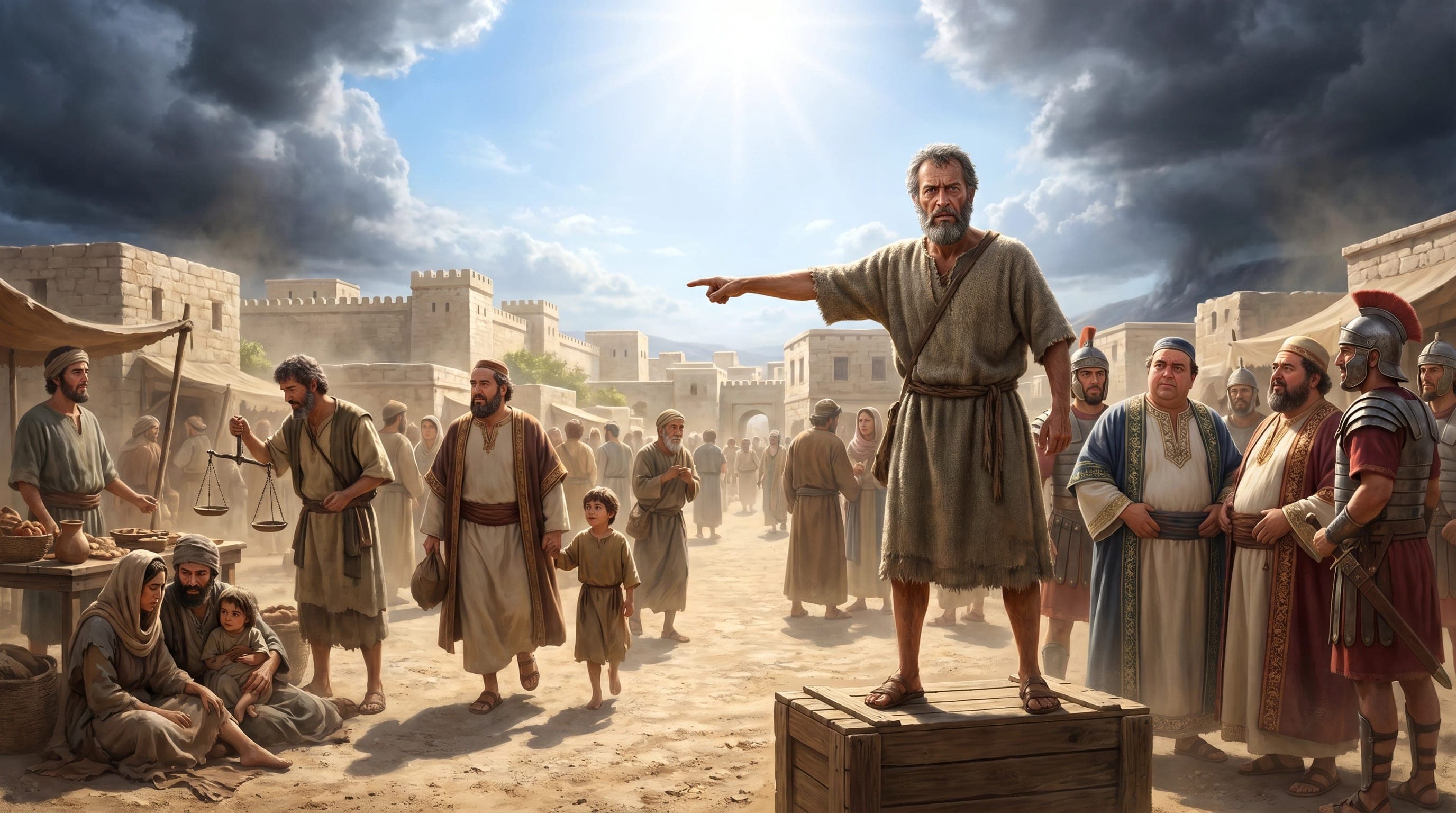
Why would God reject religious festivals and demand social justice instead? Israel's worship had become a hollow performance while they trampled the poor and perverted justice in their courts. Amos uses the imagery of flowing water to describe what God truly desires—justice that cascades down like a waterfall and righteousness flowing like an unstoppable river. The Hebrew word for 'judgment' (mishpat) encompasses both legal decisions and the broader concept of treating others fairly according to God's standards. Notice the progression: justice flows down from above (like divine mandate), while righteousness moves horizontally like a stream through society. The prophet's brilliant metaphor suggests that authentic worship must produce a continuous, life-giving flow of ethical behavior that reaches every corner of the community.
Amos delivers this oracle during a time of economic prosperity in Israel, when religious observance was thriving but social inequality was rampant. The wealthy were exploiting the poor while maintaining elaborate temple rituals. This verse concludes Amos's scathing critique of their festivals, offerings, and songs in verses 21-23, where God declares His hatred for their worship. The prophet then pivots to describe what God actually wants—a society where justice flows as naturally and persistently as water.
Religious activity without ethical living remains an abomination to God. Christians today must examine whether their worship translates into advocacy for the marginalized and pursuit of systemic justice, not just personal piety.
Read the full chapter: Amos 5 →
Scripture with Similar Themes
- Micah 6:8 →Connects social justice with covenant obedience
- Isaiah 53:5 →Connects social justice with substitutionary atonement
- Hosea 6:6 →Connects social justice with authentic worship
- Isaiah 58:11 →Connects social justice with covenant faithfulness
The Book of Amos
Amos 1: Judgment on Damascus, Gaza, Tyre, Edom, and Ammon
Amos, a herdman of Tekoa, speaks during the days of Uzziah king of Judah and Jeroboam the son of Joash king of Israel, two years before the earthquake. He declares that the Lord roars from Zion and utters his voice from Jerusalem, and the habitations of the shepherds mourn. Judgment is announced on Damascus for repeated transgressions because they thresh Gilead with instruments of iron. Fire comes upon the house of Hazael, the bar of Damascus breaks, the people are cut off, and Syria goes into captivity unto Kir.
Unlock the full Amos summary
Continue reading every chapter — themes, structure, and turning points.
The complete summary of Amos — a chapter-by-chapter breakdown covering all 9 chapters.
What you get
Every chapter of Amos summarized in clear, modern English
How each section connects — narrative flow, key themes, and turning points
Permanent access — read anytime, on any device
All 66 book summaries • unlimited AI tools • $99/year after trial
ClearBible summaries are proprietary content and may not be copied, republished, or resold.
Common Questions
- Who wrote Amos 5:24 and when?
- Amos, a shepherd from Judah, prophesied to the northern kingdom of Israel around 760-750 BC during the reign of Jeroboam II. He spoke during an era of military success and economic growth that masked deep social corruption.
- What themes does Amos 5:24 address?
- The primary theme is social justice. Related themes include authentic worship and divine judgment and economic ethics.
- What does the Bible say about social justice?
- Religious activity without ethical living remains an abomination to God. Christians today must examine whether their worship translates into advocacy for the marginalized and pursuit of systemic justice, not just personal piety.
Daily Verse — straight to your inbox
A verse and a 2-sentence plain-English explanation, every morning. Free. Unsubscribe anytime.