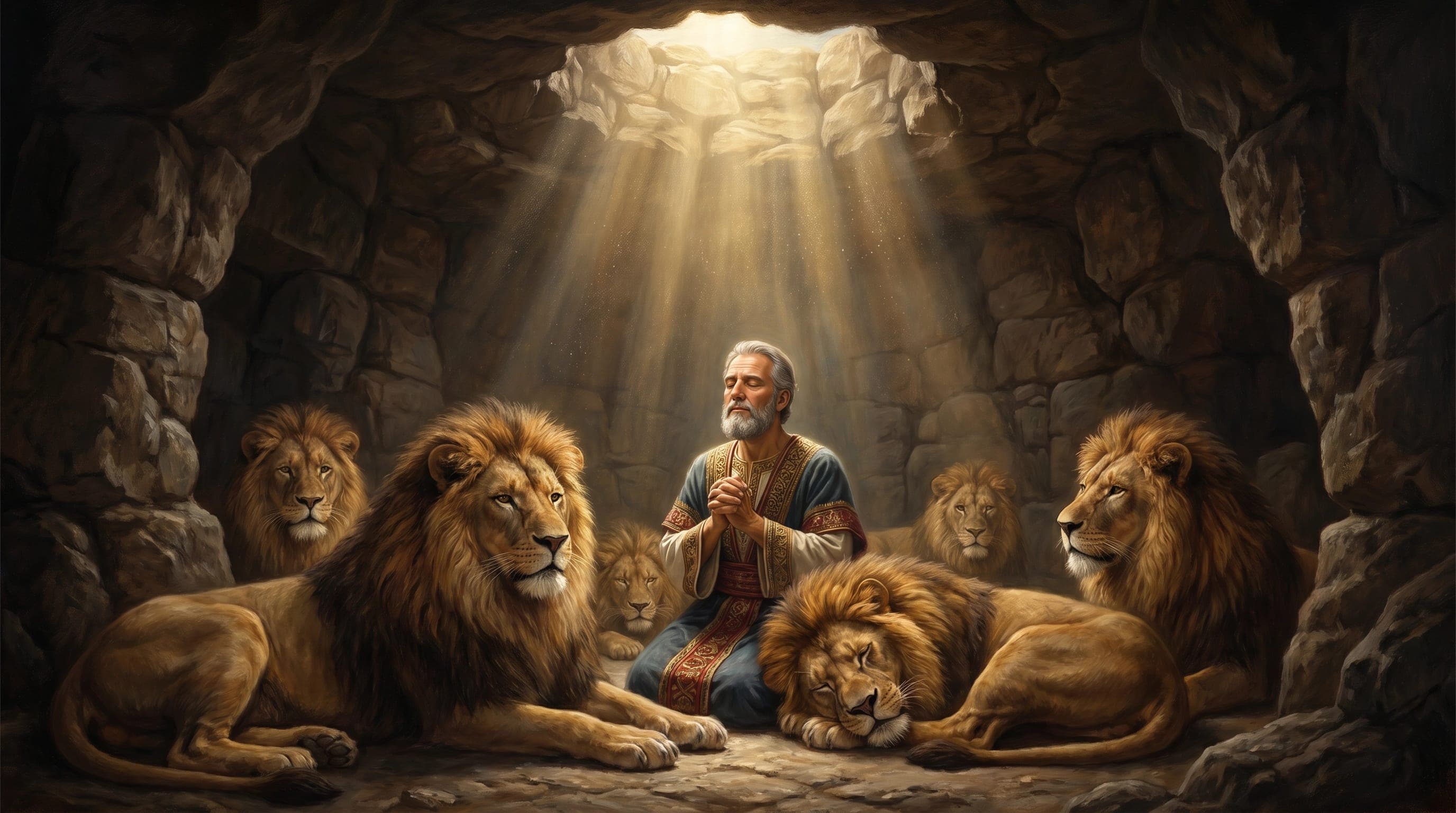
What Does Daniel 3:17 Mean?
Daniel 3:17 meaning: How can believers have confidence in God's power when facing impossible circumstances or persecution?
Clear Bible Translation
Modern EnglishIf that is so, our God, whom we serve, is able to deliver us from the burning fiery furnace, and he will deliver us from your hand, king.
King James Version
If it be so, our God whom we serve is able to deliver us from the burning fiery furnace, and he will deliver us out of thine hand, O king.
Language, Structure, and Intent
Within the framework of covenant faithfulness, Shadrach, Meshach, and Abednego articulate a profound theology of divine sovereignty that transcends circumstantial outcomes. Their declaration hinges on the Hebrew word *yakol* (able), which speaks not merely to God's capacity but to His absolute authority over all earthly powers—including Nebuchadnezzar's seemingly invincible Babylonian empire. The phrase "our God whom we serve" (*elahana di-anaḥna palḥin leh* in Aramaic) emphasizes both covenant relationship and active worship, standing in deliberate contrast to the passive idol-worship demanded by the king. Most striking is their confident assertion "he will deliver us," which the Hebrew construction suggests carries the force of certainty rather than mere hope. This isn't wishful thinking but covenant confidence—these men understand that their God's promises extend beyond physical preservation to ultimate vindication of His people. The historical irony cuts deep: three Hebrew exiles, stripped of homeland and political power, declare spiritual victory over the most powerful monarch of their age. Their words echo the ancient promise to Abraham that those who curse God's people will themselves be cursed, while revealing a mature faith that trusts divine faithfulness regardless of immediate outcomes.
Written during the Babylonian exile (6th century BC), likely compiled in its final form during the Maccabean crisis when Jews faced similar pressures to compromise their faith under Antiochus IV Epiphanes.
King Nebuchadnezzar has erected a massive golden statue and commanded all officials to worship it upon hearing musical instruments. The three Hebrew officials refuse to bow, prompting furious threats from the king to throw them into a superheated furnace. Their response comes at the moment of ultimate crisis—standing before absolute power with no earthly hope of rescue. This confrontation represents the climactic test of covenant loyalty versus imperial demands that runs throughout the first half of Daniel.
Read the full chapter: Daniel 3 →
Present-Day Relevance
When believers face impossible choices between faithfulness to God and submission to worldly authorities, this verse provides a framework for courageous response. True faith declares God's ability to deliver while remaining committed to obedience regardless of outcome—a perspective that transforms how we approach career pressures, family conflicts, or cultural demands that compromise our convictions.
Connected Passages
- Exodus 14:14 →Connects divine sovereignty with divine warfare
- Psalms 46:10 →Also explores divine sovereignty
- Jeremiah 29:11 →Also explores divine sovereignty
Reader Questions
- What is the historical background of Daniel 3:17?
- Written during the Babylonian exile (6th century BC), likely compiled in its final form during the Maccabean crisis when Jews faced similar pressures to compromise their faith under Antiochus IV Epiphanes.
- What is the main theme of Daniel 3:17?
- The primary theme is divine sovereignty. Related themes include covenant faithfulness and persecution and trust.
- Where is Daniel 3:17 in the Bible?
- Daniel, chapter 3, verse 17. Read Daniel 3 →
Daily Verse — straight to your inbox
A verse and a 2-sentence plain-English explanation, every morning. Free. Unsubscribe anytime.