What Does Exodus 14:14 Mean?
Exodus 14:14 meaning: what it means that God fights for us and we should be still
Clear Bible Translation
Modern EnglishThe LORD will fight for you. All you have to do is be still."
King James Version
The LORD shall fight for you, and ye shall hold your peace.
Explanation and Context
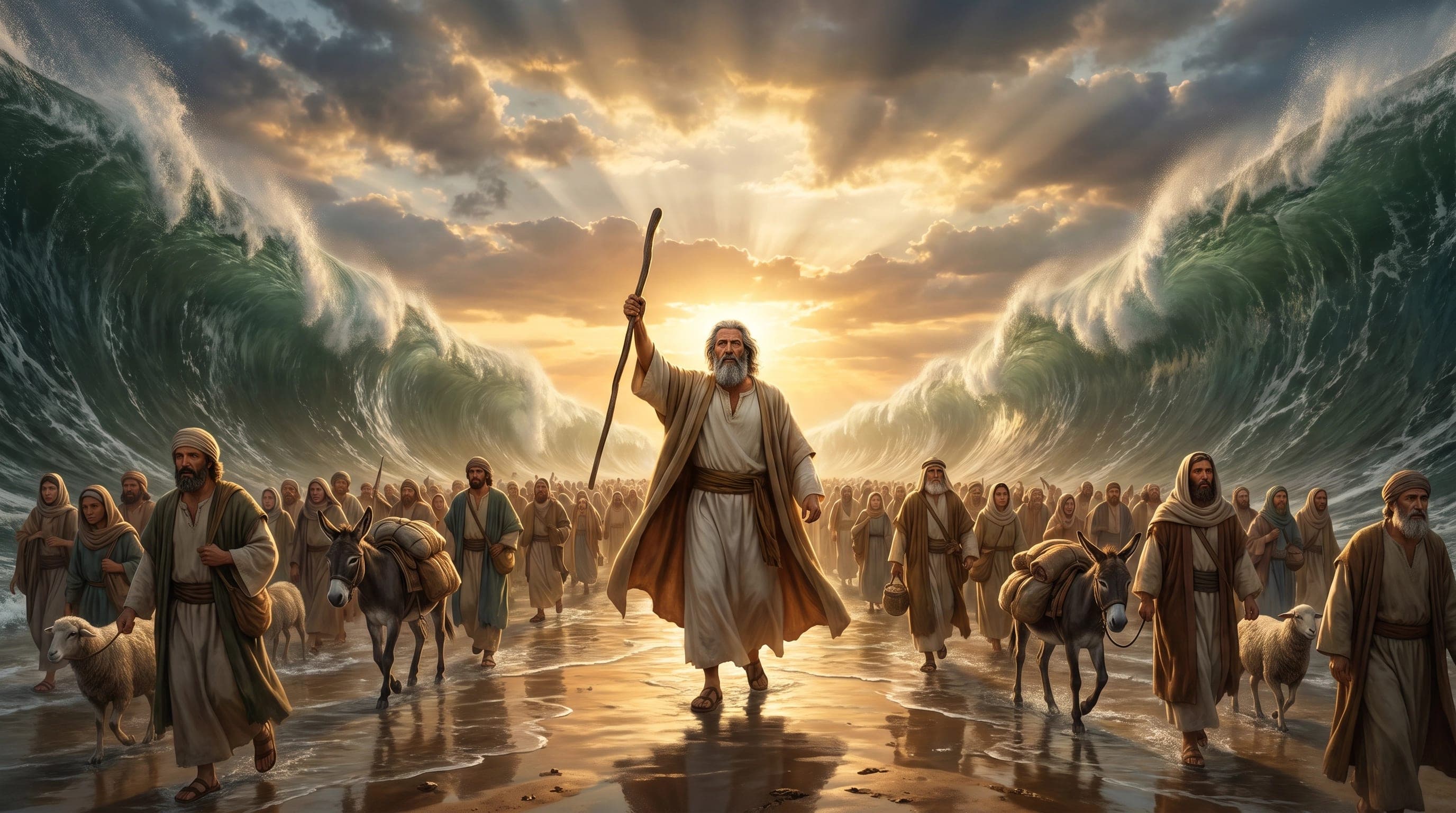
Moses delivers this divine command as panicked Israelites face the seemingly impossible choice between Pharaoh's advancing chariots behind them and the Red Sea ahead. The Hebrew verb *lacham* (fight) indicates warfare on Israel's behalf, while the phrase "hold your peace" translates *charesh*, meaning both silence and inaction. God transforms human helplessness into the stage for divine intervention. The command strips away all human agency—no fighting, no fleeing, no scheming—leaving only trust in Yahweh's military prowess.
Moses recorded this during Israel's wilderness wanderings, likely drawing from eyewitness testimony of the Red Sea crossing around 1446 BC.
The Israelites have just escaped Egypt but find themselves trapped at the Red Sea with Pharaoh's army in pursuit (14:10-12). Their terror leads to bitter complaints against Moses, wishing they had remained slaves rather than die in the wilderness. Moses responds with this prophetic declaration before the miraculous parting of the sea. The narrative deliberately builds tension to showcase God's power over both natural forces and military might, establishing a pattern of divine deliverance that will define Israel's relationship with Yahweh.
When circumstances create impossible situations with no human solutions, this verse calls believers to active waiting rather than frantic self-rescue attempts. The principle challenges our instinct to control outcomes, demanding trust in God's timing and methods even when they appear absent.
Read the full chapter: Exodus 14 →
Parallel Passages
- Psalms 46:10 →Connects divine warfare with divine sovereignty
- Joshua 1:9 →Connects divine warfare with divine courage
- Jeremiah 29:11 →Connects divine warfare with divine sovereignty
Frequently Asked
- What is the context of Exodus 14:14?
- Moses recorded this during Israel's wilderness wanderings, likely drawing from eyewitness testimony of the Red Sea crossing around 1446 BC.
- Why does Exodus 14:14 matter today?
- When circumstances create impossible situations with no human solutions, this verse calls believers to active waiting rather than frantic self-rescue attempts. The principle challenges our instinct to control outcomes, demanding trust in God's timing and methods even when they appear absent.
- Where is Exodus 14:14 located in Scripture?
- Exodus, chapter 14, verse 14. Read Exodus 14 →
Daily Verse — straight to your inbox
A verse and a 2-sentence plain-English explanation, every morning. Free. Unsubscribe anytime.