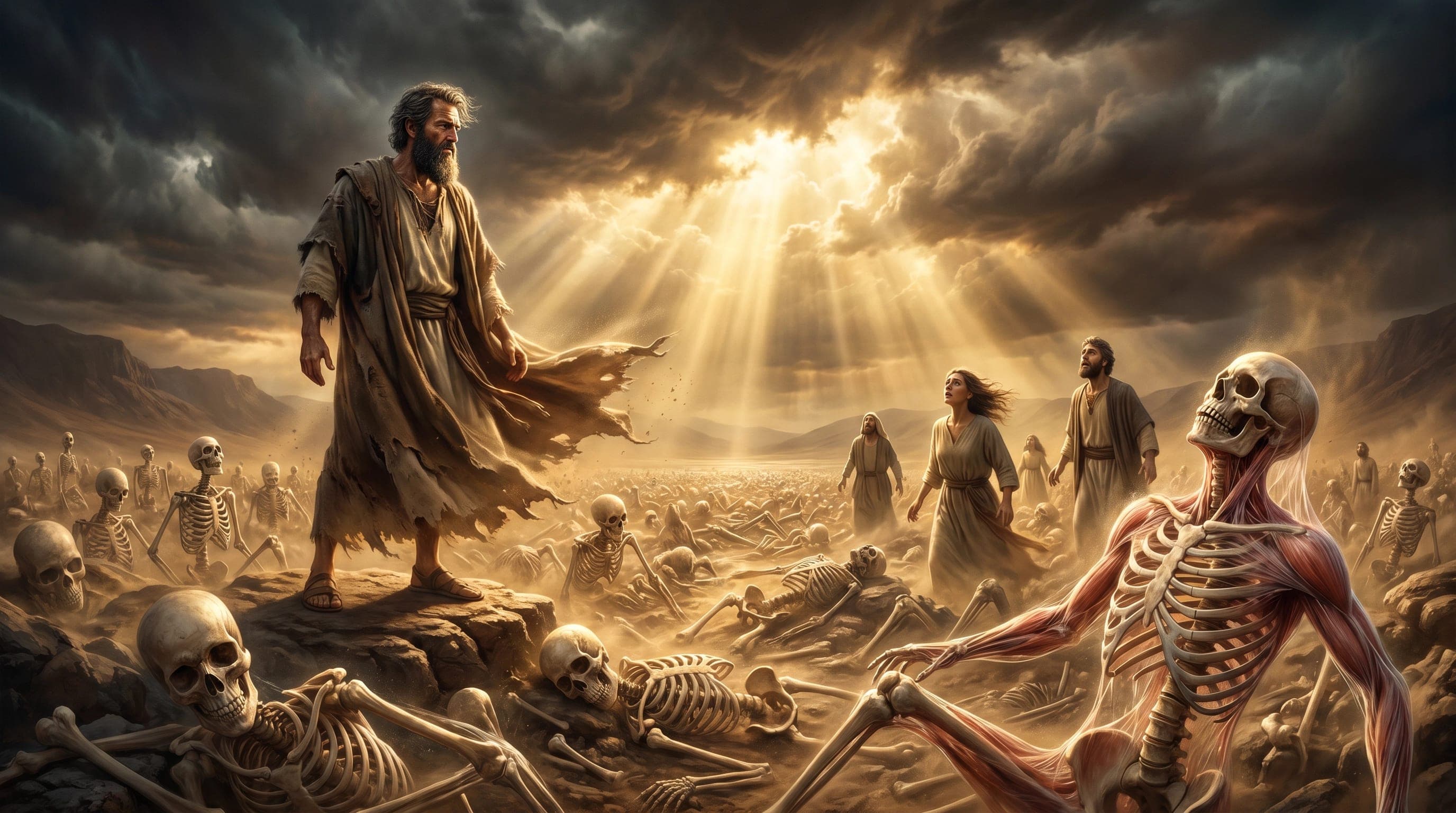
What Does Ezekiel 36:26 Mean?
Ezekiel 36:26 meaning: what does it mean for God to give a new heart and how does spiritual transformation really happen
King James Version
A new heart also will I give you, and a new spirit will I put within you: and I will take away the stony heart out of your flesh, and I will give you an heart of flesh.
Clear Bible Translation
Modern EnglishI will give you a new heart and put a new spirit inside you. I will remove the heart of stone from your body and give you a heart of flesh.
Language, Structure, and Intent
Speaking to Jewish exiles languishing in Babylon around 585 BCE, Ezekiel delivers God's promise of radical internal transformation that transcends mere behavioral modification. The Hebrew word for 'new' (chadash) doesn't simply mean fresh or recent—it denotes something unprecedented, qualitatively different from what existed before. God promises to extract the 'heart of stone' (lev ha'even), a phrase capturing the spiritual calcification that makes genuine response to divine love impossible. The contrast between stone and flesh isn't about hardness versus softness, but about death versus life—stone cannot respond, grow, or feel, while flesh pulses with sensitivity and responsiveness. The divine promise operates through substitution rather than rehabilitation: God will 'take away' and 'give' rather than repair what's broken. This prophetic vision anticipates the New Testament understanding of regeneration, where transformation occurs through divine initiative rather than human effort. The Hebrew ruach (spirit) encompasses both breath and wind, suggesting that God will breathe into his people the same life-giving force that animated Adam in Eden.
The prophet Ezekiel proclaimed this message to Jewish exiles in Babylon around 585 BCE, roughly a decade after Jerusalem's destruction. These displaced people needed assurance that their covenant relationship with God could be restored despite their apparent spiritual failure.
This promise appears within Ezekiel's broader restoration oracle (chapters 34-37), where God pledges to regather scattered Israel and renew the covenant relationship. The preceding chapters detail Israel's spiritual adultery and consequent exile, while subsequent verses outline the gift of God's Spirit enabling covenant obedience. Ezekiel positions this heart transformation as the prerequisite for Israel's return to the land and renewed fellowship with Yahweh.
Read the full chapter: Ezekiel 36 →
Present-Day Relevance
Authentic spiritual change cannot be manufactured through willpower or religious activity—it requires God's supernatural intervention in the human heart. When believers struggle with persistent sin patterns or spiritual numbness, this verse reminds them that transformation comes through divine grace, not personal effort.
Thematic Connections
- Romans 12:2 →Connects regeneration with transformation
- Ephesians 2:8 →Connects regeneration with grace
- Jeremiah 29:11 →Connects regeneration with divine sovereignty
- 2 Timothy 3:16 →Connects regeneration with biblical authority
Key Questions Answered
- What is the main theme of Ezekiel 36:26?
- The primary theme is regeneration. Related themes include covenant renewal and divine initiative and spiritual transformation.
- Why is Ezekiel 36:26 significant?
- Authentic spiritual change cannot be manufactured through willpower or religious activity—it requires God's supernatural intervention in the human heart. When believers struggle with persistent sin patterns or spiritual numbness, this verse reminds them that transformation comes through divine grace, not personal effort.
- Where can I find Ezekiel 36:26?
- Ezekiel, chapter 36, verse 26. Read Ezekiel 36 →
Daily Verse — straight to your inbox
A verse and a 2-sentence plain-English explanation, every morning. Free. Unsubscribe anytime.