What Does Joel 2:25 Mean?
Joel 2:25 meaning: how God promises to restore what has been lost or destroyed
Clear Bible Translation
Modern EnglishI will restore to you the years that the locust has eaten — the cankerworm, the caterpillar, and the palmerworm — my great army which I sent among you.
King James Version
And I will restore to you the years that the locust hath eaten, the cankerworm, and the caterpiller, and the palmerworm, my great army which I sent among you.
Historical and Literary Context
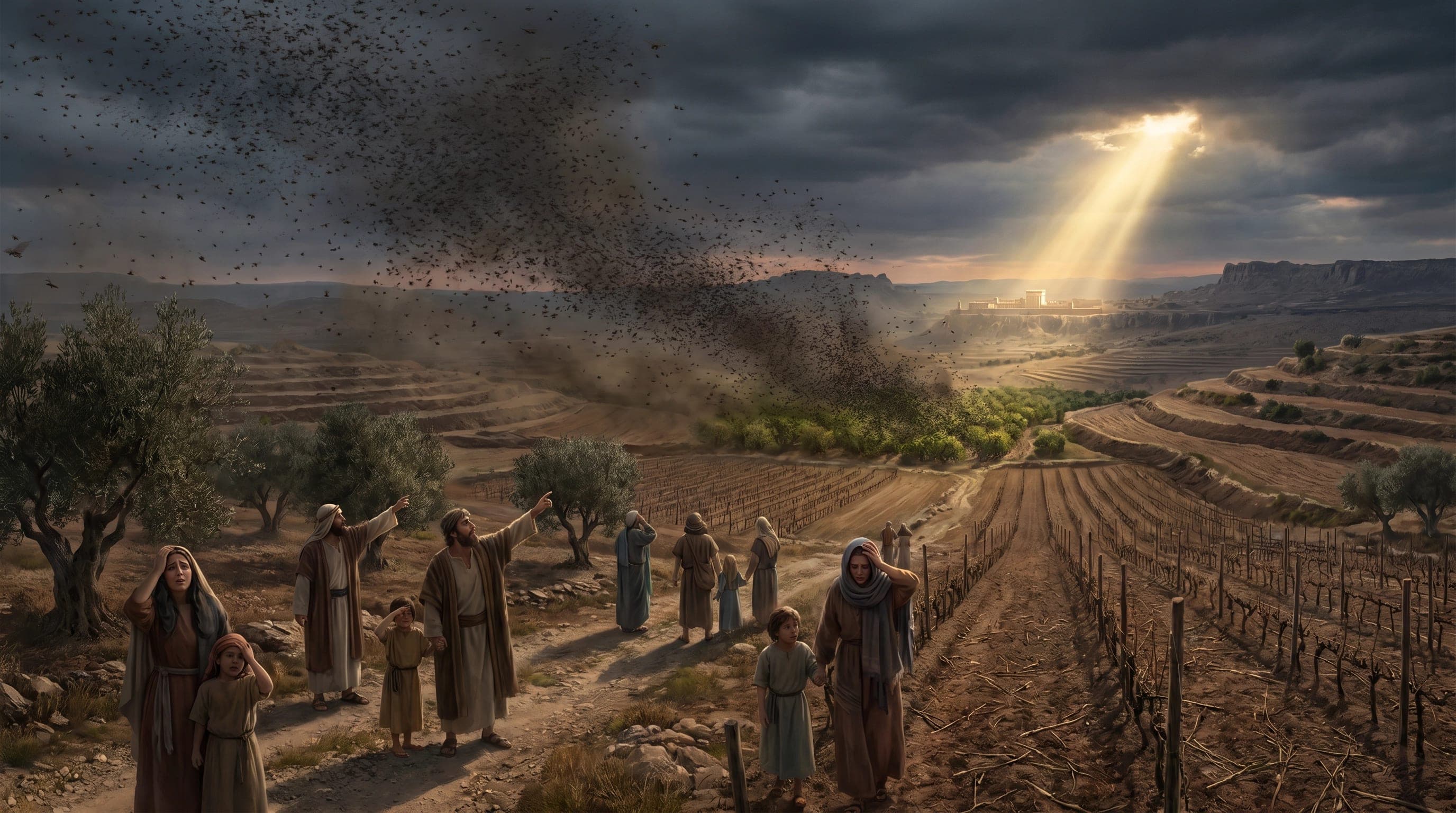
The prophet Joel wrote during a period of devastating locust swarms in Judah, likely in the 5th century BC. He interpreted these natural disasters as divine judgment while calling the covenant people back to faithful relationship with Yahweh.
God promises complete restoration to Israel after devastating locust plagues have stripped the land bare. The Hebrew word *shub* (restore) carries the meaning of divine reversal—what seemed permanently lost will be supernaturally recovered. These insects weren't random natural disasters but instruments of divine judgment, yet now mercy triumphs. The comprehensive list of destructive creatures emphasizes the totality of both judgment and promised restoration.
Joel has just called Israel to genuine repentance through fasting, mourning, and returning to the Lord with torn hearts rather than torn garments (2:12-17). The prophet now shifts from warning to promise, revealing God's compassionate response to authentic repentance. This restoration promise flows directly into Joel's famous prophecy about the outpouring of God's Spirit (2:28-32), showing how physical and spiritual renewal intertwine in covenant relationship.
Read the full chapter: Joel 2 →
Living This Out
When life circumstances feel stripped bare by loss or consequences, God specializes in restoration that exceeds what was originally taken. The promise extends beyond material recovery to relationships, purpose, and spiritual vitality that seemed permanently damaged.
Scripture with Similar Themes
- Jeremiah 29:11 →Connects restoration with divine sovereignty
- Romans 8:28 →Connects restoration with providence
- Isaiah 40:31 →Connects restoration with divine strength
The Book of Joel
Joel 1: The Locust Plague and Call to Mourning
Joel delivers the word of the LORD and calls the elders and all the inhabitants of the land to listen. He asks whether such a disaster has ever happened and commands them to tell it to future generations. He describes successive waves of locusts that strip the land bare until nothing remains. Vineyards and fig trees are ruined, and the bark is stripped from the trees.
Unlock the full Joel summary
Continue reading every chapter — themes, structure, and turning points.
The complete summary of Joel — a chapter-by-chapter breakdown covering all 3 chapters.
What you get
Every chapter of Joel summarized in clear, modern English
How each section connects — narrative flow, key themes, and turning points
Permanent access — read anytime, on any device
All 66 book summaries • unlimited AI tools • $99/year after trial
ClearBible summaries are proprietary content and may not be copied, republished, or resold.
Common Questions
- Who wrote Joel 2:25 and when?
- The prophet Joel wrote during a period of devastating locust swarms in Judah, likely in the 5th century BC. He interpreted these natural disasters as divine judgment while calling the covenant people back to faithful relationship with Yahweh.
- What themes does Joel 2:25 address?
- The primary theme is restoration. Related themes include covenant faithfulness and divine mercy and repentance.
- What does the Bible say about restoration?
- When life circumstances feel stripped bare by loss or consequences, God specializes in restoration that exceeds what was originally taken. The promise extends beyond material recovery to relationships, purpose, and spiritual vitality that seemed permanently damaged.
Daily Verse — straight to your inbox
A verse and a 2-sentence plain-English explanation, every morning. Free. Unsubscribe anytime.