What Does John 11:25 Mean?
John 11:25 meaning: what Jesus meant when he called himself the resurrection and the life
Clear Bible Translation
Modern EnglishJesus said to her, "I am the resurrection and the life. Whoever believes in me, even though they die, will live.
King James Version
Jesus said unto her, I am the resurrection, and the life: he that believeth in me, though he were dead, yet shall he live:
Verse Analysis
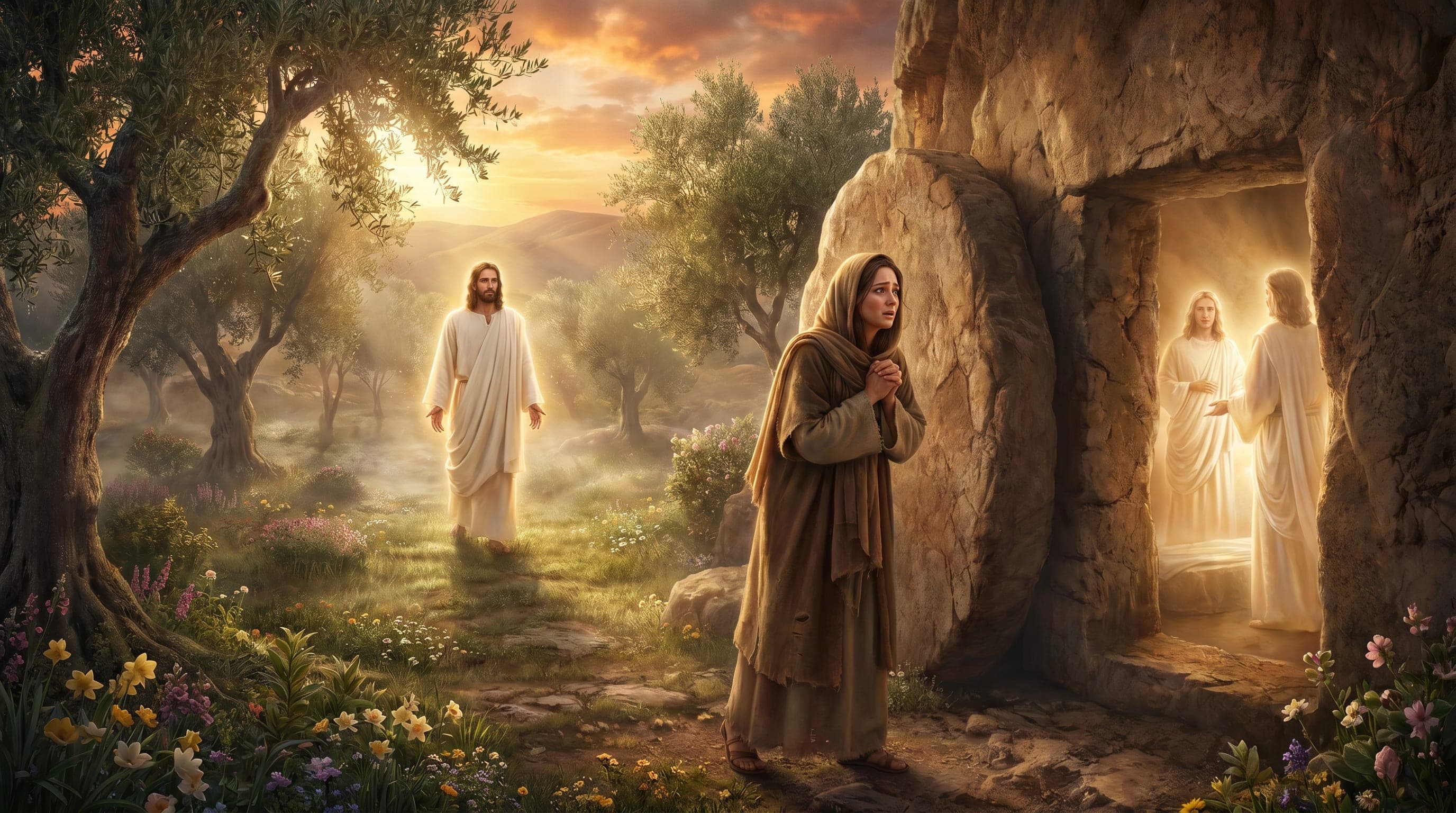
Standing before Martha in her grief, Jesus declares himself the very embodiment of resurrection power and eternal life. His words transcend temporal death—physical mortality becomes merely a transition for those united to him through faith. The promise reaches beyond future resurrection to present reality: believers possess eternal life now, making death a defeated enemy rather than final verdict. Faith becomes the bridge between mortal existence and imperishable life.
John writes his Gospel around 85-95 AD, recording Jesus' ministry in first-century Palestine. The Bethany account occurs during Jesus' final months before crucifixion, when religious opposition had intensified.
Jesus arrives in Bethany four days after Lazarus has died, deliberately delaying his journey despite the sisters' urgent plea. Martha meets him with both faith and gentle reproach, declaring her belief in his power while questioning his timing. Her confession that Lazarus will rise 'at the last day' reveals orthodox Jewish hope in future resurrection. Jesus responds not with theological theory but personal revelation, preparing her for the impossible: her brother's immediate return from death.
Read the full chapter: John 11 →
Applying This to Daily Life
Death loses its finality when viewed through Christ's claim to be life itself. Grief remains real and painful, but it cannot touch the eternal dimension of existence that faith secures. Every believer already possesses the resurrection life that will one day transform even our mortal bodies.
Related Scripture
- John 3:16 →Connects resurrection power with divine love
- John 14:6 →Connects resurrection power with exclusive salvation
- Revelation 3:20 →Connects resurrection power with divine invitation
Quick Answers
- What was happening when John 11:25 was written?
- John writes his Gospel around 85-95 AD, recording Jesus' ministry in first-century Palestine. The Bethany account occurs during Jesus' final months before crucifixion, when religious opposition had intensified.
- What is the central message of John 11:25?
- The primary theme is resurrection power. Related themes include eternal life and faith response and divine identity.
- How does this verse apply to modern life?
- Death loses its finality when viewed through Christ's claim to be life itself. Grief remains real and painful, but it cannot touch the eternal dimension of existence that faith secures. Every believer already possesses the resurrection life that will one day transform even our mortal bodies.
Daily Verse — straight to your inbox
A verse and a 2-sentence plain-English explanation, every morning. Free. Unsubscribe anytime.