What Does John 14:6 Mean?
John 14:6 meaning: what Jesus means when he claims to be the only way to God
King James Version
Jesus saith unto him, I am the way, the truth, and the life: no man cometh unto the Father, but by me.
Clear Bible Translation
Modern EnglishJesus said to him, "I am the way, the truth, and the life. No one comes to the Father except through me."
Verse Analysis
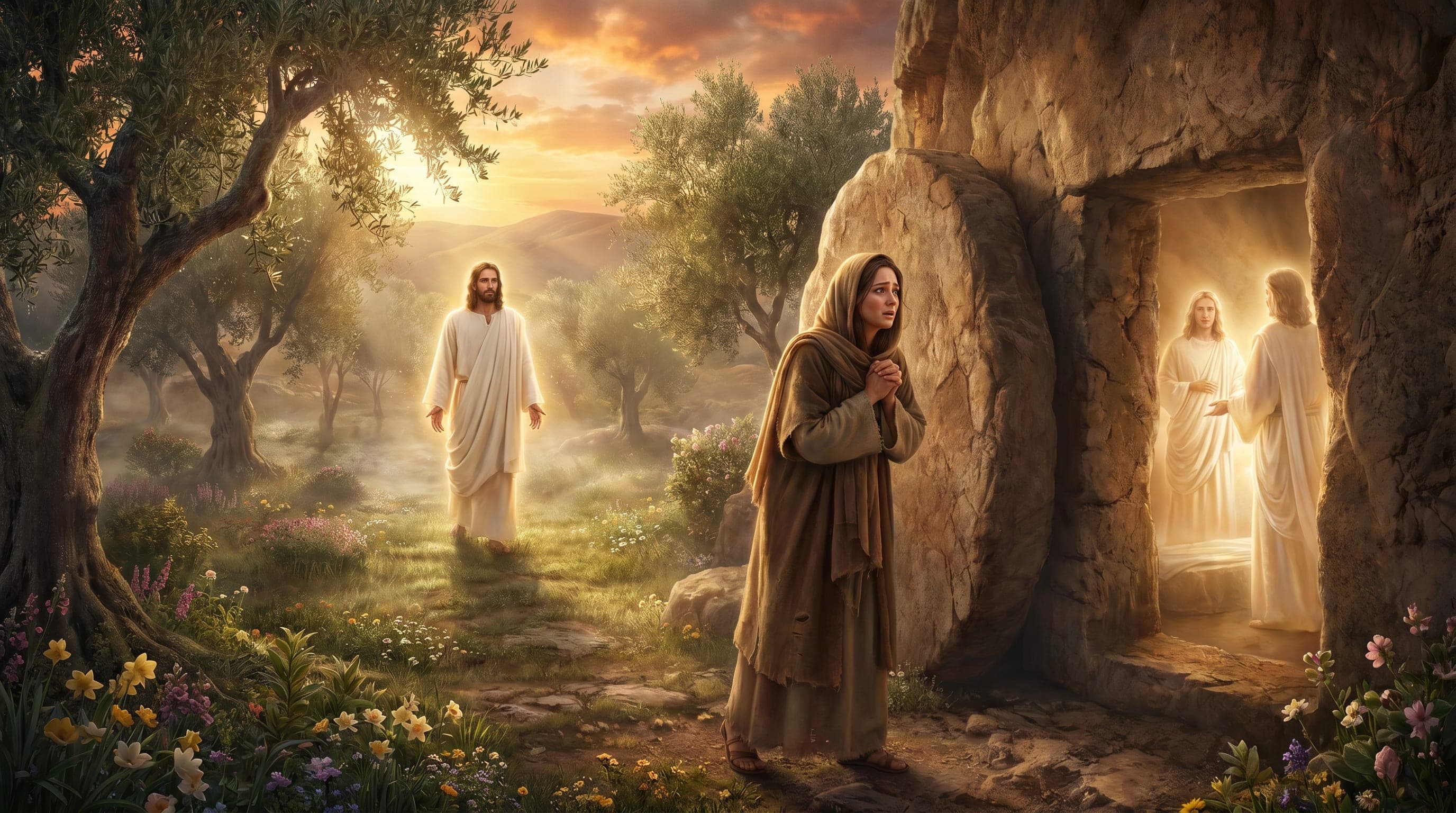
Picture the scene: Jesus has just told his closest friends he's leaving them, and they're bewildered. Thomas voices their confusion—'We don't know where you're going, so how can we know the way?' Into this moment of raw uncertainty, Jesus speaks these stunning words that would echo through history. He doesn't offer directions to a place; he declares himself to be the path itself. The Greek word 'hodos' for 'way' carries the sense of a traveled road, and Jesus claims to be the exclusive route between humanity and God. Most remarkably, he links three concepts—way, truth, and life—that Jewish thought often kept separate, suggesting that access to God isn't just about following correct directions but about encountering ultimate reality itself. When he says 'no man cometh unto the Father, but by me,' he's making perhaps the most exclusive claim in religious history.
The apostle John wrote this Gospel around 85-95 AD, decades after witnessing these events firsthand. He was writing to a community that needed to understand Jesus' unique identity amid competing religious claims in the Greco-Roman world.
This declaration comes during Jesus' final discourse to his disciples in the upper room, recorded in John 13-17. The disciples are struggling to understand Jesus' announcement that he's going away, and Thomas has just expressed their bewilderment about his destination. Jesus responds by shifting their focus from where he's going to who he is. This teaching immediately precedes his promise about preparing rooms in his Father's house and follows his prediction of Peter's denial, creating a context where comfort and shocking truth interweave.
Read the full chapter: John 14 →
Applying This to Daily Life
In a culture obsessed with multiple paths to fulfillment, Jesus' claim challenges the assumption that all roads lead to the same destination. This verse demands a decision rather than offering mere comfort—it presents Jesus not as one option among many, but as the singular bridge between human searching and divine reality.
Thematic Connections
- John 3:16 →Connects exclusive salvation with divine love
- Ephesians 2:8 →Connects exclusive salvation with grace
- Revelation 3:20 →Connects exclusive salvation with divine invitation
Key Questions Answered
- What is the main theme of John 14:6?
- The primary theme is exclusive salvation. Related themes include divine authority and christological claims and access to god.
- Why is John 14:6 significant?
- In a culture obsessed with multiple paths to fulfillment, Jesus' claim challenges the assumption that all roads lead to the same destination. This verse demands a decision rather than offering mere comfort—it presents Jesus not as one option among many, but as the singular bridge between human searching and divine reality.
- Where can I find John 14:6?
- John, chapter 14, verse 6. Read John 14 →
Daily Verse — straight to your inbox
A verse and a 2-sentence plain-English explanation, every morning. Free. Unsubscribe anytime.