What Does Joshua 1:9 Mean?
Joshua 1:9 meaning: How can I find courage and overcome fear in difficult situations?
King James Version
Have not I commanded thee? Be strong and of a good courage; be not afraid, neither be thou dismayed: for the LORD thy God is with thee whithersoever thou goest.
Clear Bible Translation
Modern EnglishHave I not commanded you? Be strong and courageous; do not be afraid or discouraged, for the LORD your God is with you wherever you go.
Verse Analysis
God's command to Joshua breaks down into four distinct components that build logically upon each other. The rhetorical question 'Have not I commanded thee?' anchors everything that follows in divine authority—this isn't human pep talk but sovereign decree. The positive commands 'be strong and of good courage' precede the negative prohibitions 'be not afraid, neither be thou dismayed,' showing that true courage isn't merely the absence of fear but the presence of godly resolve. The Hebrew term for 'dismayed' (chatat) carries connotations of being shattered or broken, suggesting Joshua faces threats that could psychologically destroy him. Yet the foundation for all these commands rests in the final clause: God's perpetual presence wherever Joshua travels. What makes this particularly striking is that God doesn't promise to remove the dangers or guarantee easy victories—He promises His presence in the midst of whatever Joshua will face.
Written during Israel's transition from wilderness wandering to conquest of Canaan, approximately 1400 BC. The author emphasizes God's direct speech to Joshua as the new leader inheriting Moses' role.
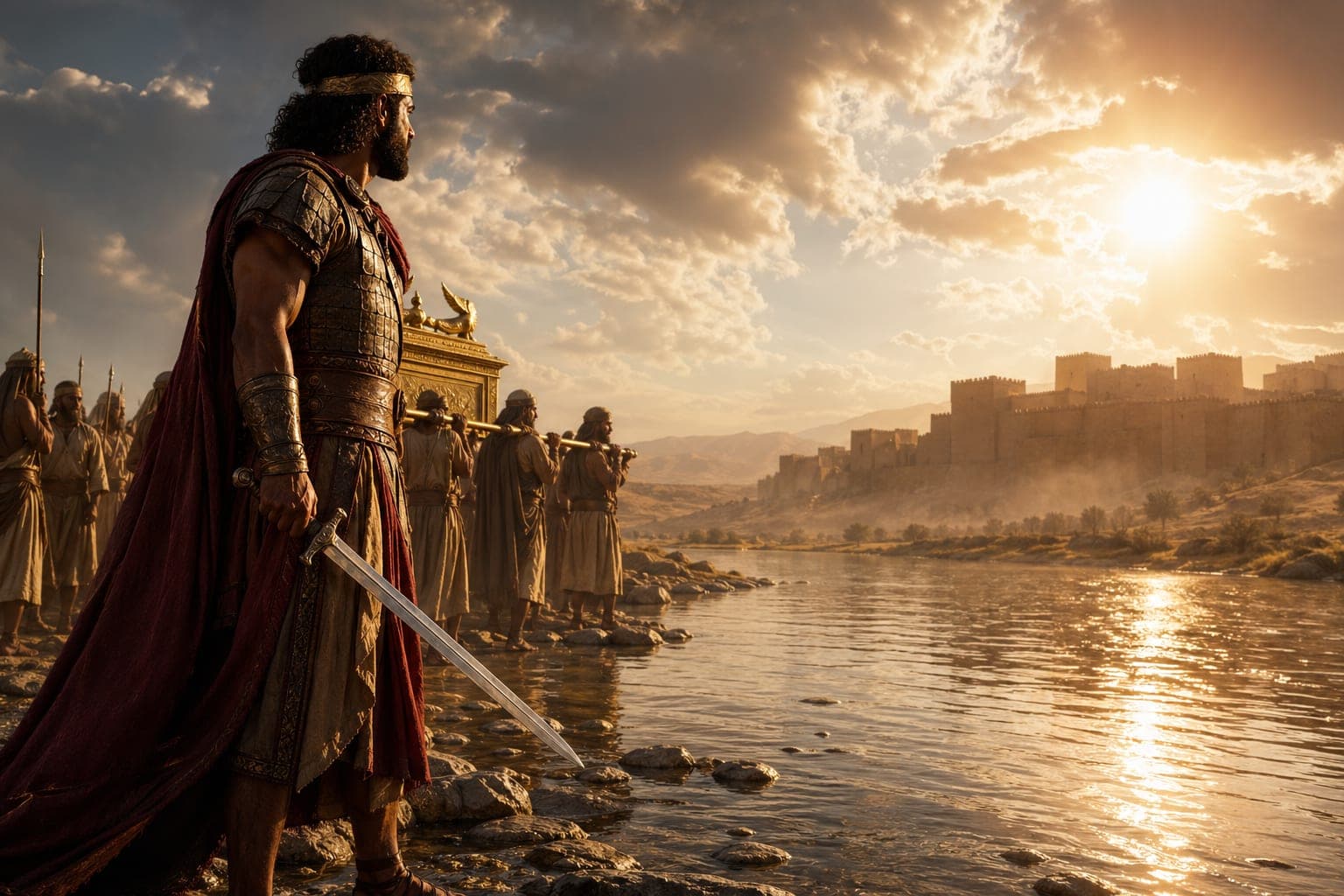
Moses has just died, and the enormous responsibility of leading Israel into Canaan falls squarely on Joshua's shoulders. In the opening verses of chapter 1, God appears to Joshua with his commission, repeatedly emphasizing courage and adherence to the Law. This particular verse represents the climactic third repetition of the courage theme, following verses 6 and 7. The repetition isn't accidental—it reveals both the magnitude of the challenges ahead and Joshua's very human need for divine reassurance. After this verse, the narrative shifts to Joshua's immediate implementation of God's commands as he begins mobilizing the tribes for conquest.
Read the full chapter: Joshua 1 →
Applying This to Daily Life
When facing overwhelming responsibilities or dangerous circumstances, believers can find confidence not in their own abilities but in God's promised presence. The verse teaches that courage is a choice rooted in theological truth rather than an emotion dependent on circumstances. Modern readers facing career transitions, family crises, or ministry challenges can draw strength from the same promise of divine accompaniment that sustained Joshua.
Thematic Connections
- Psalms 23:4 →Connects divine courage with divine presence
- Psalms 46:10 →Connects divine courage with divine sovereignty
- Exodus 14:14 →Connects divine courage with divine warfare
- Isaiah 40:31 →Connects divine courage with divine strength
Key Questions Answered
- What is the main theme of Joshua 1:9?
- The primary theme is divine courage. Related themes include god's presence and overcoming fear and divine commands.
- Why is Joshua 1:9 significant?
- When facing overwhelming responsibilities or dangerous circumstances, believers can find confidence not in their own abilities but in God's promised presence. The verse teaches that courage is a choice rooted in theological truth rather than an emotion dependent on circumstances. Modern readers facing career transitions, family crises, or ministry challenges can draw strength from the same promise of divine accompaniment that sustained Joshua.
- Where can I find Joshua 1:9?
- Joshua, chapter 1, verse 9. Read Joshua 1 →
Daily Verse — straight to your inbox
A verse and a 2-sentence plain-English explanation, every morning. Free. Unsubscribe anytime.