What Does Matthew 11:29 Mean?
Matthew 11:29 explains Jesus' invitation to discipleship through taking his yoke, promising soul rest through learning from his gentle and humble character.
Clear Bible Translation
Modern EnglishTake my yoke upon you and learn from me, because I am gentle and humble in heart. You will find rest for your souls.
King James Version
Take my yoke upon you, and learn of me; for I am meek and lowly in heart: and ye shall find rest unto your souls.
Historical and Literary Context
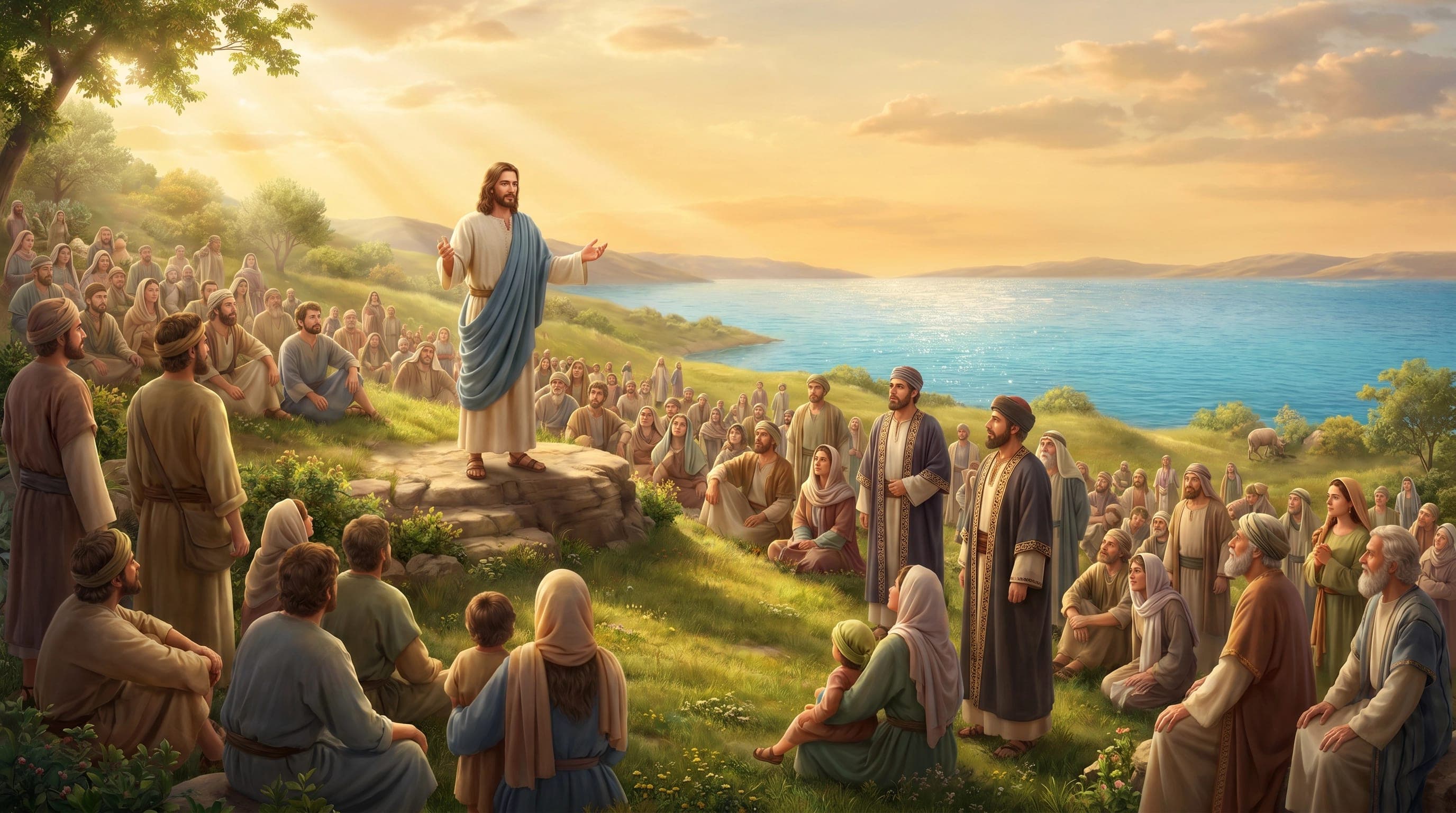
Jesus invites his followers to accept his discipleship by taking his 'yoke' — a metaphor for submitting to his teaching and authority as a rabbi. Unlike the burdensome religious requirements imposed by the Pharisees, Jesus promises that learning from him brings soul rest because of his gentle and humble character. The concept of discipleship is central here, specifically the willing submission to Jesus as teacher and master. Jesus speaks this invitation to crowds who have witnessed his ministry but struggled with the religious establishment's harsh demands.
Matthew records Jesus speaking to crowds after denouncing the unrepentant cities and revealing his unique relationship with the Father. Immediately before this verse, Jesus calls to all who are 'heavy laden' — likely referring to those burdened by the Pharisees' elaborate religious requirements. Following this invitation, Jesus contrasts his 'easy yoke' with the heavy burdens religious leaders placed on people. This passage occurs during Jesus' Galilean ministry when opposition from religious authorities was intensifying.
Read the full chapter: Matthew 11 →
Living This Out
Genuine discipleship involves actively learning from Jesus' character of gentleness and humility rather than pursuing religious performance or harsh self-discipline. Those overwhelmed by religious expectations can find relief by focusing on Jesus' teaching style and heart attitude rather than external compliance.
The Book of Matthew
Matthew 1: The Generation and Birth of Jesus Christ
The book begins with the generation of Jesus Christ, the son of David, the son of Abraham. It records the generations from Abraham to David, from David until the carrying away into Babylon, and from the carrying away into Babylon unto Christ, each being fourteen generations. The genealogy concludes with Jacob begetting Joseph, the husband of Mary, of whom was born Jesus, who is called Christ.
Unlock the full Matthew summary
Continue reading every chapter — themes, structure, and turning points.
The complete summary of Matthew — a chapter-by-chapter breakdown covering all 28 chapters.
What you get
Every chapter of Matthew summarized in clear, modern English
How each section connects — narrative flow, key themes, and turning points
Permanent access — read anytime, on any device
All 66 book summaries • unlimited AI tools • $99/year after trial
ClearBible summaries are proprietary content and may not be copied, republished, or resold.
Connected Passages
- Matthew 28:19 →Connects discipleship with great commission
- John 15:5 →Connects discipleship with abiding in christ
- Philippians 2:3 →Connects discipleship with humility
- Micah 6:8 →Connects discipleship with covenant obedience
Reader Questions
- What is the historical background of Matthew 11:29?
- Matthew records Jesus' words to Jewish crowds during his Galilean ministry, likely around 30 AD, when Pharisaic religious requirements heavily burdened the people.
- What is the main theme of Matthew 11:29?
- The primary theme is discipleship. Related themes include humility and spiritual rest and religious burden.
- Where is Matthew 11:29 in the Bible?
- Matthew, chapter 11, verse 29. Read Matthew 11 →
Daily Verse — straight to your inbox
A verse and a 2-sentence plain-English explanation, every morning. Free. Unsubscribe anytime.