What Does Matthew 28:19 Mean?
Matthew 28:19 meaning: understanding Jesus's command to make disciples of all nations and the significance of Trinitarian baptism
King James Version
Go ye therefore, and teach all nations, baptizing them in the name of the Father, and of the Son, and of the Holy Ghost:
Clear Bible Translation
Modern EnglishGo therefore, and teach all nations, baptizing them in the name of the Father, and of the Son, and of the Holy Spirit,
Verse Analysis
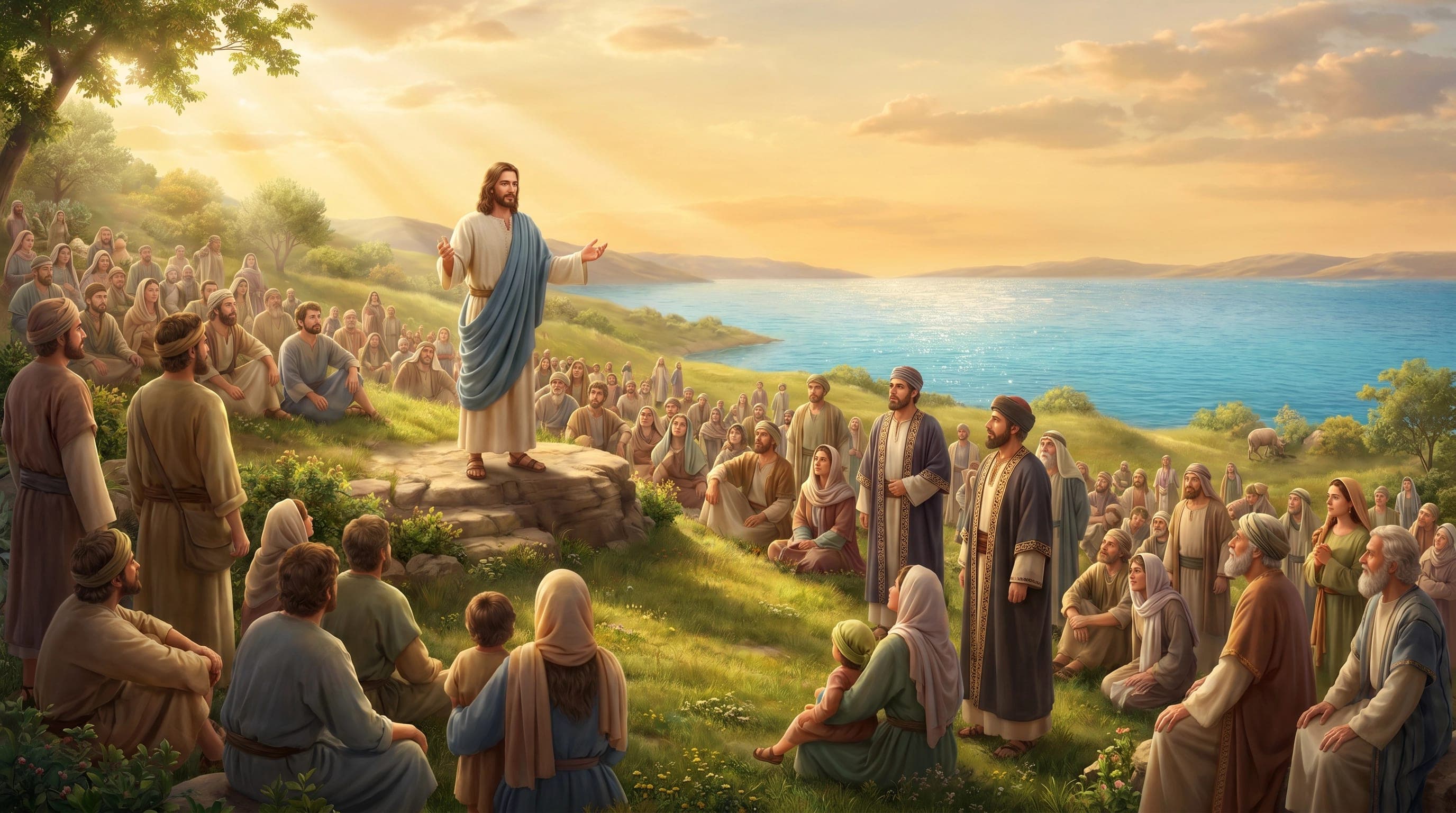
This commission emerges from Jesus's final earthly appearance to his disciples on a mountain in Galilee, following his resurrection. The word 'therefore' connects directly to his preceding claim of absolute authority in heaven and earth—because he possesses universal sovereignty, his followers must extend his reign to every corner of creation. The Greek term 'matheteuo' (translated 'teach') literally means to make disciples, emphasizing not mere instruction but life transformation and allegiance. Baptism 'in the name of' signifies more than a ritual formula; it represents placing converts under the authority and protection of the triune God. The Trinitarian formula here provides one of the clearest expressions of divine unity and distinction in the New Testament. What often goes unnoticed is that this commission reverses the scattering at Babel—where God divided the nations through language confusion, now Christ reunites them through the gospel.
Following his resurrection, Jesus had instructed his disciples to meet him in Galilee rather than remain in Jerusalem. When they gathered on the designated mountain, some worshiped while others doubted—a remarkably honest admission that shows the mixed reception even among his closest followers. Jesus then delivered what scholars call the Great Commission, which serves as Matthew's climactic conclusion to his Gospel. This commission functions as the hinge between Jesus's earthly ministry and the church's worldwide mission that would unfold in Acts.
Matthew wrote his Gospel around 70-80 AD for a primarily Jewish-Christian audience grappling with their identity after the temple's destruction. This commission demonstrates how Jesus's movement had evolved from a Jewish sect to a universal religion.
Read the full chapter: Matthew 28 →
Applying This to Daily Life
Every Christian participates in this global mission, whether through direct evangelism, supporting missionaries, or creating gospel-centered communities that attract others to Christ. The Trinitarian baptismal formula reminds believers that conversion involves entering into relationship with the fullness of God's nature—Father, Son, and Holy Spirit.
Thematic Connections
- John 14:6 →Connects great commission with exclusive salvation
- Matthew 11:28 →Connects great commission with divine rest
- Revelation 3:20 →Connects great commission with divine invitation
- 2 Timothy 3:16 →Connects great commission with biblical authority
Key Questions Answered
- What is the main theme of Matthew 28:19?
- The primary theme is great commission. Related themes include discipleship and trinity and evangelism.
- Why is Matthew 28:19 significant?
- Every Christian participates in this global mission, whether through direct evangelism, supporting missionaries, or creating gospel-centered communities that attract others to Christ. The Trinitarian baptismal formula reminds believers that conversion involves entering into relationship with the fullness of God's nature—Father, Son, and Holy Spirit.
- Where can I find Matthew 28:19?
- Matthew, chapter 28, verse 19. Read Matthew 28 →
Daily Verse — straight to your inbox
A verse and a 2-sentence plain-English explanation, every morning. Free. Unsubscribe anytime.