What Does Matthew 18:20 Mean?
Matthew 18:20 meaning: What does Jesus promise about his presence when Christians gather together?
King James Version
For where two or three are gathered together in my name, there am I in the midst of them.
Clear Bible Translation
Modern EnglishBecause wherever 2 or 3 gather together in my name, I am right there with them."
Matthew in Focus
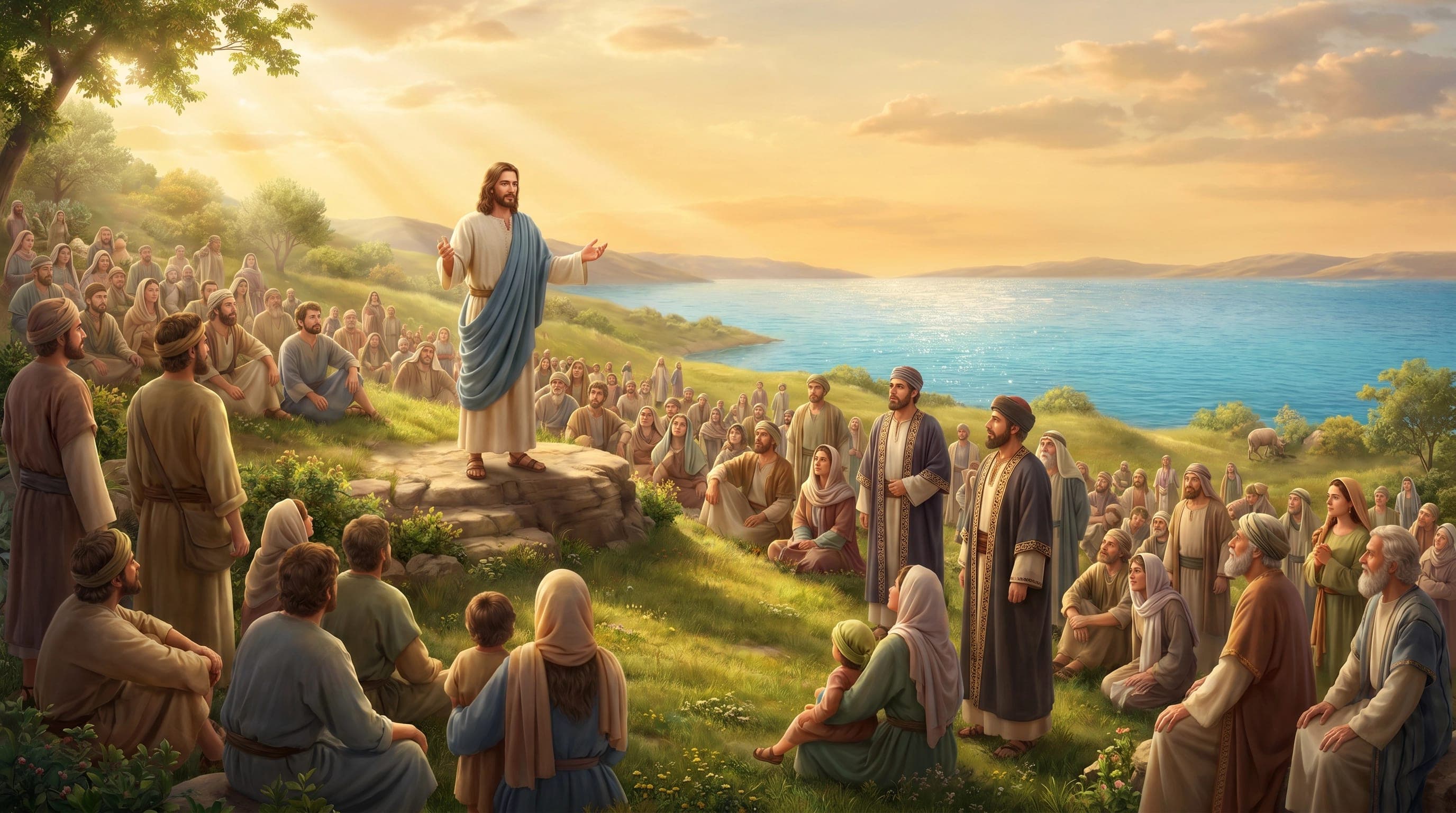
This promise emerges from Christ's discourse on church discipline and reconciliation, where he has just outlined procedures for addressing sin within the community. The Greek word synēgmena ('gathered together') carries the sense of being brought together for a specific purpose, not merely casual association. When Jesus speaks of being present 'in my name,' he employs the Hebrew concept of divine presence that permeated Temple worship—the name representing the full authority, character, and power of the person. The phrase 'in the midst' (en mesō) echoes Old Testament descriptions of Yahweh dwelling among his people in the tabernacle and Temple. Christ essentially declares that any legitimate gathering of believers, no matter how small, becomes a sacred space where his presence manifests with the same reality as the ancient Temple. The minimum of 'two or three' stands in stark contrast to rabbinic teaching that required ten men (a minyan) for certain prayers and religious functions. This radically democratizes access to divine presence, removing geographical and numerical barriers that characterized previous covenant arrangements.
Jesus has been teaching about humility, causing others to stumble, and pursuing lost sheep before addressing conflict resolution within the believing community. He outlines a careful process for confronting sin: private conversation, bringing witnesses, and finally involving the whole church. The promise of divine presence directly follows his teaching on binding and loosing, providing the theological foundation for why such small gatherings carry spiritual authority.
Small group Bible studies, prayer meetings, and informal Christian fellowships carry the same weight of Christ's presence as large congregations. When believers gather with genuine intention to honor Christ—whether for accountability, decision-making, or worship—they can expect his active participation in their discussions and prayers.
Read the full chapter: Matthew 18 →
The Book of Matthew
Matthew 1: The Generation and Birth of Jesus Christ
The book begins with the generation of Jesus Christ, the son of David, the son of Abraham. It records the generations from Abraham to David, from David until the carrying away into Babylon, and from the carrying away into Babylon unto Christ, each being fourteen generations. The genealogy concludes with Jacob begetting Joseph, the husband of Mary, of whom was born Jesus, who is called Christ.
Unlock the full Matthew summary
Continue reading every chapter — themes, structure, and turning points.
The complete summary of Matthew — a chapter-by-chapter breakdown covering all 28 chapters.
What you get
Every chapter of Matthew summarized in clear, modern English
How each section connects — narrative flow, key themes, and turning points
Permanent access — read anytime, on any device
All 66 book summaries • unlimited AI tools • $99/year after trial
ClearBible summaries are proprietary content and may not be copied, republished, or resold.
Thematic Connections
- Matthew 28:19 →Connects divine presence with great commission
- Revelation 3:20 →Connects divine presence with divine invitation
- 1 Corinthians 13:4 →Connects divine presence with divine love
Key Questions Answered
- What is the main theme of Matthew 18:20?
- The primary theme is divine presence. Related themes include community and authority and worship.
- Why is Matthew 18:20 significant?
- Small group Bible studies, prayer meetings, and informal Christian fellowships carry the same weight of Christ's presence as large congregations. When believers gather with genuine intention to honor Christ—whether for accountability, decision-making, or worship—they can expect his active participation in their discussions and prayers.
- Where can I find Matthew 18:20?
- Matthew, chapter 18, verse 20. Read Matthew 18 →
Daily Verse — straight to your inbox
A verse and a 2-sentence plain-English explanation, every morning. Free. Unsubscribe anytime.