What Does Matthew 19:26 Mean?
Matthew 19:26 meaning: Jesus teaches that salvation is impossible through human effort but achievable through God's unlimited power.
Clear Bible Translation
Modern EnglishJesus looked at them and said, "For people, this is impossible. But with God, all things are possible."
King James Version
But Jesus beheld them, and said unto them, With men this is impossible; but with God all things are possible.
Language, Structure, and Intent
Jesus declares that divine power accomplishes what human effort cannot achieve, specifically regarding salvation. The disciples had just asked 'Who then can be saved?' after Jesus explained how difficult it is for the wealthy to enter God's kingdom. Christ's response establishes God's sovereignty over salvation—while humans cannot save themselves or others through their own resources or righteousness, God possesses unlimited power to transform hearts and grant eternal life. This statement directly addresses the impossibility of self-salvation and affirms that redemption depends entirely on divine intervention.
Matthew wrote this Gospel to Jewish Christians around 70-85 AD, presenting Jesus as the promised Messiah who establishes God's kingdom.
Matthew records Jesus teaching his disciples after a rich young ruler walked away from following Christ due to the cost of discipleship. Jesus had just used the hyperbolic image of a camel passing through a needle's eye to illustrate how wealth creates barriers to entering God's kingdom. The disciples' astonishment and question about who can be saved reveals their assumption that wealthy people, often viewed as blessed by God, would have the best chance at salvation. Jesus responds by completely reframing salvation as God's work rather than human achievement.
Read the full chapter: Matthew 19 →
Present-Day Relevance
This verse confronts any confidence in human ability to earn or achieve salvation through wealth, good works, or moral effort. When facing seemingly impossible spiritual transformations—whether personal salvation or the conversion of others—believers can trust in God's power rather than human strategies or resources.
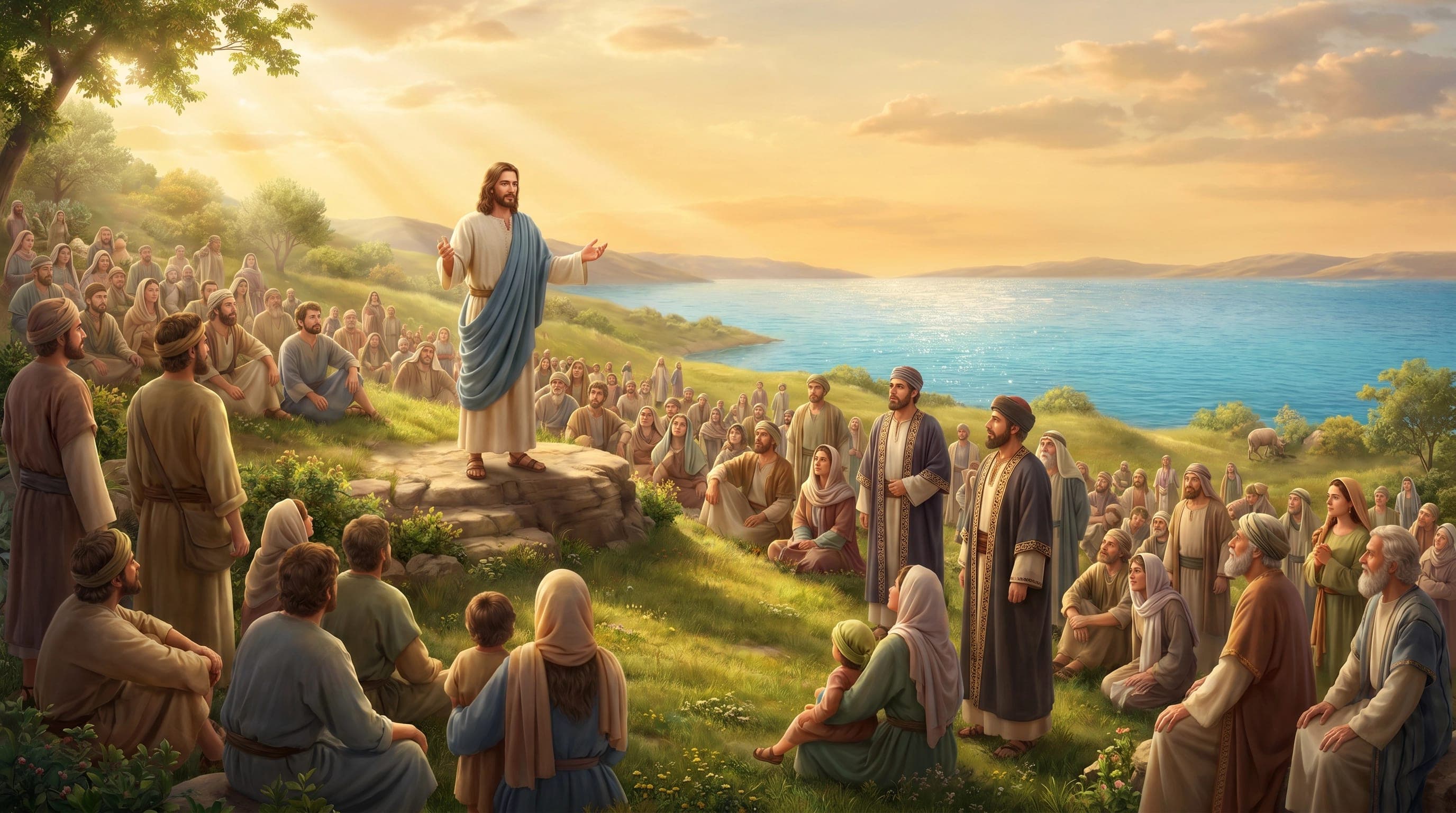
The Book of Matthew
Matthew 1: The Generation and Birth of Jesus Christ
The book begins with the generation of Jesus Christ, the son of David, the son of Abraham. It records the generations from Abraham to David, from David until the carrying away into Babylon, and from the carrying away into Babylon unto Christ, each being fourteen generations. The genealogy concludes with Jacob begetting Joseph, the husband of Mary, of whom was born Jesus, who is called Christ.
Unlock the full Matthew summary
Continue reading every chapter — themes, structure, and turning points.
The complete summary of Matthew — a chapter-by-chapter breakdown covering all 28 chapters.
What you get
Every chapter of Matthew summarized in clear, modern English
How each section connects — narrative flow, key themes, and turning points
Permanent access — read anytime, on any device
All 66 book summaries • unlimited AI tools • $99/year after trial
ClearBible summaries are proprietary content and may not be copied, republished, or resold.
Parallel Passages
- Romans 8:28 →Connects God's sovereignty with providence
- Proverbs 19:21 →Connects God's sovereignty with divine sovereignty
- Revelation 1:8 →Also explores God's sovereignty
- Psalms 121:2 →Connects God's sovereignty with divine providence
Frequently Asked
- What is the context of Matthew 19:26?
- Matthew wrote this Gospel to Jewish Christians around 70-85 AD, presenting Jesus as the promised Messiah who establishes God's kingdom.
- Why does Matthew 19:26 matter today?
- This verse confronts any confidence in human ability to earn or achieve salvation through wealth, good works, or moral effort. When facing seemingly impossible spiritual transformations—whether personal salvation or the conversion of others—believers can trust in God's power rather than human strategies or resources.
- Where is Matthew 19:26 located in Scripture?
- Matthew, chapter 19, verse 26. Read Matthew 19 →
Daily Verse — straight to your inbox
A verse and a 2-sentence plain-English explanation, every morning. Free. Unsubscribe anytime.