What Does Matthew 9:37 Mean?
Matthew 9:37 meaning: Jesus uses harvest imagery to explain the urgent need for more gospel workers to reach spiritually ready people.
Clear Bible Translation
Modern EnglishHe told his disciples, "The harvest is enormous, but the workers are few.
King James Version
Then saith he unto his disciples, The harvest truly is plenteous, but the labourers are few;
Historical and Literary Context
Matthew records Jesus' words to his twelve disciples during his Galilean ministry, approximately 30 AD, as he prepared to commission them for their own evangelistic mission.
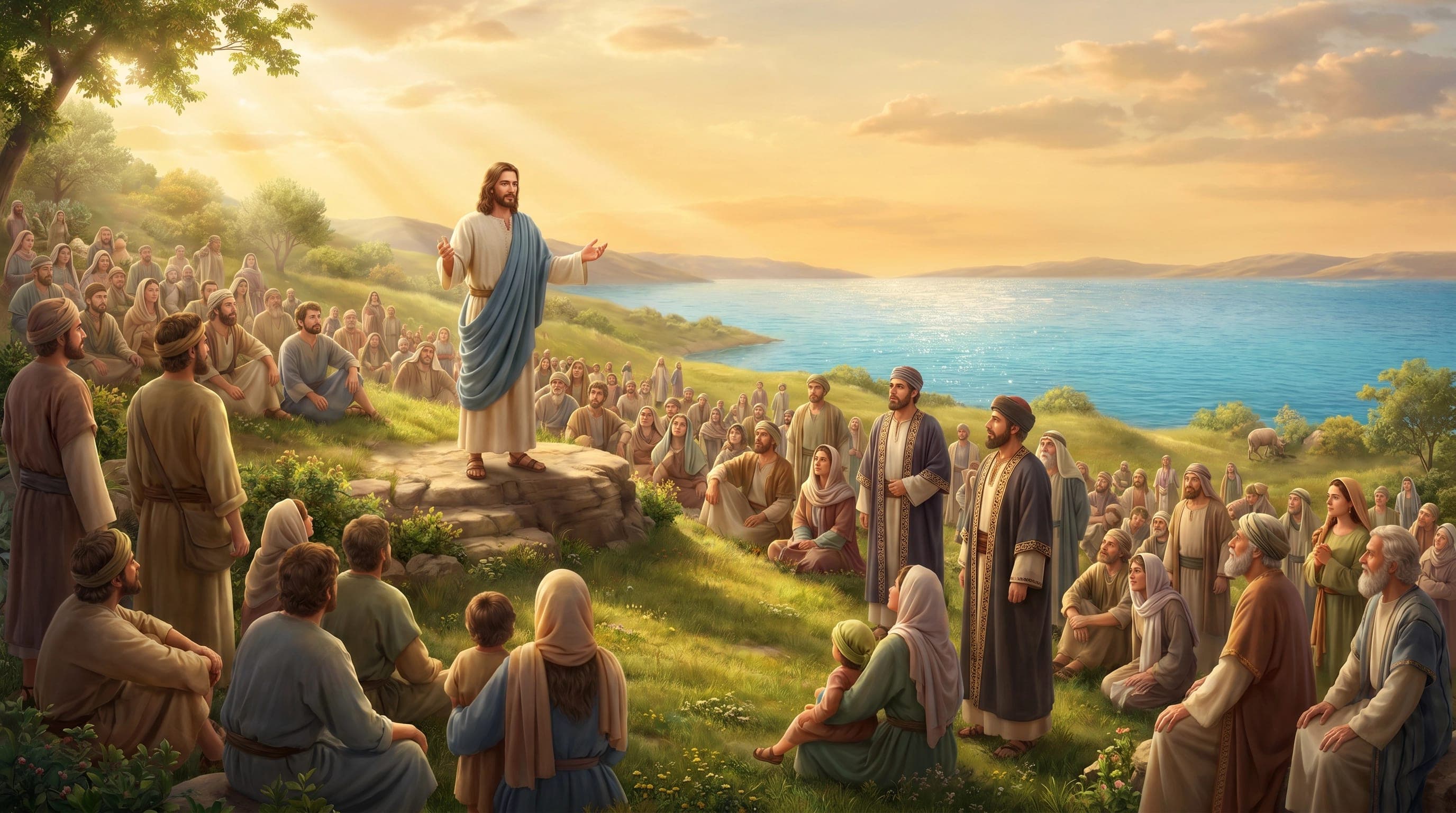
Jesus uses agricultural imagery to describe the urgent need for evangelistic workers in God's kingdom. The 'harvest' represents people ready to receive the gospel message, while 'laborers' refers to those called to proclaim it. This metaphor emphasizes divine mission - that God has prepared hearts to respond to the gospel, but lacks sufficient workers to reach them. Jesus speaks this directly to his twelve disciples after witnessing crowds who were spiritually lost and leaderless.
Matthew records Jesus speaking to his disciples immediately after feeling compassion for crowds who were 'like sheep without a shepherd.' This follows Jesus' extensive ministry tour through Galician cities and villages, where he taught, preached, and healed while facing opposition from Pharisees. The harvest metaphor directly connects to verse 38, where Jesus commands his disciples to pray for more workers, setting up the commissioning of the twelve apostles in chapter 10.
Read the full chapter: Matthew 9 →
Living This Out
The abundance of spiritually receptive people compared to available gospel workers creates an urgent responsibility for believers to engage in evangelistic mission. This verse challenges Christians to recognize that God has already prepared hearts around them and to either participate directly in sharing the gospel or support those who do.
The Book of Matthew
Matthew 1: The Generation and Birth of Jesus Christ
The book begins with the generation of Jesus Christ, the son of David, the son of Abraham. It records the generations from Abraham to David, from David until the carrying away into Babylon, and from the carrying away into Babylon unto Christ, each being fourteen generations. The genealogy concludes with Jacob begetting Joseph, the husband of Mary, of whom was born Jesus, who is called Christ.
Unlock the full Matthew summary
Continue reading every chapter — themes, structure, and turning points.
The complete summary of Matthew — a chapter-by-chapter breakdown covering all 28 chapters.
What you get
Every chapter of Matthew summarized in clear, modern English
How each section connects — narrative flow, key themes, and turning points
Permanent access — read anytime, on any device
All 66 book summaries • unlimited AI tools • $99/year after trial
ClearBible summaries are proprietary content and may not be copied, republished, or resold.
Scripture with Similar Themes
Common Questions
- Who wrote Matthew 9:37 and when?
- Matthew records Jesus' words to his twelve disciples during his Galilean ministry, approximately 30 AD, as he prepared to commission them for their own evangelistic mission.
- What themes does Matthew 9:37 address?
- The primary theme is divine mission. Related themes include evangelism and spiritual harvest and compassionate ministry.
- What does the Bible say about divine mission?
- The abundance of spiritually receptive people compared to available gospel workers creates an urgent responsibility for believers to engage in evangelistic mission. This verse challenges Christians to recognize that God has already prepared hearts around them and to either participate directly in sharing the gospel or support those who do.
Daily Verse — straight to your inbox
A verse and a 2-sentence plain-English explanation, every morning. Free. Unsubscribe anytime.