New Testament
1 Corinthians 14:28
Read the Bible in clear, modern English—easy to understand, faithful to the meaning, and written for everyday readers.
If no interpreter is present, the tongue-speaker should stay silent in the church and speak only to themselves and to God.
Compare translations
But if there be no interpreter, let him keep silence in the church; and let him speak to himself, and to God.
What 1 Corinthians 14:28 means
Plain-English insight for readers
In this verse, Paul emphasizes the importance of communication in a church setting. If someone speaks in a language that others cannot understand and there is no interpreter available, they should remain quiet. This is to ensure that everyone can participate and understand what is being said. Speaking in tongues can be a personal expression of faith, but it should not disrupt the community. Instead, the individual should focus on their personal connection with God. This guidance helps maintain order and clarity during worship. Ultimately, the goal is to foster an environment where everyone can grow spiritually together, rather than creating confusion. By encouraging silence when necessary, the church can be a place of unity and understanding, where all voices can be heard and appreciated. This principle applies not just to speaking in tongues but to all forms of communication within the church, promoting respect and consideration for others in the community. It reminds us that our personal expressions of faith should enhance, not hinder, the collective experience.
How to apply 1 Corinthians 14:28 to your life
In your own life, consider how your expressions of faith impact those around you. Are you fostering understanding and connection, or creating confusion? Take time to reflect on how you can communicate more effectively in your community, ensuring everyone feels included and valued. Silence can sometimes be the best choice for clarity and unity in discussions about faith and beliefs. Remember, your relationship with God is personal, but sharing it should be considerate of others.
Curated for this public verse page. 1 Corinthians Summary
Explore more of the Bible
Learn the Bible through its people and places
Get to know the people in Scripture through illustrated stories, and explore the places where they lived and traveled.
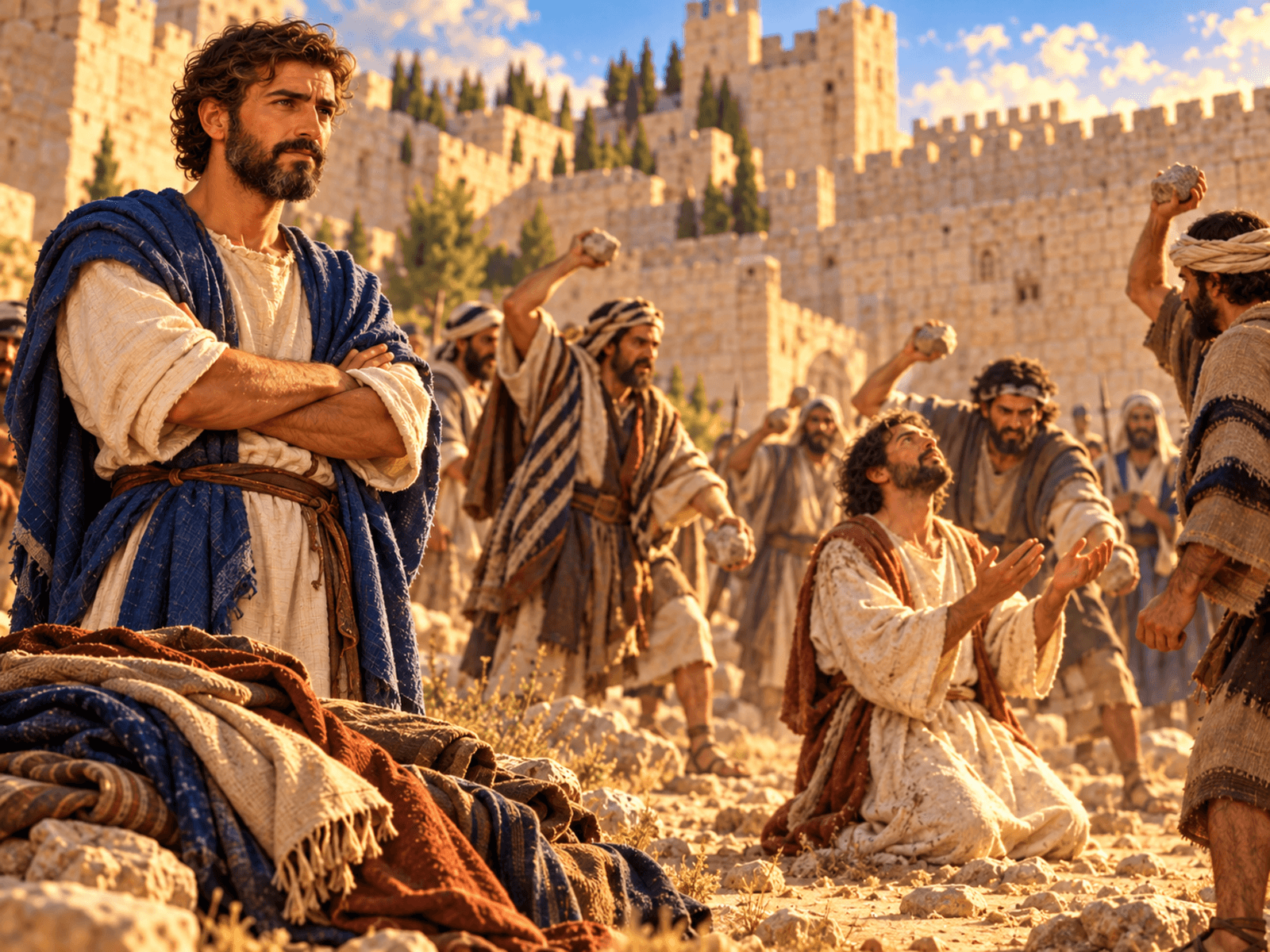
Illustrated scene from Paul's story: The Stoning of Stephen (Acts 7:57–8:2)
Meet the people of the Bible
Follow their lives in order, with illustrated scenes and Bible passages that tell their stories.
 Paul

Photo: Gary Todd (Gary Lee Todd, Ph.D.), via Wikimedia Commons. License: CC0 1.0 Universal Public Domain Dedication. Source. Location: Southern end of the Temple Mount, Jerusalem Old City. Resized for the web.
Explore the places of the Bible
See where biblical events happened, why each place matters, and what archaeology helps us understand.
Jerusalem
David's capital, the city of the temple, and the place where Jesus died and rose again.
Get full access with one subscription
Explore the people and places of the Bible. Read summaries of every book, with images and clear explanations covering every chapter. Access all these features and our Bible study tools with one subscription.
See PlansAsk AI about 1 Corinthians 14:28
Ask a question about this verse and get a clear answer, with Bible references you can read for yourself.
Every Bible book, explained chapter by chapter
Explore summaries of every book of the Bible, with images and easy-to-understand explanations covering every chapter.
Keep studying 1 Corinthians 14:28
Related Bible verses
Key themes
Related topics
At a Glance — the Book of 1 Corinthians
- Author
- Paul the apostle
- Written
- Around AD 55
- Genre
- Letter (epistle)
- Original Audience
- The church in Corinth
Frequently Asked Questions
Quick, clear answers about this verse
What does 1 Corinthians 14:28 mean?
1 Corinthians 14:28 emphasizes the need for clear communication in the church. If someone speaks in tongues without an interpreter, they should remain silent to avoid confusion and ensure that everyone can participate in worship.
What is the meaning of silence in 1 Corinthians 14:28?
Silence in 1 Corinthians 14:28 means that a tongue-speaker should refrain from speaking publicly if there is no interpreter. This encourages respect for the community and promotes understanding during church services.
How does 1 Corinthians 14:28 apply to modern church practices?
1 Corinthians 14:28 applies to modern church practices by reminding congregants to communicate in ways that everyone can understand. It encourages individuals to consider how their expressions of faith affect the community and to prioritize clarity.
Why is interpretation important in 1 Corinthians 14:28?
Interpretation is important in 1 Corinthians 14:28 because it allows the congregation to understand what is being said. Without an interpreter, speaking in tongues can lead to confusion, undermining the unity and purpose of the worship experience.
Daily Verse — straight to your inbox
A verse and a 2-sentence plain-English explanation, every morning. Free. Unsubscribe anytime.