New Testament
1 Corinthians 5:8
Read the Bible in clear, modern English—easy to understand, faithful to the meaning, and written for everyday readers.
So let's celebrate the feast — not with the old yeast of malice and wickedness, but with the unleavened bread of sincerity and truth.
Compare translations
Therefore let us keep the feast, not with old leaven, neither with the leaven of malice and wickedness; but with the unleavened bread of sincerity and truth.
What 1 Corinthians 5:8 means
Plain-English insight for readers
In this verse, Paul encourages the community to celebrate with a fresh perspective. The 'feast' symbolizes a time of joy and unity, but he emphasizes that it should not be tainted by negativity or deceit. Instead of holding onto past grudges and harmful behaviors, they should embrace a spirit of honesty and genuine love. The 'unleavened bread' represents purity and sincerity, suggesting that their actions and relationships should be rooted in truth. By letting go of malice and wickedness, they can fully enjoy the celebration and foster a supportive environment. This call to authenticity is not just about personal conduct; it’s about creating a community that reflects these values. Ultimately, Paul is urging them to renew their commitment to living in a way that honors their shared beliefs and strengthens their bonds. This transformation is essential for a meaningful celebration that truly reflects their faith and purpose together. It’s a reminder that our inner attitudes shape our communal experiences.
How to apply 1 Corinthians 5:8 to your life
To apply this message, reflect on your own attitudes and behaviors. Are there grudges or negative feelings you need to let go of? Focus on building honest relationships and fostering a supportive environment. Celebrate your connections with sincerity and truth, creating a positive atmosphere for everyone involved. Embrace the joy of unity!
Curated for this public verse page. 1 Corinthians Summary
Explore more of the Bible
Learn the Bible through its people and places
Get to know the people in Scripture through illustrated stories, and explore the places where they lived and traveled.
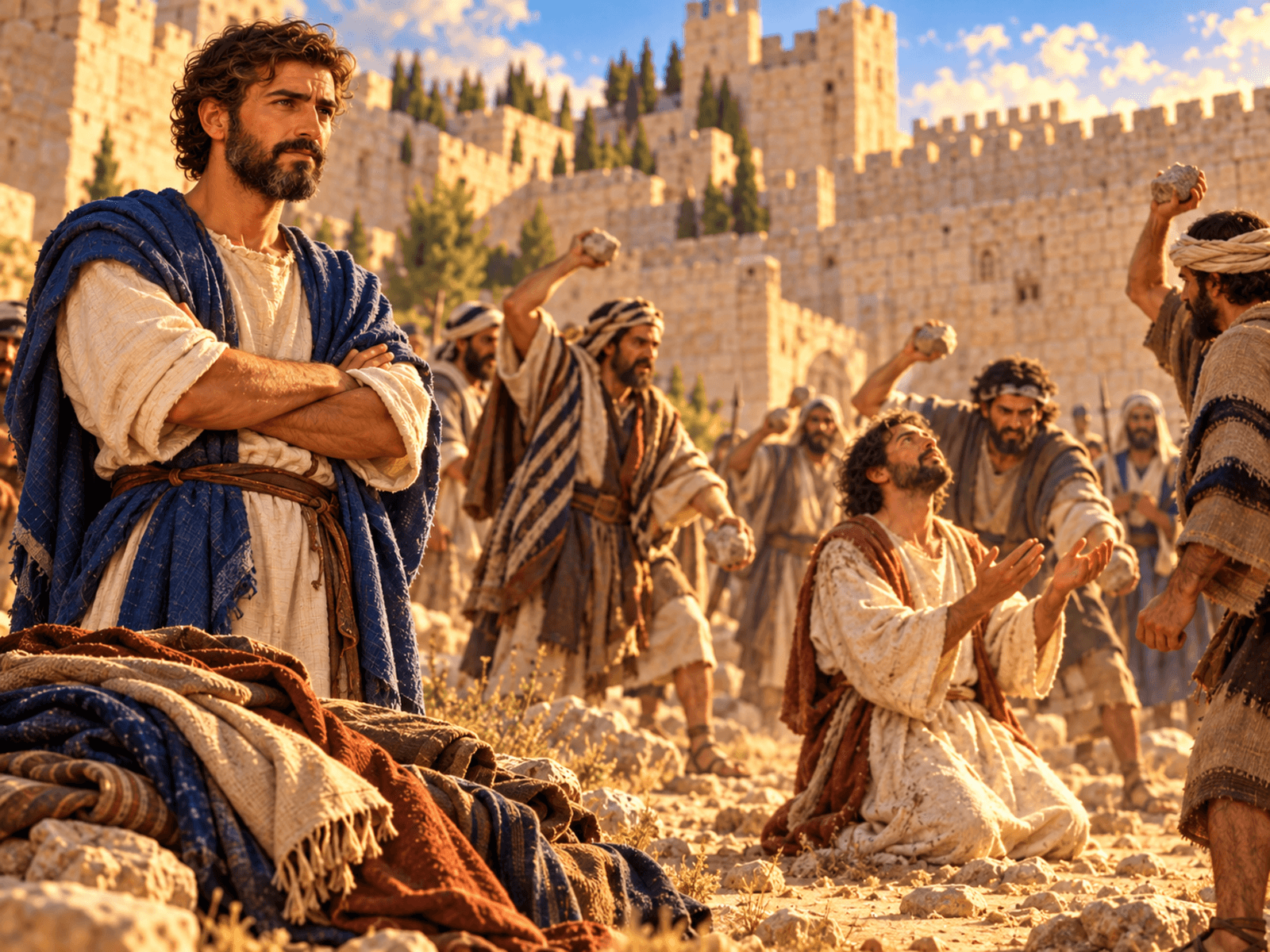
Illustrated scene from Paul's story: The Stoning of Stephen (Acts 7:57–8:2)
Meet the people of the Bible
Follow their lives in order, with illustrated scenes and Bible passages that tell their stories.
 Paul

Photo: Gary Todd (Gary Lee Todd, Ph.D.), via Wikimedia Commons. License: CC0 1.0 Universal Public Domain Dedication. Source. Location: Southern end of the Temple Mount, Jerusalem Old City. Resized for the web.
Explore the places of the Bible
See where biblical events happened, why each place matters, and what archaeology helps us understand.
Jerusalem
David's capital, the city of the temple, and the place where Jesus died and rose again.
Get full access with one subscription
Explore the people and places of the Bible. Read summaries of every book, with images and clear explanations covering every chapter. Access all these features and our Bible study tools with one subscription.
See PlansAsk AI about 1 Corinthians 5:8
Ask a question about this verse and get a clear answer, with Bible references you can read for yourself.
Every Bible book, explained chapter by chapter
Explore summaries of every book of the Bible, with images and easy-to-understand explanations covering every chapter.
Keep studying 1 Corinthians 5:8
Related Bible verses
Key themes
Related topics
At a Glance — the Book of 1 Corinthians
- Author
- Paul the apostle
- Written
- Around AD 55
- Genre
- Letter (epistle)
- Original Audience
- The church in Corinth
Frequently Asked Questions
Quick, clear answers about this verse
What does 'celebrate the feast' mean in 1 Corinthians 5:8?
In 1 Corinthians 5:8, 'celebrate the feast' refers to the communal joy and unity experienced during significant religious observances, particularly the Passover. Paul uses this metaphor to encourage the community to engage in their celebrations with a renewed spirit, emphasizing that their actions should reflect sincerity and truth rather than negativity or past grievances.
What is the significance of 'unleavened bread' in this verse?
The 'unleavened bread' in 1 Corinthians 5:8 symbolizes purity and sincerity. In the context of the Jewish Passover, unleavened bread represents a time of cleansing and renewal. Paul uses this imagery to urge the community to approach their celebrations with honesty and integrity, shedding any malice or wickedness that could taint their relationships and communal experience.
How can I apply the message of 1 Corinthians 5:8 in my life?
To apply the message of 1 Corinthians 5:8, start by reflecting on any grudges or negative feelings you may be holding onto. Work on letting go of these emotions and focus on building honest, supportive relationships. Celebrate your connections with others by fostering an environment of sincerity and truth, which will enhance your communal experiences and create a more positive atmosphere.
What does Paul mean by 'old leaven' in this verse?
In 1 Corinthians 5:8, 'old leaven' represents past behaviors and attitudes, particularly those characterized by malice and wickedness. Paul is urging the community to avoid these negative influences as they celebrate. By letting go of the 'old leaven,' they can embrace a new way of living that aligns with their values of sincerity and truth, fostering a healthier community.
Daily Verse — straight to your inbox
A verse and a 2-sentence plain-English explanation, every morning. Free. Unsubscribe anytime.