Old Testament
1 Kings 6:25
Read the Bible in clear, modern English—easy to understand, faithful to the meaning, and written for everyday readers.
The second cherub also measured 10 cubits across. Both cherubim were identical in size and shape.
Compare translations
And the other cherub was ten cubits: both the cherubims were of one measure and one size.
What 1 Kings 6:25 means
Plain-English insight for readers
In this passage, we learn about the second cherub, which was also ten cubits wide, just like the first one. This detail emphasizes that both cherubs were exactly the same in size and shape. The cherubs were crafted to be identical, symbolizing unity and harmony. Their design was intentional, reflecting a sense of balance in the sacred space they occupied. This uniformity can remind us of the importance of consistency in our lives and relationships. Just as these cherubs were made to complement each other, we too can strive for harmony in our interactions with others. The cherubs served a significant role in the temple, representing divine presence and protection. Their identical nature invites us to consider how we can reflect unity in our communities and families, fostering a sense of belonging and support. Ultimately, this passage encourages us to appreciate the beauty of togetherness and the strength found in shared purpose and values, much like the cherubs that stood side by side.
How to apply 1 Kings 6:25 to your life
Consider how you can bring harmony into your relationships. Strive for consistency in your actions and words, just as the cherubs were identical. Reflect on the importance of unity in your community, fostering connections that support and uplift one another. Together, we can create a stronger, more supportive environment for everyone involved. Embrace the beauty of togetherness in your daily life, just like the cherubs did in the temple.
Curated for this public verse page. 1 Kings Summary
Learn the Bible through its people and places
Get to know the people in Scripture through illustrated stories, and explore the places where they lived and traveled.
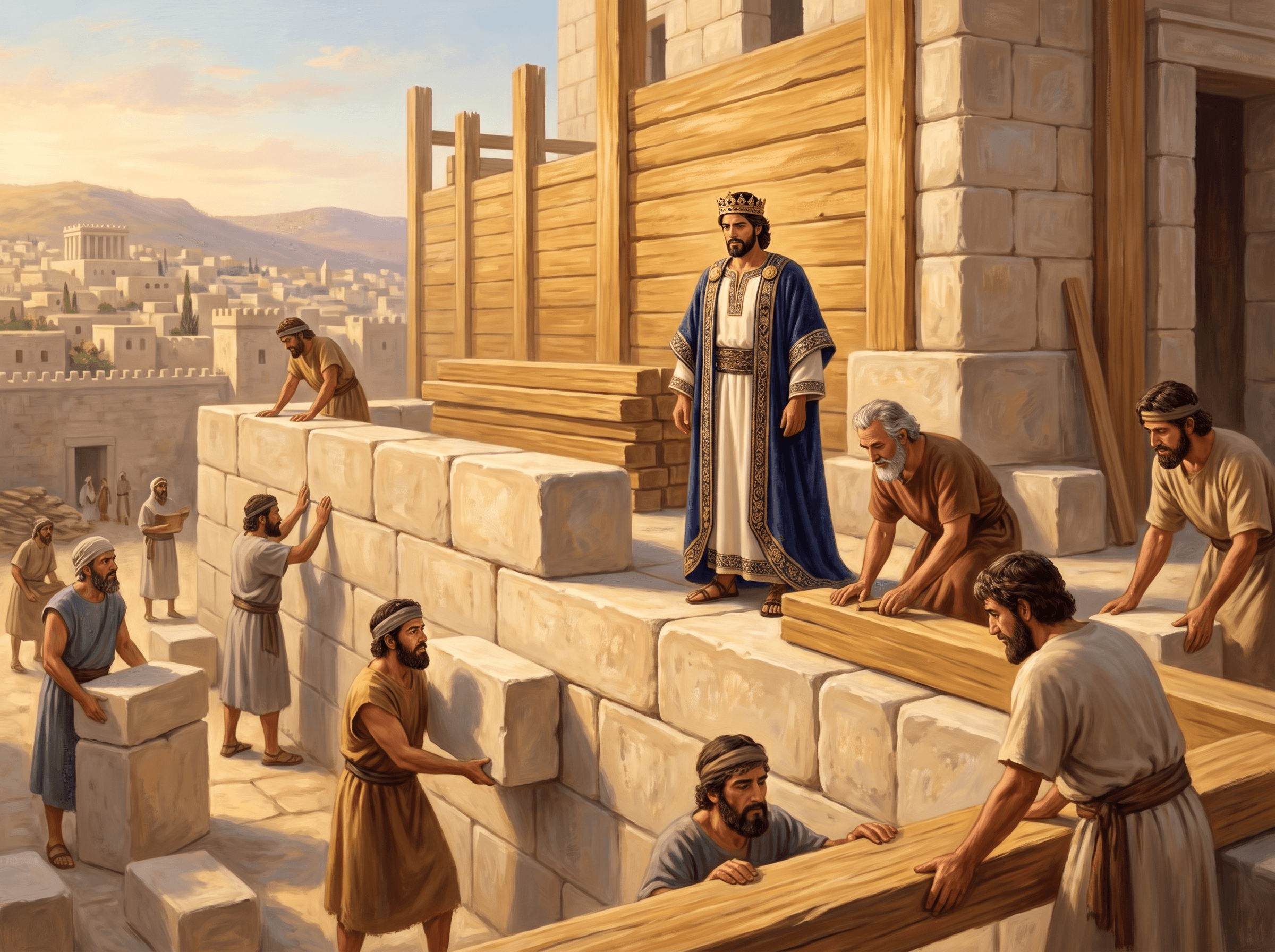
Illustrated scene from Solomon's story: Building the Temple (1 Kings 6:1–38)
Meet the people of the Bible
Follow their lives in order, with illustrated scenes and Bible passages that tell their stories.
 Solomon

Photo: Photochrom print, Library of Congress Prints and Photographs Division (LCCN 2002724987). License: Public domain in the United States; Library of Congress states no known restrictions on publication. Source. Location: Hebron, West Bank; print preserved by the Library of Congress. Resized for the web.
Explore the places of the Bible
See where biblical events happened, why each place matters, and what archaeology helps us understand.
Hebron
Where Abraham lived and buried Sarah, and where David was first made king.
Get full access with one subscription
Explore the people and places of the Bible. Read summaries of every book, with images and clear explanations covering every chapter. Access all these features and our Bible study tools with one subscription.
See PlansAsk AI about 1 Kings 6:25
Ask a question about this verse and get a clear answer, with Bible references you can read for yourself.
Every Bible book, explained chapter by chapter
Explore summaries of every book of the Bible, with images and easy-to-understand explanations covering every chapter.
Keep studying 1 Kings 6:25
Related Bible verses
Key themes
Related topics
At a Glance — the Book of 1 Kings
- Author
- Author unknown; possibly Jeremiah
- Written
- Around 560 BC
- Genre
- Historical narrative
- Original Audience
- Exiled Israelites in Babylon
Frequently Asked Questions
Quick, clear answers about this verse
What does 1 Kings 6:25 mean?
1 Kings 6:25 describes the second cherub in the temple, which measured ten cubits wide, just like the first cherub. This verse highlights that both cherubs were identical in size and shape, symbolizing unity and balance in the sacred space.
What is the significance of the cherubs in 1 Kings 6:25?
The cherubs in 1 Kings 6:25 represent divine presence and protection in the temple. Their identical nature emphasizes harmony and unity, reflecting the importance of these qualities in our lives and communities.
How do the cherubs in 1 Kings 6:25 symbolize community?
The identical nature of the cherubs in 1 Kings 6:25 symbolizes the importance of unity and harmony within a community. Just as the cherubs complement each other, we are encouraged to foster supportive relationships and connections.
What can we learn from 1 Kings 6:25 about relationships?
From 1 Kings 6:25, we can learn the value of consistency and harmony in our relationships. The identical cherubs remind us to strive for unity and support in our interactions with others.
Daily Verse — straight to your inbox
A verse and a 2-sentence plain-English explanation, every morning. Free. Unsubscribe anytime.