Old Testament
1 Kings 6:29
Read the Bible in clear, modern English—easy to understand, faithful to the meaning, and written for everyday readers.
On every wall throughout the house — both in the inner and outer rooms — he carved designs of cherubim, palm trees, and open flowers.
Compare translations
And he carved all the walls of the house round about with carved figures of cherubims and palm trees and open flowers, within and without.
What 1 Kings 6:29 means
Plain-English insight for readers
In this passage, we see the intricate artistry that went into the construction of the temple. The walls were not just plain surfaces; they were adorned with beautiful carvings of cherubim, palm trees, and flowers. These designs were present in both the inner and outer rooms, showcasing a deep appreciation for beauty and symbolism. Cherubim often represent divine presence, while palm trees symbolize victory and peace. Open flowers add a touch of life and vibrancy to the space. This attention to detail reflects the importance of the temple as a sacred place. It was designed to inspire awe and reverence, inviting people to connect with something greater than themselves. The artistry serves as a reminder that our surroundings can reflect our values and beliefs, making the environment a part of our spiritual journey. The temple was not just a building; it was a manifestation of faith and creativity, encouraging us to think about how we can beautify our own lives and spaces.
How to apply 1 Kings 6:29 to your life
Consider how you can bring beauty into your own life and surroundings. Whether through art, nature, or personal expression, creating a space that reflects your values can enhance your well-being. Small changes can make a significant impact on your environment and mindset. Embrace creativity in your daily life to inspire yourself and others.
Curated for this public verse page. 1 Kings Summary
Learn the Bible through its people and places
Get to know the people in Scripture through illustrated stories, and explore the places where they lived and traveled.
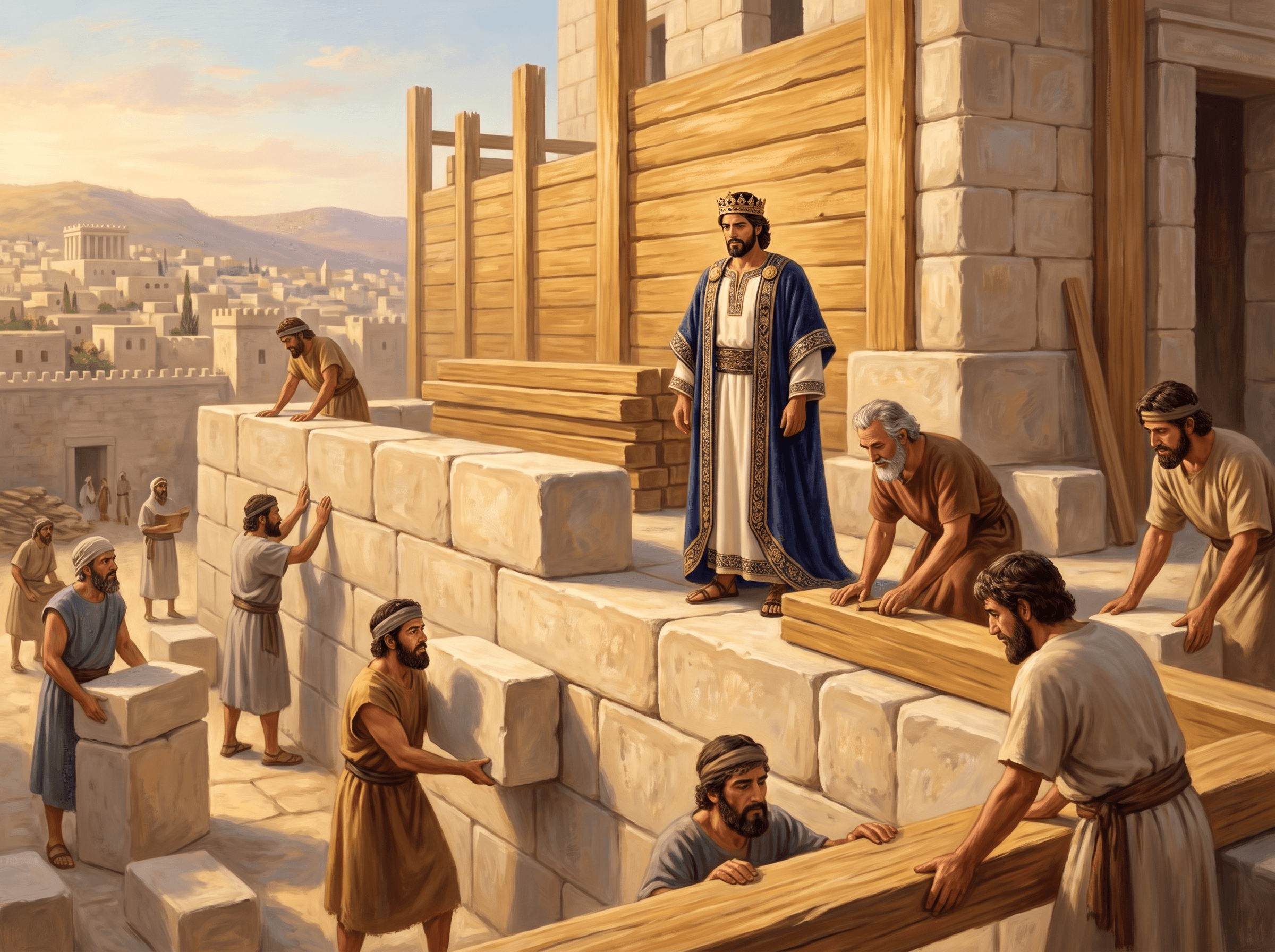
Illustrated scene from Solomon's story: Building the Temple (1 Kings 6:1–38)
Meet the people of the Bible
Follow their lives in order, with illustrated scenes and Bible passages that tell their stories.
 Solomon

Photo: Photochrom print, Library of Congress Prints and Photographs Division (LCCN 2002724987). License: Public domain in the United States; Library of Congress states no known restrictions on publication. Source. Location: Hebron, West Bank; print preserved by the Library of Congress. Resized for the web.
Explore the places of the Bible
See where biblical events happened, why each place matters, and what archaeology helps us understand.
Hebron
Where Abraham lived and buried Sarah, and where David was first made king.
Get full access with one subscription
Explore the people and places of the Bible. Read summaries of every book, with images and clear explanations covering every chapter. Access all these features and our Bible study tools with one subscription.
See PlansAsk AI about 1 Kings 6:29
Ask a question about this verse and get a clear answer, with Bible references you can read for yourself.
Every Bible book, explained chapter by chapter
Explore summaries of every book of the Bible, with images and easy-to-understand explanations covering every chapter.
Keep studying 1 Kings 6:29
Related Bible verses
Key themes
Related topics
At a Glance — the Book of 1 Kings
- Author
- Author unknown; possibly Jeremiah
- Written
- Around 560 BC
- Genre
- Historical narrative
- Original Audience
- Exiled Israelites in Babylon
Frequently Asked Questions
Quick, clear answers about this verse
What does 1 Kings 6:29 mean?
1 Kings 6:29 describes the detailed carvings on the walls of the temple, highlighting the artistic craftsmanship involved in its construction. The designs of cherubim, palm trees, and flowers symbolize divine presence, victory, and life, reflecting the temple's significance as a sacred space.
What is the significance of cherubim in 1 Kings 6:29?
In 1 Kings 6:29, cherubim represent the divine presence of God. Their inclusion in the temple's design emphasizes the sacredness of the space and the belief that it is a dwelling place for God among His people.
What do palm trees symbolize in 1 Kings 6:29?
In 1 Kings 6:29, palm trees symbolize victory and peace. Their presence in the temple's carvings reflects a sense of triumph and the hope for tranquility in the lives of those who worship there.
What is the meaning of open flowers in 1 Kings 6:29?
Open flowers in 1 Kings 6:29 add a sense of life and vibrancy to the temple's design. They represent beauty and the flourishing of creation, enhancing the overall aesthetic and spiritual atmosphere of the sacred space.
Daily Verse — straight to your inbox
A verse and a 2-sentence plain-English explanation, every morning. Free. Unsubscribe anytime.