Old Testament
2 Chronicles 3:8
Read the Bible in clear, modern English—easy to understand, faithful to the meaning, and written for everyday readers.
He constructed the Most Holy Place, which was 20 cubits long and 20 cubits wide, matching the width of the house. He overlaid it with fine gold totaling 600 talents.
Compare translations
And he made the most holy house, the length whereof was according to the breadth of the house, twenty cubits, and the breadth thereof twenty cubits: and he overlaid it with fine gold, amounting to six hundred talents.
What 2 Chronicles 3:8 means
Plain-English insight for readers
In this passage, we see the construction of the Most Holy Place, a sacred area within the temple. It was designed to be a perfect square, measuring 20 cubits in length and width, symbolizing balance and harmony. The use of fine gold, totaling 600 talents, highlights the importance and value placed on this space. This area was meant to be a dwelling place for the divine, representing a connection between God and His people. The meticulous details in its construction reflect the reverence and care taken in creating a space for worship. The gold overlay signifies purity and glory, emphasizing the significance of the Most Holy Place in the spiritual life of the community. This passage invites us to consider how we honor sacred spaces in our own lives, whether physical or spiritual, and the value we place on our relationship with the divine. It challenges us to create environments that reflect our commitment to what is holy and meaningful in our lives, just as the temple was built with intention and reverence.
How to apply 2 Chronicles 3:8 to your life
Consider how you create sacred spaces in your life, whether through physical places or moments of reflection. Make time for worship and connection with the divine. Reflect on the value you place on these experiences and how they shape your spiritual journey. Honor what is meaningful to you in your daily life, just as the temple was honored in its construction. Seek to create environments that inspire reverence and connection with the divine.
Curated for this public verse page. 2 Chronicles Summary
Learn the Bible through its people and places
Get to know the people in Scripture through illustrated stories, and explore the places where they lived and traveled.
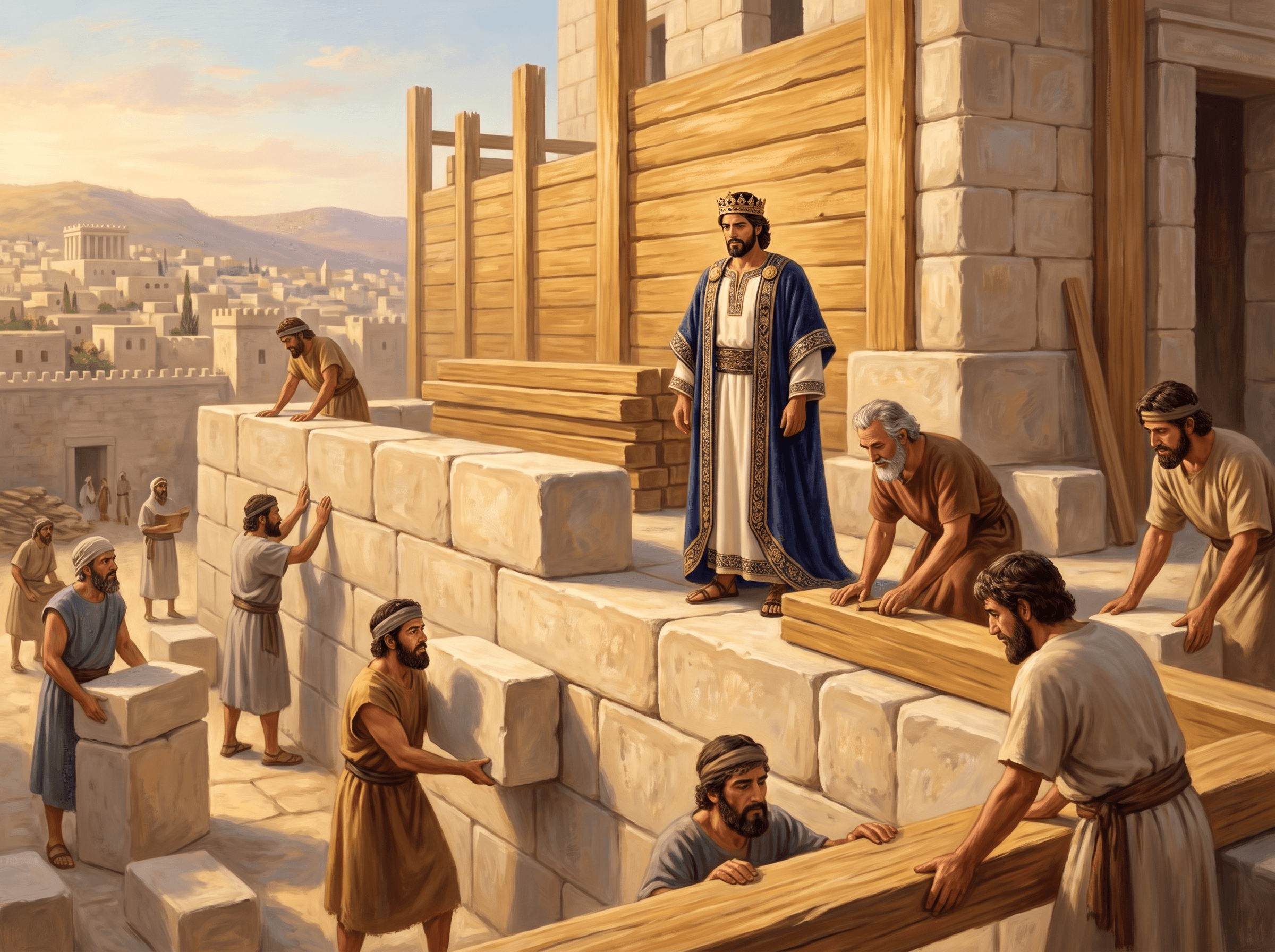
Illustrated scene from Solomon's story: Building the Temple (2 Chronicles 3:1–17)
Meet the people of the Bible
Follow their lives in order, with illustrated scenes and Bible passages that tell their stories.
 Solomon

Photo: Photochrom print, Library of Congress Prints and Photographs Division (LCCN 2002724987). License: Public domain in the United States; Library of Congress states no known restrictions on publication. Source. Location: Hebron, West Bank; print preserved by the Library of Congress. Resized for the web.
Explore the places of the Bible
See where biblical events happened, why each place matters, and what archaeology helps us understand.
Hebron
Where Abraham lived and buried Sarah, and where David was first made king.
Get full access with one subscription
Explore the people and places of the Bible. Read summaries of every book, with images and clear explanations covering every chapter. Access all these features and our Bible study tools with one subscription.
See PlansAsk AI about 2 Chronicles 3:8
Ask a question about this verse and get a clear answer, with Bible references you can read for yourself.
Every Bible book, explained chapter by chapter
Explore summaries of every book of the Bible, with images and easy-to-understand explanations covering every chapter.
Keep studying 2 Chronicles 3:8
Related Bible verses
Key themes
Related topics
At a Glance — the Book of 2 Chronicles
- Author
- Traditionally attributed to Ezra
- Written
- Around 430 BC
- Genre
- Historical narrative
- Original Audience
- Post-exilic Jews
Frequently Asked Questions
Quick, clear answers about this verse
What is the significance of the Most Holy Place in the temple?
The Most Holy Place, also known as the Holy of Holies, was the innermost sanctuary of the temple where God's presence dwelled. It was a sacred space reserved for the highest acts of worship and was separated from the rest of the temple by a veil. This area symbolized the ultimate connection between God and His people, representing holiness, reverence, and the importance of worship in the community.
Why was the Most Holy Place constructed as a perfect square?
The design of the Most Holy Place as a perfect square, measuring 20 cubits by 20 cubits, symbolizes balance, harmony, and completeness. This geometric shape reflects the idea of divine order and perfection, emphasizing the sacredness of the space where God's presence would dwell. It serves as a reminder of the importance of creating environments that reflect spiritual integrity and intentionality.
What does the gold overlay on the Most Holy Place represent?
The fine gold overlay of the Most Holy Place, totaling 600 talents, represents purity, glory, and the immense value placed on this sacred space. Gold is often associated with divinity and excellence in biblical texts, highlighting the significance of the Most Holy Place as a dwelling for God. This lavish use of materials underscores the reverence and honor given to worship and the divine presence.
How can we create sacred spaces in our own lives?
Creating sacred spaces in our lives can involve setting aside specific areas for prayer, meditation, or reflection. This could be a corner in your home, a quiet outdoor spot, or even a moment of stillness in your daily routine. The key is to approach these spaces with intentionality and reverence, allowing them to become places where you can connect with the divine and reflect on your spiritual journey.
Daily Verse — straight to your inbox
A verse and a 2-sentence plain-English explanation, every morning. Free. Unsubscribe anytime.