New Testament
Hebrews 7:13
Read the Bible in clear, modern English—easy to understand, faithful to the meaning, and written for everyday readers.
For the person of whom these things are spoken belongs to another tribe, from which no one has attended at the altar.
Compare translations
For he of whom these things are spoken pertaineth to another tribe, of which no man gave attendance at the altar.
What Hebrews 7:13 means
Plain-English insight for readers
In this verse, the author of Hebrews is highlighting that the person being discussed, likely referring to Jesus, comes from a different tribe than the Levitical priests. The Levitical priests were responsible for the altar and the sacrificial system in the Jewish tradition, specifically from the tribe of Levi. However, Jesus is from the tribe of Judah, which is significant because it shows that He does not fit the traditional priestly role established in the Old Testament. This distinction emphasizes the uniqueness of Jesus' priesthood and His role as a mediator between God and humanity. The author is making a case for a new kind of priesthood that transcends the old system, suggesting that Jesus' sacrifice and intercession are superior to the Levitical offerings. This verse sets the stage for understanding the new covenant and the transformative nature of Jesus' ministry.
How to apply Hebrews 7:13 to your life
Understanding that Jesus is our high priest from a different tribe encourages us to rely on His unique authority and sacrifice. It reminds us that we have direct access to God through Him, and we can approach Him with confidence, knowing He understands our struggles and intercedes for us.
Curated for this public verse page. Hebrews Summary
Explore more of the Bible
Learn the Bible through its people and places
Get to know the people in Scripture through illustrated stories, and explore the places where they lived and traveled.
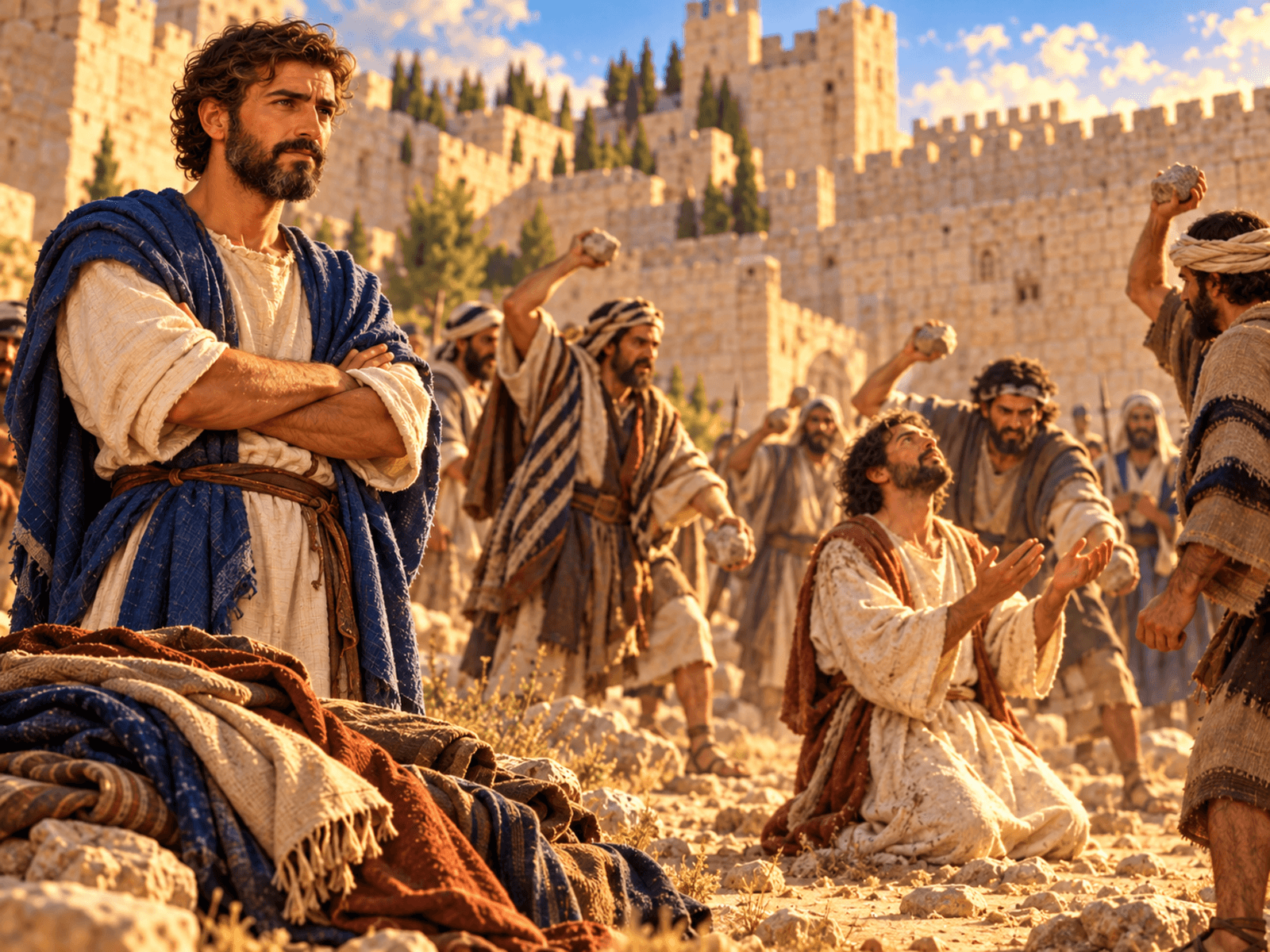
Illustrated scene from Paul's story: The Stoning of Stephen (Acts 7:57–8:2)
Meet the people of the Bible
Follow their lives in order, with illustrated scenes and Bible passages that tell their stories.
 Paul

Photo: Photochrom print, Library of Congress Prints and Photographs Division (LCCN 2002725045). License: Public domain in the United States; Library of Congress states no known restrictions on publication. Source. Location: Nazareth, Israel; print preserved by the Library of Congress. Resized for the web.
Explore the places of the Bible
See where biblical events happened, why each place matters, and what archaeology helps us understand.
Nazareth
The small town in Galilee where Jesus grew up.
Get full access with one subscription
Explore the people and places of the Bible. Read summaries of every book, with images and clear explanations covering every chapter. Access all these features and our Bible study tools with one subscription.
See PlansAsk AI about Hebrews 7:13
Ask a question about this verse and get a clear answer, with Bible references you can read for yourself.
Every Bible book, explained chapter by chapter
Explore summaries of every book of the Bible, with images and easy-to-understand explanations covering every chapter.
Keep studying Hebrews 7:13
Related Bible verses
Key themes
Related topics
At a Glance — the Book of Hebrews
- Author
- Author unknown; traditionally attributed to Paul
- Written
- Around AD 60-70
- Genre
- Letter and sermon
- Original Audience
- Jewish Christians
Frequently Asked Questions
Quick, clear answers about this verse
What does Hebrews 7:13 mean?
Hebrews 7:13 explains that Jesus, the person being discussed, comes from the tribe of Judah, not Levi, which is significant because Levitical priests were the only ones allowed to serve at the altar. This highlights the uniqueness of Jesus' priesthood and His role in the new covenant.
What is the significance of Jesus being from the tribe of Judah in Hebrews 7:13?
The significance lies in the fact that the Levitical priests, who served at the altar, were from the tribe of Levi. By stating that Jesus is from Judah, the verse emphasizes that His priesthood is different and superior, establishing a new order that transcends the old system.
How does Hebrews 7:13 relate to the concept of a new covenant?
This verse relates to the new covenant by showing that Jesus' priesthood is not based on the traditional Levitical system. It indicates that His sacrifice and role as a mediator are part of a new and transformative approach to connecting with God.
Daily Verse — straight to your inbox
A verse and a 2-sentence plain-English explanation, every morning. Free. Unsubscribe anytime.