New Testament
John 2:13
Read the Bible in clear, modern English—easy to understand, faithful to the meaning, and written for everyday readers.
The Jewish Passover was near, and Jesus went up to Jerusalem.
Compare translations
And the Jews’ passover was at hand, and Jesus went up to Jerusalem,
What John 2:13 means
Plain-English insight for readers
In this verse, we see that the Jewish Passover, a significant religious festival commemorating the Israelites' exodus from Egypt, was approaching. Jesus, a Jewish man, traveled to Jerusalem, the center of Jewish worship, to participate in this important event. The Passover was a time of reflection, remembrance, and celebration for the Jewish people, and it drew many pilgrims to the city. Jesus' journey to Jerusalem signifies his commitment to his faith and the traditions of his people. This moment sets the stage for the events that will unfold during the Passover, including Jesus' teachings and ultimately his crucifixion. The mention of the Passover also foreshadows the deeper significance of Jesus' sacrifice, as he becomes the ultimate Passover Lamb for humanity. This verse highlights the importance of religious observance and the cultural context in which Jesus lived and ministered.
How to apply John 2:13 to your life
As we reflect on this verse, we can consider the importance of participating in our own faith traditions. Just as Jesus honored the Passover, we should engage in practices that deepen our relationship with God and connect us to our spiritual heritage. This can strengthen our faith and community.
Curated for this public verse page. John Summary
Learn the Bible through its people and places
Get to know the people in Scripture through illustrated stories, and explore the places where they lived and traveled.
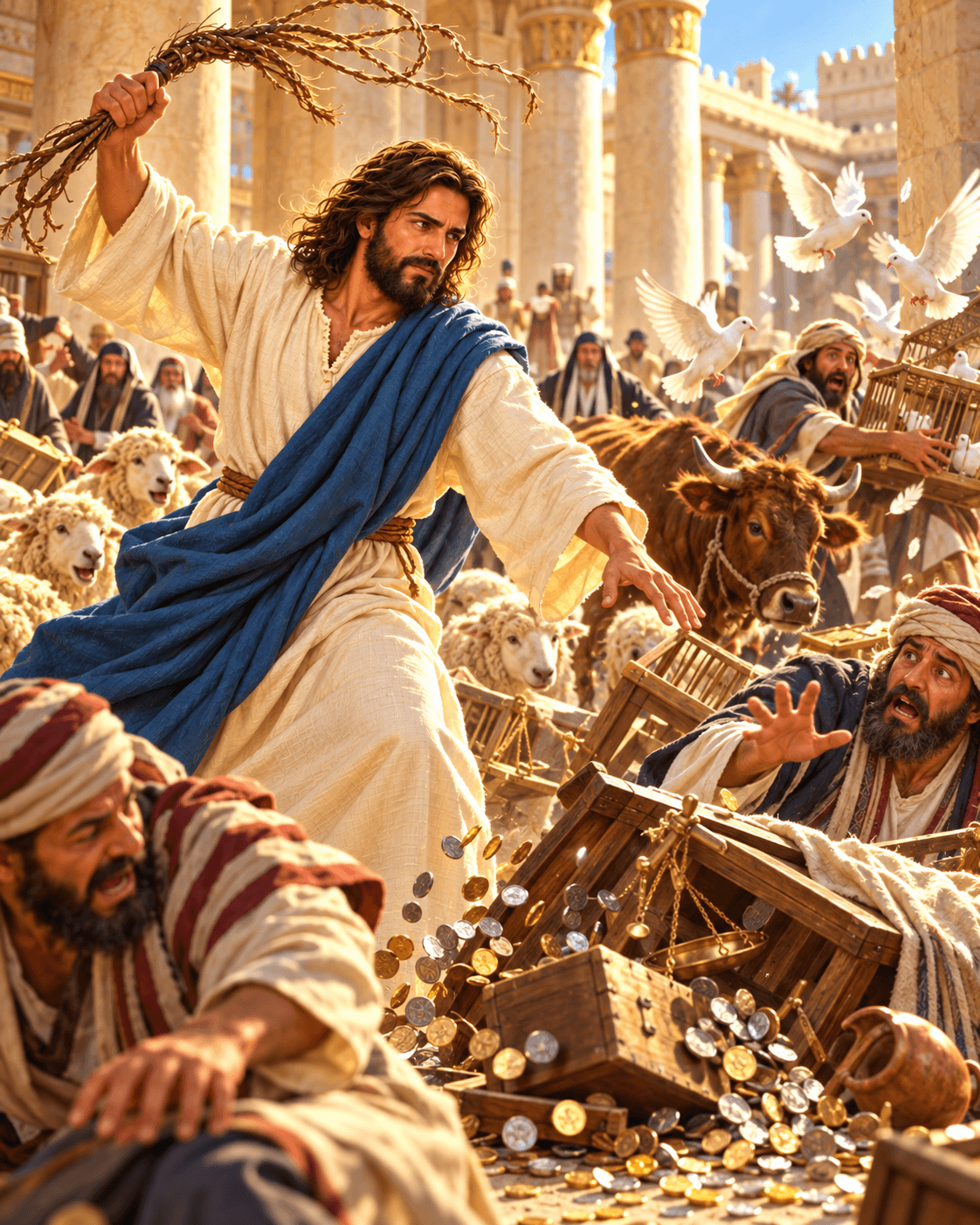
Illustrated scene from Jesus's story: Clearing the Temple at Passover (John 2:13–22)
Meet the people of the Bible
Follow their lives in order, with illustrated scenes and Bible passages that tell their stories.
 Jesus

Photo: Gary Todd (Gary Lee Todd, Ph.D.), via Wikimedia Commons. License: CC0 1.0 Universal Public Domain Dedication. Source. Location: Southern end of the Temple Mount, Jerusalem Old City. Resized for the web.
Explore the places of the Bible
See where biblical events happened, why each place matters, and what archaeology helps us understand.
Jerusalem
David's capital, the city of the temple, and the place where Jesus died and rose again.
Get full access with one subscription
Explore the people and places of the Bible. Read summaries of every book, with images and clear explanations covering every chapter. Access all these features and our Bible study tools with one subscription.
See PlansAsk AI about John 2:13
Ask a question about this verse and get a clear answer, with Bible references you can read for yourself.
Every Bible book, explained chapter by chapter
Explore summaries of every book of the Bible, with images and easy-to-understand explanations covering every chapter.
Keep studying John 2:13
At a Glance — the Book of John
- Author
- John the apostle
- Written
- Around AD 85-95
- Genre
- Gospel
- Original Audience
- All believers
Frequently Asked Questions
Quick, clear answers about this verse
What is the significance of the Passover in John 2:13?
In John 2:13, the Passover is significant as it represents a major Jewish festival commemorating the Israelites' liberation from slavery in Egypt. This event is central to Jewish identity and faith, and Jesus' participation in it underscores his commitment to Jewish traditions. The Passover also foreshadows Jesus' role as the ultimate sacrifice, paralleling the Passover lamb, which adds deeper meaning to his mission and teachings.
Why did Jesus go to Jerusalem for Passover?
Jesus went to Jerusalem for Passover because it was a religious obligation for Jewish males to attend the festival in the holy city. Jerusalem was the center of Jewish worship, and attending Passover allowed Jesus to connect with his faith and community. This journey also sets the stage for significant events in his ministry, including his teachings and the eventual culmination of his mission.
How does John 2:13 relate to Jesus' sacrifice?
John 2:13 relates to Jesus' sacrifice by highlighting the Passover, which symbolizes liberation and sacrifice. As the Passover lamb was sacrificed for the Israelites, Jesus' journey to Jerusalem during this time foreshadows his own impending sacrifice on the cross. This connection emphasizes the theological significance of Jesus as the ultimate Passover Lamb, whose death brings salvation to humanity.
What can we learn from Jesus' observance of Passover?
From Jesus' observance of Passover, we learn the importance of honoring our faith traditions and participating in communal worship. Just as Jesus engaged in the practices of his faith, we are encouraged to actively participate in our spiritual heritage. This involvement can deepen our relationship with God and strengthen our sense of community, reminding us of the significance of our beliefs and practices.
Daily Verse — straight to your inbox
A verse and a 2-sentence plain-English explanation, every morning. Free. Unsubscribe anytime.